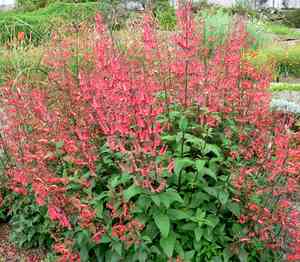
Cape fuchsia (Phygelius) (Phygelius)
Also known as: Cape Fuchsia, Cape Figwort
The evergreen shrubs often treated as perennials in colder climates are known for their lasting beauty and resilience. These two species produce a profusion of hanging tubular flowers throughout the summer, showcasing hues of white, yellow, and red. Originating from the moist slopes and riverbanks of southern Africa, they thrive in these environments. Their ornamental value and adaptability make them a popular choice for gardeners.
In This Article
Attributes of Cape fuchsia (Phygelius)
Lifespan
Perennial
Plant Height
1 m
Spread
1 m
Leaf Color
Dark Green
Flower Size
1 to 2 inches (2.5 to 5 cm)
Flower Color
Red, Yellow, Pink
Images of Cape fuchsia (Phygelius)
Quickly Identify Cape fuchsia (Phygelius)
1
Phygelius plants can be identified by their tubular flowers which come in colors like red, yellow, and pink. The leaves are dark green, lance-shaped, and slightly serrated. They can grow in a shrub-like form.
Scientific Classification of Cape fuchsia (Phygelius)
Phylum
Magnoliophyta
Class
Magnoliopsida
Order
Lamiales
Family
Scrophulariaceae
Genus
Phygelius
Planting and Growing of Cape fuchsia (Phygelius)
Care Difficulty
Moderate
Watering Schedule
Every 4 days
Sunlight Requirements
Full sun
Sunshine Duration
4-8 hours
Ideal Temperature
55-75℉
Soil Type
Potting Mix, Peat Mix
Soil pH
6.5-7.5
Fertilizer Type
Balanced
Pruning Season
Spring, Summer
Pruning Area
Branches, Leaves
Pruning Frequency
Once a year
Repotting Season
Spring
Pot Type
Ceramic, Plastic
 How to Water Cape fuchsia (Phygelius)?
For Phygelius, ensure the soil is consistently moist by watering until you see a slight trickle from the drainage holes. This ensures the roots have sufficient moisture without waterlogging.
What are the symptoms of an underwatered Cape fuchsia (Phygelius)?
›
What should I do if my Cape fuchsia (Phygelius) is not getting enough water?
›
What are the symptoms of an overwatered Cape fuchsia (Phygelius)?
›
How to save an overwatered Cape fuchsia (Phygelius)?
›
 What Are the Sunlight Requirements for Cape fuchsia (Phygelius)?
Phygelius favors an ideal light range of partial sun to full sun, where it receives around 4 to 6 hours of sunlight daily. Proper lighting promotes strong growth and plentiful, vibrant blooms, enhancing the decorative appeal of the plant.
What is the ideal lighting condition for Phygelius?
›
How can I ensure ideal sunlight exposure for Phygelius?
›
What benefits does Phygelius gain from ideal lighting?
›
 What Is the Ideal Temperature Range for Cape fuchsia (Phygelius)?
For optimal growth, Phygelius thrives in a temperature range of 55°F to 75°F. Within this range, the plant can efficiently photosynthesize and undergo healthy metabolic processes. Temperatures on the lower end of this range facilitate strong root development, while temperatures toward the higher spectrum promote more robust flowering and growth.
 What Soil is Best for Cape fuchsia (Phygelius)?
Phygelius thrives in well-drained soil, which ensures that excess water does not accumulate around the roots. This is vital as it prevents root rot and promotes healthy root development, allowing the plant to absorb nutrients more efficiently. The plant benefits from moderately fertile soil, which provides the necessary nutrients for vibrant foliage and robust blooming. Maintaining moderate fertility helps balance growth and flowering, ensuring that the plant is neither over-nourished nor under-fed. Phygelius prefers a loose soil texture that facilitates root expansion and air circulation. Such a texture aids in anchoring the plant while also allowing roots to explore for nutrients, leading to stronger overall plant health.
 How to Fertilize Cape fuchsia (Phygelius)?
Phygelius tends to benefit from a balanced, all-purpose fertilizer formula. For liquid fertilizers, use a dilution of about half the recommended strength on the product label. Apply it directly to the soil around the base of the plant. Slow-release granules should follow the instructions on the package, generally around 2 tablespoons per plant.
 How to Prune Cape fuchsia (Phygelius)?
Begin by sterilizing your pruning tools to prevent disease spread. In early spring, cut back the Phygelius stems to about 6-12 inches above the base to promote robust new growth. Throughout the growing season, remove spent flowers to encourage continual blooming and prevent seed formation. This process is commonly known as deadheading.
 How to Propagate Cape fuchsia (Phygelius) plant?
1
Start by selecting a well-draining potting mix. For seeds, a mix of peat and perlite works well. This mixture retains adequate moisture while providing good drainage, which is critical for seed germination and rooting.
2
For seed propagation, sow seeds thinly on the surface of the damp compost and cover with a thin layer of vermiculite. For cuttings, select healthy shoots and trim them below a node to enhance rooting potential.
3
Place the seeds or cuttings in a warm, bright location but out of direct sunlight. Maintain humidity by covering with a plastic dome or using a propagation tray with a lid. The ideal temperature should be around 21°C for enhanced growth.
 How to Repot Cape fuchsia (Phygelius) plant?
1
Phygelius should be repotted when you notice roots emerging from the drainage holes or when growth appears stunted. These signs usually indicate that the plant has outgrown its current pot and requires more space and nutrients to thrive properly.
2
Select a pot that is one size larger than the current one. Ensure that it has adequate drainage holes. A terracotta pot is ideal as it allows better airflow and helps wick away excess moisture, which prevents waterlogging and root rot.
3
Opt for a well-draining potting mix rich in organic matter. This type of soil promotes healthy root development by allowing excess water to escape, which is crucial to prevent root diseases, and ensures that the roots receive sufficient aeration.
Learn More About Cape fuchsia (Phygelius) Diseases
Anthracnose
Bacterial Leaf Spot
Bacterial Soft Rot
Bacterial Wilt
Black Spot
Chemical Injury
Crown Gall
Cyst Nematode
Damping-off
Downy Mildew
Drought Stress
Fusarium Wilt
Gray Mold
Leaf Curl
Leaf Spot
Mosaic
Nutrient Deficiency
Nutrient Toxicity
Powdery Mildew
Root Rot
Root-knot Nematode
Rusts
Sooty Mold
Spider Mites
Temperature Stress
Thrips Damage
White Mold

