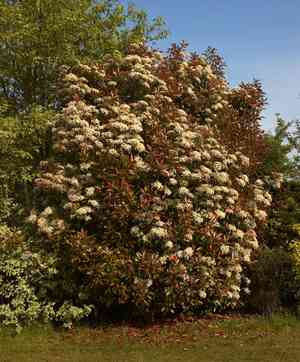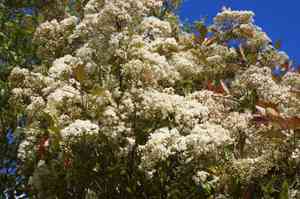
Red tip photinia(Photinia × fraseri)

Red tip photinia (Photinia × fraseri)

Also known as: Red Tip Photinia, Fraser Photinia

Red tip photinia is a hybrid created from Taiwanese and Japanese Photinia species. It was developed at Fraser Nurseries in Birmingham, Alabama. Unlike its parent plants, this shrub or small tree rarely produces red fruits. It is highly valued as an ornamental plant for its vibrant red-to-green foliage, attractive white flowers, and resistance to frost.

Attributes of Red tip photinia

Lifespan
Perennial
Plant Type
Shrub
Plant Height
2.5 to 5 meters
Spread
2 to 3 meters
Leaf Color
Young leaves are red, mature leaves are dark green
Flower Size
8 cm to 15 cm
Flower Color
White

ForwardPlant - Identify plants with a snap

Identify and diagnose plants, get toxicity alerts, and explore safety guides for all types of fungi.

Try for Free

Images of Red tip photinia

Red tip photinia(Photinia × fraseri)

Quickly Identify Red tip photinia

1
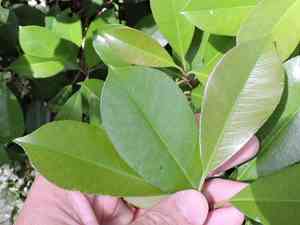
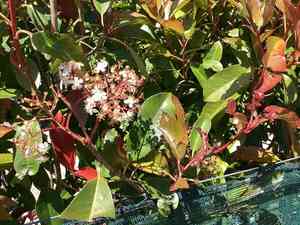
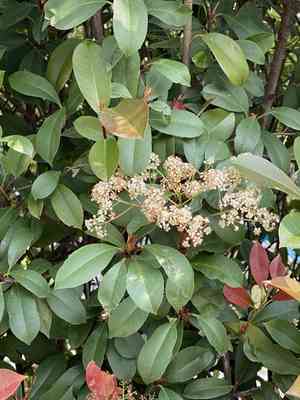
Identify Photinia × fraseri by its glossy, elliptical leaves that turn vibrant red when young before maturing to a dark green. The plant also produces small white flowers in the spring, which develop into red berries in the autumn.

Scientific Classification of Red tip photinia

Phylum
Vascular plants
Class
Dicotyledons
Order
Roses, elms, figs, and allies
Family
Rose
Genus
Photinia
Species
Red tip photinia

Planting and Growing of Red tip photinia

Care Difficulty
Easy
Watering Schedule
Every 2 days
Sunlight Requirements
Full sun
Sunshine Duration
4-8 hours
Ideal Temperature
60-75℉
Soil Type
Potting Mix, Peat Mix
Soil pH
6.5-7.5
Fertilizer Type
Balanced
Pruning Season
Spring, Summer
Pruning Area
Branches, Leaves
Pruning Frequency
2 times a year
Repotting Season
Spring
Pot Type
Plastic, Ceramic

water icon How to Water Red tip photinia?

When watering Photinia × fraseri, ensure the soil is thoroughly soaked until water runs out of the drainage holes. This ensures that the entire root system is adequately hydrated. The amount should be about 2000 milliliters per session, allowing the plant to absorb moisture effectively without waterlogging the roots.
What are the symptoms of an underwatered Red tip photinia?
What should I do if my Red tip photinia is not getting enough water?
What are the symptoms of an overwatered Red tip photinia?
How to save an overwatered Red tip photinia?

sunlight icon What Are the Sunlight Requirements for Red tip photinia?

Sunlight Requirements: Full sun, Partial sun
Duration of light: 4-6 hours daily
Photinia × fraseri thrives in full to partial sun environments, ideally receiving 4 to 6 hours of sunlight daily, promoting vigorous growth and enhancing its natural leaf colors.
What is the ideal light for Photinia × fraseri?
How can you achieve ideal lighting?
What benefits come from ideal lighting?

temperature icon What Is the Ideal Temperature Range for Red tip photinia?

Ideal Temperature: 60 ~ 75℉
The ideal temperature range for Photinia × fraseri typically falls between 60°F and 75°F. This range ensures optimal growth and health, promoting vibrant foliage and robust branching. Maintaining these temperatures is crucial for minimizing plant stress and preventing temperature-induced diseases or growth abnormalities.

soil icon What Soil is Best for Red tip photinia?

Soil type: Loam, Sandy loam
Soil PH: 6.5 ~ 7.5
Photinia × fraseri thrives best in well-drained soils that prevent waterlogging, which can lead to root rot. Well-drained soils help maintain optimal moisture without excess water, ensuring the plant's roots get the necessary oxygen they need. These plants prefer soils rich in organic matter, providing essential nutrients for healthy growth. Nutrient-rich soil supports vigorous foliage development and a robust root system, promoting overall plant vitality. Moderate fertility in soil helps Photinia × fraseri maintain a balanced growth rate. While too much fertility can lead to excessive foliage at the expense of flowers, moderate levels ensure a harmonious balance of leaves and blooms.

fertilize icon How to Fertilize Red tip photinia?

Fertilizer type: Balanced
Photinia × fraseri requires a balanced approach to fertilization. When using liquid fertilizers, ensure a dilution rate of half the recommended strength to avoid root burn. An application of approximately 8 ounces around the base of the plant evenly can support healthy growth. For slow-release fertilizers, use about one cup spread uniformly in the soil around the plant base.

prune icon How to Prune Red tip photinia?

Pruning Time: Spring, Summer
Gather sharp pruning shears and gloves before you start. A clean cut is crucial to prevent disease. Disinfect tools with alcohol to ensure a sterile environment. Also, remove any nearby debris to maintain clarity and safety during the pruning process. Begin by cutting back any overgrown branches to maintain the desired shape of your shrub. Focus on branch nodes where new growth emerges. Aim to cut at a 45-degree angle, about a quarter inch above a bud facing outward. This encourages outward growth and prevents the plant from becoming too dense. More About Pruning Techniques

propagate icon How to Propagate Red tip photinia plant?

Propagate Time: Spring, Early summer, Late spring
1
Select healthy, non-flowering stems about 4-6 inches long. Use sharp pruning shears to make a clean cut below a node, remove the leaves from the lower half, and optionally, dip the cut end in rooting hormone.
2
Prepare a pot with a mix of sand and peat. Use a stick to make a hole, insert the prepared cutting, and gently firm the soil around it to ensure it stands upright and has good soil contact.
3
Water the cuttings thoroughly until the soil is moist. Cover the pot with a plastic bag or a clear cover to retain humidity without allowing the plastic to touch the cutting.
More About Propagating Techniques

repot icon How to Repot Red tip photinia plant?

Repotting frequency: Every 2-3 years
1
Repotting Photinia × fraseri is best done in spring when the plant shows signs of outgrowing its current pot. Look for roots protruding from drainage holes or the soil drying out too quickly. These are indicators that your plant is ready for a new home.
2
Select a pot that is only one size larger than the current one, ideally with drainage holes. This prevents waterlogging and promotes healthy root development. A pot too large can lead to excess soil moisture retention, risking root rot.
3
Use a well-draining potting mix to ensure proper aeration and moisture management. This type of soil helps prevent root diseases and allows the plant to access necessary nutrients efficiently, supporting robust growth.

ForwardPlant - Identify plants with a snap

Find the best spots for them to optimize their health, simply using your phone.

Try for Free

Toxicity of Red tip photinia

Is Red tip photinia toxic to humans?

The red tip photinia presents a mild risk of toxicity to humans when ingested. This entire plant contains cyanogenic glycosides, which can be detrimental if consumed. Upon ingestion, these compounds can be metabolized into hydrogen cyanide within the body, resulting in symptoms such as breathing difficulties, weakness, and gastrointestinal upset. In extreme cases, it may lead to convulsions and even coma. Given that all parts of red tip photinia are toxic, it is important to exercise caution to avoid accidental ingestion, particularly by children and pets that may be attracted to its leaves or berries.

Is Red tip photinia toxic to cat?

Red tip photinia is recognized to possess a mild toxicity to cats. If a cat inadvertently consumes any portion of this plant, it may face the risk of poisoning. Symptoms of red tip photinia poisoning can frequently reflect overall physical distress in cats. Given that the plant contains cyanogenic glycosides, it is vital to obtain timely veterinary assistance to address the situation effectively. Consequently, if a cat displays signs of illness after encountering red tip photinia, it is imperative to pursue professional care at a veterinary clinic without delay.

Is Red tip photinia toxic to dog?

The plant variety known as red tip photinia possesses a mild toxicity level for dogs. If dogs accidentally ingest portions of this plant, they could suffer from poisoning. Every part of the plant, including its leaves, stems, and berries, harbors toxic substances that may jeopardize canine health. Upon ingestion, dogs may show symptoms such as gastrointestinal distress—like vomiting and diarrhea—as well as more severe reactions, including breathing difficulties or an elevated heart rate, due to the presence of cyanogenic glycosides. It is essential for dog owners to keep a vigilant watch on their pets and restrict their access to red tip photinia. Should a dog consume any part of this plant, it is vital to seek prompt veterinary assistance to ensure appropriate treatment and management of potential poisoning.

Identify toxic plants for your safety

Learn which plants are harmful to you and your pets, and make informed choices for a safer home!

Try for Free
WARNING
The judgment on toxicity and danger is for reference only. We DO NOT GUARANTEE any accuracy of such judgment. Therefore, you SHALL NOT rely on such judgment. It is IMPORTANT TO SEEK PROFESSIONAL ADVICE in advance when necessary.
More About Toxic Techniques