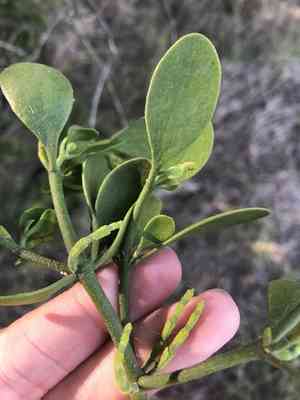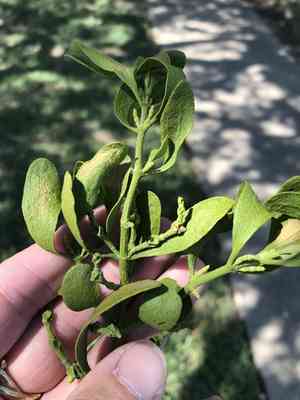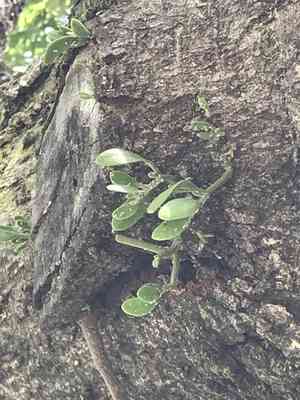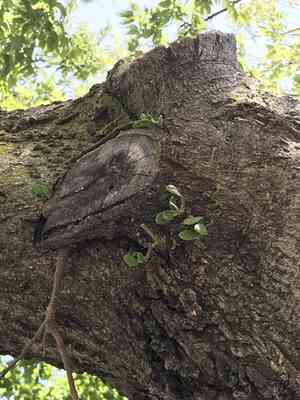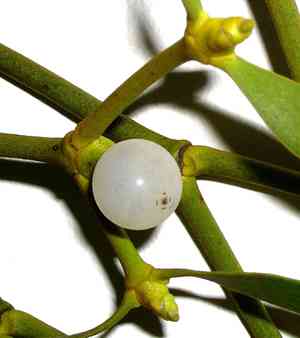
American mistletoe(Phoradendron leucarpum)

American mistletoe (Phoradendron leucarpum)

Also known as: Oak mistletoe, Hairy mistletoe

According to tradition, when two people find themselves under the American mistletoe, they are supposed to share a kiss. The mistletoe, scientifically known as Phoradendron leucarpum, is a plant native to North America that produces small white berries, which are toxic to humans but can be consumed by certain birds and animals.

Attributes of American mistletoe

Lifespan
Perennial
Plant Type
Shrub
Plant Height
1 m
Spread
1 m
Leaf Color
Green
Flower Size
5 mm to 5 cm
Flower Color
Green Yellow

PlantJoy - Identify plants with a snap

Identify and diagnose plants, get toxicity alerts, and explore safety guides for all types of fungi.

Try for Free

Images of American mistletoe

American mistletoe(Phoradendron leucarpum)

Quickly Identify American mistletoe

1
Oppositely arranged, oblong leaves with a leathery texture.
2
Berry-like, white fruit that stands out against foliage.
3
Small, inconspicuous flowers in tight clusters, lacking prominent petals.
4
Flowers typically white to greenish-yellow, less than 0.1 inches (2-3 mm) in diameter.
5
Bloom period in late winter to early spring; no significant scent.

Scientific Classification of American mistletoe

Phylum
Vascular plants
Class
Dicotyledons
Order
Santalales
Family
Sandalwood
Genus
Mistletoe
Species
American mistletoe

Planting and Growing of American mistletoe

Care Difficulty
Hard
Watering Schedule
Every 2 days
Sunlight Requirements
Full sun
Sunshine Duration
4-6 hours
Ideal Temperature
60-70℉
Soil Type
Potting Mix, Peat Mix
Soil pH
6-7.5
Fertilizer Type
Balanced
Pruning Season
Spring, Summer
Pruning Area
Branches, Leaves
Pruning Frequency
2 times a year
Repotting Season
Spring
Pot Type
Plastic, Ceramic

water icon How to Water American mistletoe?

For Phoradendron leucarpum, aim to provide just enough water to keep the soil lightly moist. This means around 200 ml of water per session is ideal. Make sure to water until the top inch of the soil feels damp but not soggy, allowing the plant's roots to breathe and avoid waterlogging that can lead to root rot.
What are the symptoms of an underwatered American mistletoe?
What should I do if my American mistletoe is not getting enough water?
What are the symptoms of an overwatered American mistletoe?
How to save an overwatered American mistletoe?

sunlight icon What Are the Sunlight Requirements for American mistletoe?

Sunlight Requirements: Full sun, Partial sun
Duration of light: 6 to 12 hours
Phoradendron leucarpum is well-suited for partial to full sunlight conditions. Ideal light exposure ensures robust growth, disease resistance, and rich foliage, enhancing its ornamental appeal.
What is the ideal lighting solution?
What are ways to achieve ideal lighting?
What benefits does ideal light provide?
More About Sunlight Requirements Techniques

temperature icon What Is the Ideal Temperature Range for American mistletoe?

Ideal Temperature: 60 ~ 70℉
The ideal temperature range for Phoradendron leucarpum is between 60°F and 70°F. Within this range, the plant is likely to thrive, as these temperatures mimic the mild, temperate climates it naturally grows in. This range ensures optimum photosynthesis and overall plant health, making it a critical factor in successful propagation and maintenance.

soil icon What Soil is Best for American mistletoe?

Soil type: Loam, Sandy soil, Acidic soil
Soil PH: 6 ~ 7.5
Phoradendron leucarpum thrives in well-drained soil which prevents waterlogging, essential for preventing root rot and ensuring the roots can access oxygen efficiently. This mistletoe prefers soil with moderate fertility, as overly rich soil can lead to excessive growth that may become unsustainable for its host plant. Maintaining consistent moisture in the soil is key, as it supports robust parasitic growth, ensuring that it can adequately draw nutrients from the host plant.

fertilize icon How to Fertilize American mistletoe?

Fertilizer type: Balanced
For Phoradendron leucarpum, it's vital to use a balanced 10-10-10 NPK fertilizer during its active growing season. Apply about 1/4 cup of this fertilizer for small plants and up to 1/2 cup for larger specimens. It's crucial not to fertilize in excessive quantities as mistletoe has relatively low nutrient needs due to its parasitic nature.

prune icon How to Prune American mistletoe?

Pruning Time: Spring, Summer
It's crucial to avoid cutting into the host tree's wood, as this can cause injury and open the way for diseases and pests. Always be careful when pruning so that only the mistletoe is affected, preserving the health of the host tree. After pruning, regularly inspect the host tree to ensure no new growth occurs at the same site. Mistletoe can be persistent, so consider more frequent monitoring and potentially further pruning if regrowth is noticed. More About Pruning Techniques

propagate icon How to Propagate American mistletoe plant?

Propagate Time: Spring, Late spring, Early spring
1
Collect seeds from ripe berries in early spring. Make sure the berries are fully mature and have a bright color. Extract the seeds by gently crushing the berries and rinsing away the pulp.
2
For cutting propagation, select healthy branches and cut segments around 6 inches long. Choose sections with several nodes for optimal root growth potential.
3
Plant seeds or cuttings in well-draining soil. For seeds, ensure they are slightly buried. Cuttings should be inserted deeply enough to cover at least two nodes for stability.
More About Propagating Techniques

repot icon How to Repot American mistletoe plant?

Repotting frequency: Every 2-3 years
1
Phoradendron leucarpum, known as American mistletoe, shows signs of needing repotting when you observe roots growing through the drainage holes, slowed growth, or soil that dries out very quickly. It's best to schedule repotting early in the growing season for minimal stress to the plant.
2
Choose a pot that is slightly larger than the current one, with good drainage. Pots made of porous materials like terracotta are ideal as they allow the roots to breathe and prevent root rot. The increased space will accommodate root growth while the drainage holes will help maintain optimal soil moisture.
3
Select a well-draining potting mix rich in organic matter. This type of soil retains sufficient moisture without waterlogging, which is crucial for Phoradendron leucarpum's health. The organic content provides necessary nutrients, promoting healthy growth post-repotting.

PlantJoy - Identify plants with a snap

Find the best spots for them to optimize their health, simply using your phone.

Try for Free

Toxicity of American mistletoe

Is American mistletoe toxic to humans?

Consuming substantial quantities of American mistletoe can lead to adverse effects in humans. The resulting symptoms typically vary from mild to moderate in severity. The presence of phoratoxins in the berries renders them dangerous when ingested in significant amounts. Additionally, the leaves may pose a risk as well. Symptoms caused by the berries and leaves encompass stomach discomfort, diarrhea, vomiting, a slowed heart rate, and constricted air passages. Given that these seasonal plants are frequently used for home decoration, they may readily be accessible to children who are attracted to the vibrant berries.

Identify toxic plants for your safety

Learn which plants are harmful to you and your pets, and make informed choices for a safer home!

Try for Free
WARNING
The judgment on toxicity and danger is for reference only. We DO NOT GUARANTEE any accuracy of such judgment. Therefore, you SHALL NOT rely on such judgment. It is IMPORTANT TO SEEK PROFESSIONAL ADVICE in advance when necessary.
More About Toxic Techniques