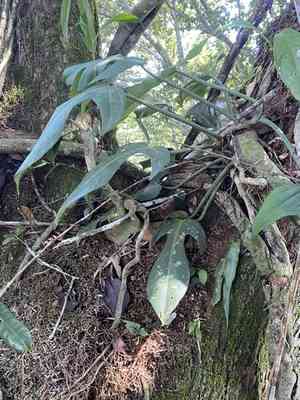
Wolf's head philodendron (Philodendron panduriforme)
Also known as: Fiddle-leaf philodendron, Fiddle-leaf climber
Philodendron hederaceum, also known as Heartleaf Philodendron, is a vigorous climber originating from South America. Its distinctively shaped leaves make it a popular choice for ornamental gardens. This fast-growing plant is among the most resilient in the Philodendron genus.
In This Article
Attributes of Wolf's head philodendron
Lifespan
Perennial
Plant Type
Herb, Vine
Plant Height
61 cm
Spread
30 cm to 45 cm
Leaf Color
Green
Flower Size
Flowers are not a prominent feature and are typically small
Flower Color
Greenish-white
Images of Wolf's head philodendron
Quickly Identify Wolf's head philodendron
1
Look for the distinctive fiddle-shaped leaves and climbing stems. The leaves are glossy, dark green, and deeply lobed. It has aerial roots that help it cling to supports.
Scientific Classification of Wolf's head philodendron
Phylum
Vascular plants
Class
Monocotyledons
Order
Water plantains and allies
Family
Arum
Genus
Philodendrons
Species
Wolf's head philodendron
Planting and Growing of Wolf's head philodendron
Care Difficulty
Moderate
Watering Schedule
Every 3 days
Sunlight Requirements
Partial sun
Sunshine Duration
6-10 hours
Ideal Temperature
65-80℉
Soil Type
Potting Mix, Peat Mix
Soil pH
6.5-7.5
Fertilizer Type
Balanced
Pruning Season
Spring, Summer
Pruning Area
Branches, Leaves
Pruning Frequency
2 times a year
Repotting Season
Spring
Pot Type
Plastic, Ceramic
 How to Water Wolf's head philodendron?
For Philodendron panduriforme, you should aim to water it until the soil is thoroughly moist but not waterlogged. Typically, around 200 ml of water per watering session is sufficient. It's crucial to ensure that excess water drains out completely to prevent root rot. The goal is to maintain consistently moist but not soggy soil.
What are the symptoms of an underwatered Wolf's head philodendron?
›
What should I do if my Wolf's head philodendron is not getting enough water?
›
What are the symptoms of an overwatered Wolf's head philodendron?
›
How to save an overwatered Wolf's head philodendron?
›
 What Are the Sunlight Requirements for Wolf's head philodendron?
Partial sun to full shade is ideal, allowing Philodendron panduriforme to photosynthesize effectively without risk of sunburn. This light range supports lush growth and helps maintain the plant's aesthetic appeal.
Question: What is the ideal lighting for Philodendron panduriforme?
›
Solution: How can I achieve the ideal lighting?
›
Benefit: What benefits will the plant have in ideal lighting?
›
 What Is the Ideal Temperature Range for Wolf's head philodendron?
The ideal temperature range for Philodendron panduriforme is between 65°F and 80°F. This range is perfect for ensuring optimal growth, as these temperatures mimic the tropical climate conditions that this plant originally thrives in. Maintaining this temperature range helps the plant's metabolic processes function efficiently, leading to healthy growth and vibrant foliage.
 What Soil is Best for Wolf's head philodendron?
Philodendron panduriforme thrives in soil that offers excellent drainage. This plant is particularly sensitive to waterlogged conditions, so well-draining soil helps prevent root rot and allows for healthy root growth by ensuring water passes through efficiently. The plant benefits from a nutrient-rich soil, which provides the essential minerals and nutrients needed for vibrant foliage and robust growth. A balanced mixture with organic matter supports its overall health and promotes lush, green leaves. While Philodendron panduriforme needs good drainage, it also appreciates soil that retains some moisture without becoming soggy. This balance helps the plant maintain consistent hydration, which is vital for maintaining leaf turgor and vibrancy.
 How to Fertilize Wolf's head philodendron?
For Philodendron panduriforme, applying too much fertilizer can lead to burnt roots, while too little results in poor growth. Typically, use a balanced liquid fertilizer like a 20-20-20 at half strength. During the growing season, apply this at the recommended frequency to maintain optimal health.
 How to Prune Wolf's head philodendron?
Begin by identifying any dead or yellowing leaves as these should be the first to be removed. Next, look for any stems that are too long or detracting from the plant’s overall shape. Use clean, sharp scissors or pruning shears to make cuts just above a leaf node to encourage new growth in a desired direction. Always step back periodically to assess the plant's overall appearance to ensure it remains balanced. After the basic pruning, take a moment to clean up the base of the plant by removing any fallen debris or brown leaves that tend to collect over time. This not only helps in maintaining aesthetics but also prevents any unwanted pests or diseases from taking hold.
 How to Propagate Wolf's head philodendron plant?
1
Choose a healthy stem from the parent plant that has at least two nodes. This ensures that the cutting has enough nutrients stored and potential growth points to successfully develop roots.
2
Use sterilized pruning shears to make a clean cut just below a node. Ensure the cutting is around 4-6 inches long to balance sufficient resource availability with manageability.
3
Dip the cut end in rooting hormone and plant it in a well-draining potting mix. This conditions help reduce moisture stress and encourage root growth by avoiding waterlogging.
 How to Repot Wolf's head philodendron plant?
1
Philodendron panduriforme needs repotting when roots start circling inside the pot or growing through drainage holes. Another signal is when the plant appears stunted despite adequate care. Repotting during its active growth period, in spring or summer, ensures the plant can recover swiftly and continue growing.
2
Select a pot 1-2 inches larger in diameter than the current one to provide extra root space without overwhelming the plant. A good pot has drainage holes to prevent waterlogging, which can lead to root rot. A slightly heavier pot can offer stability for taller philodendrons prone to toppling.
3
Use a well-draining soil rich in organic matter to ensure moisture retention without waterlogging. A mix of equal parts potting soil, orchid bark, and perlite is beneficial. This combination provides ample aeration for roots, preventing compactness and promoting healthy growth.
Toxicity
Ingestion or contact with sap
WARNING
The judgment on toxicity and danger is for reference only. We DO NOT GUARANTEE any accuracy of such judgment. Therefore, you SHALL NOT rely on such judgment. It is IMPORTANT TO SEEK PROFESSIONAL ADVICE in advance when necessary.



