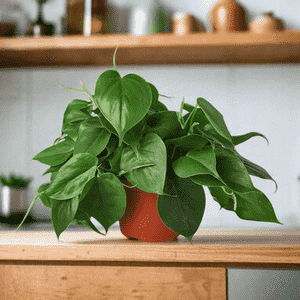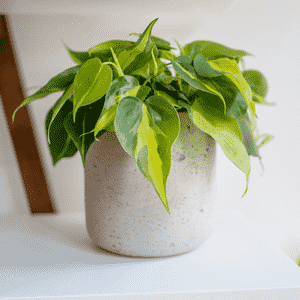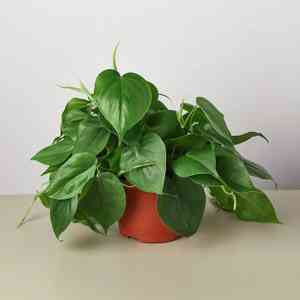
Heart-leaf philodendron(Philodendron cordatum)

Heart-leaf philodendron (Philodendron cordatum)

Also known as: Heartleaf Philodendron, Sweetheart Plant

### Benefits:
1. **Air Quality Improvement:** Effective at filtering out harmful toxins such as formaldehyde.
2. **Low Maintenance:** Great for those new to plant care due to its hardy nature.
3. **Decorative:** Heart-shaped foliage and trailing vines enhance interior spaces.
4. **Versatile Growth:** Can adapt to various lighting environments.

### Care Tips:
1. **Lighting:** Thrives in bright, indirect light but also manages well in low light.
2. **Watering:** Allow the top inch of soil to dry before watering again; avoid excess moisture to prevent root rot.
3. **Humidity:** Prefers moderate to high humidity; occasional misting is beneficial.
4. **Soil:** Opt for a well-draining potting mix.
5. **Feeding:** Apply a balanced liquid fertilizer monthly during the growing season.
6. **Pruning:** Regularly trim to control legginess and encourage fullness.
7. **Pest Control:** Keep an eye out for pests like spider mites and aphids, and address any infestations promptly.

### Additional Note:
In its natural environment, the heart-leaf philodendron can grow as an epiphyte, meaning it attaches itself to other plants without causing them harm.

Attributes of Heart-leaf philodendron

Lifespan
Perennial
Plant Type
Herb, Vine
Plant Height
3 m
Spread
50 cm
Leaf Color
Green Purple
Flower Size
N/A
Flower Color
N/A

ForwardPlant - Identify plants with a snap

Identify and diagnose plants, get toxicity alerts, and explore safety guides for all types of fungi.

Try for Free

Images of Heart-leaf philodendron

Heart-leaf philodendron(Philodendron cordatum)

Quickly Identify Heart-leaf philodendron

1
Look for heart-shaped, glossy green leaves and trailing or climbing vines. It often has aerial roots along the stem.

Scientific Classification of Heart-leaf philodendron

Phylum
Vascular plants
Class
Monocotyledons
Order
Alismatales
Family
Arum
Genus
Philodendrons
Species
Heart-leaf philodendron

Planting and Growing of Heart-leaf philodendron

Care Difficulty
Easy
Watering Schedule
Every 4 days
Sunlight Requirements
Partial sun
Sunshine Duration
6-10 hours
Ideal Temperature
65-80℉
Soil Type
Potting Mix, Peat Mix
Soil pH
6.5-7.5
Fertilizer Type
Balanced
Pruning Season
Spring, Summer
Pruning Area
Branches, Leaves
Pruning Frequency
2 times a year
Repotting Season
Spring
Pot Type
Plastic, Ceramic

water icon How to Water Heart-leaf philodendron?

The ideal watering amount for Philodendron cordatum is about 250ml per session. Ensure the top inch of soil is dry before watering, and water thoroughly until you see excess draining from the pot's bottom. It's crucial not to let the plant sit in water as this can lead to root rot.
What are the symptoms of an underwatered Heart-leaf philodendron?
What should I do if my Heart-leaf philodendron is not getting enough water?
What are the symptoms of an overwatered Heart-leaf philodendron?
How to save an overwatered Heart-leaf philodendron?

sunlight icon What Are the Sunlight Requirements for Heart-leaf philodendron?

Sunlight Requirements: Partial sun
Duration of light: 2 to 4 hours
The ideal light range for Philodendron cordatum is partial sun, receiving bright, indirect light throughout the day. This light range promotes healthy photosynthesis, encouraging vibrant foliage and robust growth, while preventing leaf burn and ensuring a visually appealing plant.
What is the ideal light requirement for Philodendron cordatum?
How can I ensure my plant gets the best light?
What benefits does ideal lighting provide to Philodendron cordatum?

temperature icon What Is the Ideal Temperature Range for Heart-leaf philodendron?

Ideal Temperature: 65 ~ 80℉
For optimal growth, the Philodendron cordatum should be kept in temperatures ranging from 65°F to 80°F. This range provides the tropical warmth that the plant naturally thrives in, ensuring vigorous growth and healthy foliage.

soil icon What Soil is Best for Heart-leaf philodendron?

Soil type: Loam, Sandy loam
Soil PH: 6.5 ~ 7.5
Philodendron cordatum thrives in well-drained soil, ensuring that water does not stagnate around the roots. This prevents root rot, which is a common issue in dense, poorly drained soils, ultimately promoting robust growth and vibrant foliage. This plant prefers moderately fertile soils, which provide the necessary nutrients without over-fertilizing. This balance supports steady growth without leading to leggy or weak stems, ensuring a lush, healthy appearance. While the soil must drain well, it should also retain some moisture to keep the roots hydrated between watering. This acts as a continuous supply of water to the plant, reducing the frequency of watering and preventing stress during dry periods.

fertilize icon How to Fertilize Heart-leaf philodendron?

Fertilizer type: Balanced
For Philodendron cordatum, use a balanced liquid fertilizer diluted to half strength. Apply approximately 1 tablespoon per gallon of water to avoid nutrient burn. Always ensure the soil is moist before applying fertilizer to prevent root damage.

prune icon How to Prune Heart-leaf philodendron?

Pruning Time: Spring, Summer
Begin by examining your plant for any yellowing, damaged, or dead leaves. Trim these off at the base to allow the plant to redirect energy to healthier growth and improve overall appearance. Cut back overly long or stray stems that disrupt the shape of the plant. Make your cut just above a leaf node to encourage branching and a bushier growth habit from that point onward. To promote lush growth, also consider pinching back the tips of new growth. This technique encourages the plant to develop side shoots, resulting in a fuller, more abundant foliage.

propagate icon How to Propagate Heart-leaf philodendron plant?

Propagate Time: Spring, Early summer
1
Choose a healthy stem with several nodes from the parent plant. This ensures that the cutting has sufficient energy and potential for successful propagation. Avoid stems with signs of disease or pest damage.
2
Using sanitized pruning shears, make a clean cut below a node. The cutting should be approximately 4-6 inches long. This allows for sufficient area for root growth while maintaining the health of the parent plant.
3
Dip the cut end of the stem in rooting hormone and plant it in a pot with well-draining soil. Ensure that a couple of nodes are buried to encourage root formation. Water lightly and keep in a warm, bright location but out of direct sunlight.

repot icon How to Repot Heart-leaf philodendron plant?

Repotting frequency: Every 1-2 years
1
Philodendron cordatum should be repotted when you notice roots emerging from the drainage holes, indicating the plant has outgrown its current home. Additionally, if the soil dries out too quickly after watering, it might be time to repot. Early growing seasons like spring and summer are ideal for giving your plant the best chance to thrive in its new pot.
2
Select a pot that is only one size larger than the current one. A pot that is too large can lead to overwatering problems as the excess soil retains moisture. Look for a pot with good drainage holes to prevent waterlogging. A well-chosen pot gives roots room to expand without risking root rot.
3
For Philodendron cordatum, choose a well-draining potting mix. A mixture containing peat moss, perlite, and orchid bark works wonders as it mimics the plant's natural habitat, promoting healthy root growth and facilitating aeration. This type of soil helps prevent root rot while retaining adequate moisture for plant health.

ForwardPlant - Identify plants with a snap

Find the best spots for them to optimize their health, simply using your phone.

Try for Free

Toxicity

Ingestion, Contact with sap

Identify toxic plants for your safety

Learn which plants are harmful to you and your pets, and make informed choices for a safer home!

Try for Free
WARNING
The judgment on toxicity and danger is for reference only. We DO NOT GUARANTEE any accuracy of such judgment. Therefore, you SHALL NOT rely on such judgment. It is IMPORTANT TO SEEK PROFESSIONAL ADVICE in advance when necessary.