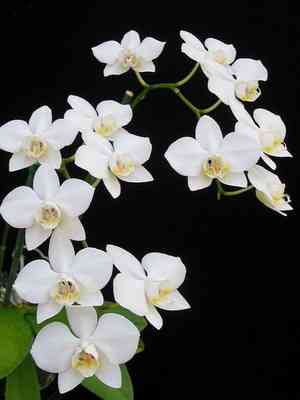
Aphrodite's phalaenopsis (Phalaenopsis aphrodite)
Also known as: Moth orchid
Aphrodite's Phalaenopsis, also known as Phalaenopsis aphrodite, hails from the regions of Taiwan and the Philippines. This orchid features shiny, evergreen leaves and striking white flowers with yellow or pink centers. Renowned for its beauty, it is relatively straightforward to cultivate with the right care.
In This Article
Attributes of Aphrodite's phalaenopsis
Lifespan
Perennial
Plant Type
Herb
Plant Height
10 cm to 60 cm
Spread
5 cm to 8 cm
Leaf Color
Green
Flower Size
4 cm to 7 cm
Flower Color
White Yellow Pink Purple Blue
Images of Aphrodite's phalaenopsis


Quickly Identify Aphrodite's phalaenopsis
1
Identifying Phalaenopsis aphrodite can be done by looking for its characteristic white flowers with yellow centers and possibly a hint of pink. The leaves are thick, leathery, and dark green, while the flower stems are long and arch gracefully.
Scientific Classification of Aphrodite's phalaenopsis
Phylum
Vascular plants
Class
Monocotyledons
Order
Asparagus and allies
Family
Orchid
Genus
Moth orchids
Species
Aphrodite's phalaenopsis
Planting and Growing of Aphrodite's phalaenopsis
Care Difficulty
Easy
Watering Schedule
Every 2 days
Sunlight Requirements
Partial sun
Sunshine Duration
6-8 hours
Ideal Temperature
64-78℉
Soil Type
Potting Mix, Peat Mix
Soil pH
6.5-7.5
Fertilizer Type
Balanced
Pruning Season
Spring, Summer
Pruning Area
Branches, Leaves
Pruning Frequency
2 times a year
Repotting Season
Spring
Pot Type
Plastic, Ceramic
 How to Water Aphrodite's phalaenopsis?
When watering Phalaenopsis aphrodite, you should strive for a balance where the moisture is consistent yet not excessive. The general rule of thumb is to water until about 100 ml has been absorbed by the potting medium, ensuring that the roots are sufficiently moistened without being waterlogged. The idea is to keep the potting medium moist but not soggy, which mimics their natural habitat of humid rainforests.
More About Watering Techniques→
What are the symptoms of an underwatered Aphrodite's phalaenopsis?
›
What should I do if my Aphrodite's phalaenopsis is not getting enough water?
›
What are the symptoms of an overwatered Aphrodite's phalaenopsis?
›
How to save an overwatered Aphrodite's phalaenopsis?
›
 What Are the Sunlight Requirements for Aphrodite's phalaenopsis?
Phalaenopsis aphrodite thrives in partial sunlight. This light range supports healthy leaf color and bloom production, mimicking the filtered light conditions of its natural forest understorey habitat.
More About Sunlight Requirements Techniques→
How much light does Phalaenopsis aphrodite need?
›
What if my Phalaenopsis aphrodite gets too little light?
›
How will ideal lighting benefit Phalaenopsis aphrodite?
›
 What Is the Ideal Temperature Range for Aphrodite's phalaenopsis?
The ideal temperature range for Phalaenopsis aphrodite is between 64°F and 78°F. These temperatures mimic the orchid's natural tropical environment and promote healthy growth and blooming. Maintaining this range ensures that the plant can perform photosynthesis efficiently and supports optimal root and leaf development.
 What Soil is Best for Aphrodite's phalaenopsis?
Phalaenopsis aphrodite thrives in well-drained soil to prevent root rot. This type of soil allows water to flow through, preventing waterlogging while ensuring that roots receive adequate oxygen. A soil blend that retains moisture yet drains effectively is ideal. This balance ensures that the plant remains hydrated without the risk of overwatering, promoting vigorous growth and flowering. Incorporating organic matter into the soil enriches it with nutrients, supporting a healthy root system and overall vigor. It improves soil structure and provides a steady release of essential nutrients.
More About Soil→
 How to Fertilize Aphrodite's phalaenopsis?
For Phalaenopsis aphrodite, it's crucial to follow manufacturer instructions, typically using half the recommended strength to avoid over-fertilization. Ensure that fertilizer is well-diluted in water to prevent any possible damage to the plant's roots.
More About Fertilizing Techniques→
 How to Prune Aphrodite's phalaenopsis?
Begin by inspecting the orchid for any damaged or dead flower spikes, leaves, or roots. Use sterilized scissors or pruning shears to carefully trim these parts. Focus on cutting just above a node on the flower spike, as this can encourage the growth of new flowers. Regular removal of yellow or dead leaves is crucial to prevent disease. After pruning, consider applying a small amount of fungicide to the cut areas to prevent infections. Once you've completed the pruning, ensure that the Phalaenopsis aphrodite is returned to its ideal growing conditions. Provide sufficient light, maintain warm temperatures, and ensure the orchid is not exposed to drafts. Water the orchid moderately, allowing the media to dry between watering. Fertilize it lightly during the growing season to support recovery and new growth.
More About Pruning Techniques→
 How to Propagate Aphrodite's phalaenopsis plant?
1
Harvest mature seed pods from Phalaenopsis aphrodite carefully to avoid damaging the seeds inside. Sterilization is necessary to eliminate pathogens; this can be done using a diluted bleach solution followed by rinsing with sterile water.
2
Prepare the growth medium according to the propagation method. For seed propagation, ensure the medium is well-balanced with nutrients. In tissue culture, the medium should include growth regulators like cytokinins to encourage cell division.
3
In a sterile environment, sow the seeds on the prepared medium or place tissue samples if using tissue culture. Ensure that the containers are sealed properly to maintain sterility. Provide adequate light and maintain consistent temperature and humidity levels.
 How to Repot Aphrodite's phalaenopsis plant?
1
Repot your Phalaenopsis aphrodite when you notice that the roots are tightly packed and growing out of the pot, or when the potting medium has broken down and is no longer providing proper drainage. Another indication that it's time to repot is when the plant stops flowering or is struggling health-wise. Ideally, repot during active growth phases in spring or summer, avoiding periods when the plant is in full bloom.
2
Choose a pot that is slightly larger than the current one, with adequate drainage holes to prevent water accumulation at the base, which can lead to root rot. The size should allow just enough space for root growth while not being excessive, as orchids prefer snug conditions. Clear pots can be advantageous as they allow light to reach the roots, promoting healthier development.
3
Opt for a coarse, bark-based orchid mix that ensures good aeration and drainage. This type of medium is ideal because it mimics the plant's natural epiphytic environment where roots are used to clinging to trees with ample airflow. Such a mix minimizes the risk of root rot and provides the necessary support for the orchid to grow robustly.



