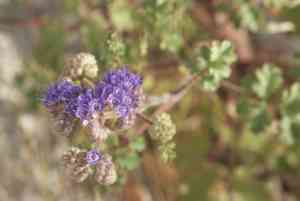
Pedicellate phacelia (Phacelia pedicellata)
Also known as: Stalked-Flower Phacelia
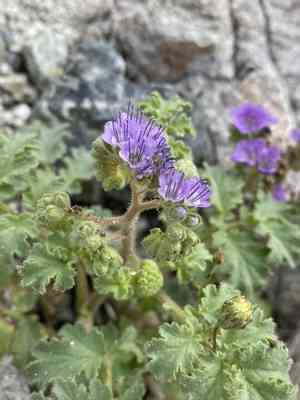
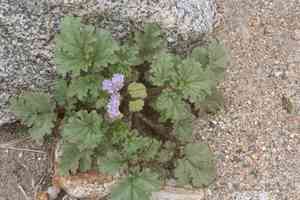
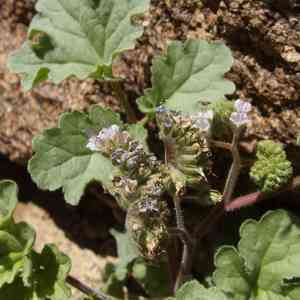
The leaves can reach a length of 12 centimeters and have rounded or oval shapes, with the largest ones split into 3 to 7 sections. The inflorescence, which is hairy and glandular, forms a one-sided, curving or coiling cyme of bell-shaped blooms. Each flower measures about half a centimeter and can range in color from pink to blue.
In This Article
Attributes of Pedicellate phacelia
Lifespan
Annual
Plant Type
Herb
Plant Height
15-60 cm
Spread
30-60 cm
Leaf Color
Green
Flower Size
1-2 cm
Flower Color
Blue to purple
Images of Pedicellate phacelia
Quickly Identify Pedicellate phacelia
1
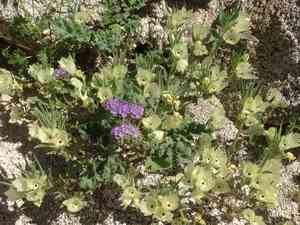
Identifying Phacelia pedicellata involves looking for its distinct bright blue to purple flowers, which have five lobes and may appear almost stalkless. The leaves are usually lobed or divided, and the plant tends to form a low, spreading clump.
Scientific Classification of Pedicellate phacelia
Phylum
Vascular plants
Class
Dicotyledons
Order
Boraginales
Family
Waterleaf
Genus
Heliotrope
Species
Pedicellate phacelia
Planting and Growing of Pedicellate phacelia
Care Difficulty
Easy
Watering Schedule
Every 3 days
Sunlight Requirements
Full sun
Sunshine Duration
4-6 hours
Ideal Temperature
68-77℉
Soil Type
Potting Mix, Peat Mix
Soil pH
6.5-7.5
Fertilizer Type
Balanced
Pruning Season
Spring, Summer
Pruning Area
Branches, Leaves
Pruning Frequency
2 times a year
Repotting Season
Spring
Pot Type
Plastic, Ceramic
 How to Water Pedicellate phacelia?
The watering amount for Phacelia pedicellata should be enough to moisten the soil thoroughly, but not so much that it becomes waterlogged. A general guideline is approximately 200 ml per watering session. Make sure water reaches the root zone to ensure optimal growth without pooling water at the base.
What are the symptoms of an underwatered Pedicellate phacelia?
›
What should I do if my Pedicellate phacelia is not getting enough water?
›
What are the symptoms of an overwatered Pedicellate phacelia?
›
How to save an overwatered Pedicellate phacelia?
›
 What Are the Sunlight Requirements for Pedicellate phacelia?
Phacelia pedicellata prefers full sunlight conditions ranging between six to eight hours daily. Adequate sunlight ensures robust growth and abundant flowering, enhancing its aesthetic appeal and health.
How much light does it need?
›
How to achieve ideal lighting?
›
Benefits of ideal lighting
›
 What Is the Ideal Temperature Range for Pedicellate phacelia?
For optimal growth of Phacelia pedicellata, the ideal temperature range is between 68 and 77 degrees Fahrenheit. This range supports robust growth, maximizes photosynthesis, and ensures the plant's metabolic functions operate efficiently. Keeping the ambient temperature within this range facilitates better flowering and overall vigor.
 What Soil is Best for Pedicellate phacelia?
Phacelia pedicellata thrives in well-drained soil, which prevents waterlogging that could lead to root rot. Ensuring good drainage mimics its natural habitat, offering the plant optimal growth conditions. This plant favors soils rich in organic matter, providing essential nutrients that boost its growth and flowering potential. Incorporating compost can significantly enhance soil fertility. Maintaining moderate soil moisture is key for Phacelia pedicellata, helping it absorb nutrients effectively without the risk of dehydration or oversaturation.
 How to Fertilize Pedicellate phacelia?
For Phacelia pedicellata, apply liquid fertilizer with a concentration of 1/2 strength to avoid overwhelming the plant. Use approximately 500 ml of diluted fertilizer per plant to provide essential nutrients without excess.
 How to Prune Pedicellate phacelia?
Begin by examining the plant's overall structure to identify any crossed or tangled branches. Clear out areas that may limit airflow or sunlight penetration to inner parts of the plant. Carefully trim away any dead or diseased branches to prevent further damage and encourage healthy growth. Ensure you cut back to a point just above healthy stems. Trim to shape the plant aesthetically while considering its natural growth habit. Avoid excessive removal at once; instead, aim for balance and symmetry.
More About Pruning Techniques→
 How to Propagate Pedicellate phacelia plant?
1
Start by filling the seed tray with a high-quality potting mix, ensuring it is evenly spread and lightly compressed. This provides a stable base for the seeds and encourages root penetration into the soil.
2
Sprinkle the Phacelia pedicellata seeds evenly across the surface of the prepared tray, then lightly cover them with a thin layer of potting mix. Ensure the seeds are not buried too deep so they can effectively germinate with adequate light exposure.
3
Gently water the seeded tray using a spray bottle to avoid displacing the seeds. Maintain consistent humidity and moisture by covering the tray with a clear lid or plastic wrap until germination occurs and seedlings are visible.
 How to Repot Pedicellate phacelia plant?
1
Look for signs like roots coming out of drainage holes, slowed growth, or soil that dries out too quickly. These indicate it's time to repot your Phacelia pedicellata, typically during its active growth period in spring or summer.
2
Choose a pot that is one size larger than its current pot. This provides enough room for root growth and soil to support the plant's nutrient needs, facilitating healthy development without overwhelming the plant.
3
Opt for a sandy, well-draining soil mix. This mimics the plant's natural habitat, ensuring good air circulation and preventing waterlogged conditions that could lead to root rot.
Learn More About Pedicellate phacelia Diseases
Anthracnose
Bacterial Leaf Spot
Bacterial Soft Rot
Bacterial Wilt
Damping-off
Downy Mildew
Drought Stress
Fusarium Wilt
Gray Mold
Leaf Spot
Mosaic
Nutrient Deficiency
Nutrient Toxicity
Powdery Mildew
Root Rot
Root-knot Nematode
Rusts
Sooty Mold
Spider Mites
Temperature Stress
Thrips Damage
White Mold
Chemical Injury



