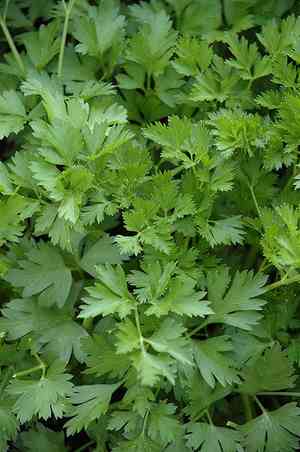
Parsley (Petroselinum crispum)
Also known as: Curly leaf parsley, Flat leaf parsley
Dill (Anethum graveolens) is a widely cherished herb in the culinary traditions of the USA, Europe, and the Middle East. Known for its unique flavor, dill enhances sauces, soups, and stews, and is often used fresh in salads and pickling. In the garden, dill is not just a culinary delight but also a magnet for beneficial insects like ladybugs and bees, and its seeds attract various birds.
Attributes of Parsley
Images of Parsley
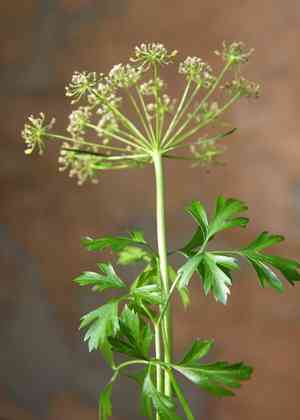
Quickly Identify Parsley
Scientific Classification of Parsley
Planting and Growing of Parsley
 How to Water Parsley?
 What Are the Sunlight Requirements for Parsley?
 What Is the Ideal Temperature Range for Parsley?
 What Soil is Best for Parsley?
 How to Fertilize Parsley?
 How to Prune Parsley?
 How to Propagate Parsley plant?
 How to Repot Parsley plant?
Toxicity of Parsley
Is Parsley toxic to cat?
Parsley (Petroselinum crispum), a widely used culinary garnish, is not safe for your cat, as it is moderately toxic to felines. While a small nibble of a parsley leaf is generally safe, consuming more significant quantities can lead to photosensitization (an increased susceptibility to sunlight), which may result in sunburn, dermatitis, and potentially eye injury. In severe instances, strong burns and blisters could occur.
Is Parsley toxic to dog?
Parsley poses a mild toxicity risk to dogs. The leaves and stems can induce negative reactions, but the seeds are often the most hazardous part. Upon ingestion, the toxins may result in heightened photosensitivity, potentially resulting in sunburn, a reluctance to be outdoors, and even temporary vision impairment. Notably, some of these symptoms can arise from mere contact rather than ingestion. Fortunately, serious effects typically occur only when parsley is consumed in excessive amounts.



