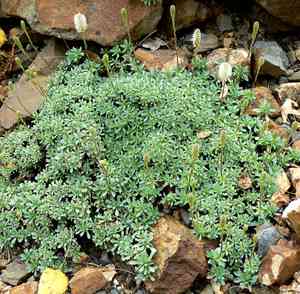
Rock spiraeas (Petrophytum)(Petrophytum)

Rock spiraeas (Petrophytum) (Petrophytum)

Also known as: Rock Spirea, Stonecrop Spirea

Rock spiraeas, part of the Stephanandra genus, are deciduous shrubs known for their attractive, finely-textured foliage and graceful, arching branches. These hardy plants typically feature small, serrated leaves that display stunning fall colors, ranging from yellow to deep red. During late spring to early summer, they produce subtle clusters of tiny white or pale green flowers.

In gardening, rock spiraeas are appreciated for their adaptability and resilience. They are particularly useful as ground cover, in rock gardens, or for stabilizing slopes due to their dense, spreading growth habit. Their lush foliage creates a beautiful backdrop in mixed borders, and they thrive in well-drained soil with partial shade. Additionally, their ability to attract butterflies makes them a delightful addition to wildlife-friendly gardens.

Attributes of Rock spiraeas (Petrophytum)

Lifespan
Perennial
Plant Height
Up to 15 cm
Spread
Up to 30 cm
Leaf Color
Green, sometimes with a reddish tinge
Flower Size
Up to 5 mm per flower
Flower Color
White

ForwardPlant - Identify plants with a snap

Identify and diagnose plants, get toxicity alerts, and explore safety guides for all types of fungi.

Try for Free

Images of Rock spiraeas (Petrophytum)

Rock spiraeas (Petrophytum)(Petrophytum)

Quickly Identify Rock spiraeas (Petrophytum)

1
Petrophytum can be identified by its dense mats of small, succulent leaves and its white, fluffy flower clusters that appear in late summer. The leaves are typically smooth and fleshy, and the flowers are small and densely packed.

Scientific Classification of Rock spiraeas (Petrophytum)

Phylum
Magnoliophyta
Class
Magnoliopsida
Order
Rosales
Family
Rosaceae
Genus
Petrophytum

Planting and Growing of Rock spiraeas (Petrophytum)

Care Difficulty
Hard
Watering Schedule
Every 2 days
Sunlight Requirements
Full sun
Sunshine Duration
6-10 hours
Ideal Temperature
60-75℉
Soil Type
Potting Mix, Peat Mix
Soil pH
6.5-7.5
Fertilizer Type
Balanced
Pruning Season
Spring, Summer
Pruning Area
Branches, Leaves
Pruning Frequency
2 times a year
Repotting Season
Spring
Pot Type
Plastic, Ceramic

water icon How to Water Rock spiraeas (Petrophytum)?

Petrophytum prefers moderate watering. Ensure the soil is thoroughly moist but not waterlogged, using around 250ml per session. The plant thrives when the soil can dry out moderately between waterings.
What are the symptoms of an underwatered Rock spiraeas (Petrophytum)? ›
What should I do if my Rock spiraeas (Petrophytum) is not getting enough water? ›
What are the symptoms of an overwatered Rock spiraeas (Petrophytum)? ›
How to save an overwatered Rock spiraeas (Petrophytum)? ›

sunlight icon What Are the Sunlight Requirements for Rock spiraeas (Petrophytum)?

Sunlight Requirements: Full sun, Partial sun
Duration of light: 6 to 8 hours
Petrophytum ideally thrives in full to partial sun conditions. Maintaining this light range supports optimal photosynthesis, enhancing plant health, stronger growth, and vibrant flowering.
Ideal Sunlight Duration ›
Ensuring Ideal Lighting ›
Benefits of Ideal Lighting ›

temperature icon What Is the Ideal Temperature Range for Rock spiraeas (Petrophytum)?

Ideal Temperature: 60 ~ 75℉
The ideal temperature range for Petrophytum growth is between 60°F and 75°F. This range ensures that the plant gets the optimal conditions to thrive, promoting healthy growth and robust blooming.

soil icon What Soil is Best for Rock spiraeas (Petrophytum)?

Soil type: Sandy soil, Loam, Calcareous soil
Soil PH: 6.5 ~ 7.5
Petrophytum prefers well-drained soil to prevent root rot. Utilizing well-drained soil ensures that water does not accumulate around the roots, enhancing plant health by providing adequate aeration and reducing the risk of fungal infections. Although Petrophytum can tolerate poor soils, it thrives in nutrient-rich substrates. Providing the plant with essential nutrients encourages vigorous growth and a more robust flowering process, resulting in a more aesthetically pleasing plant. Petrophytum requires soil that retains moisture moderately without becoming waterlogged. This balance helps maintain consistent hydration levels, promoting steady growth and reducing the risk of drought stress.

fertilize icon How to Fertilize Rock spiraeas (Petrophytum)?

Fertilizer type: Balanced
For Petrophytum, moderate fertilization is key. Use a balanced 10-10-10 liquid fertilizer diluted to half strength. Apply approximately 1/2 teaspoon per quart of water. Avoid over-fertilizing as it can lead to salt build-up in the soil, affecting plant health.

prune icon How to Prune Rock spiraeas (Petrophytum)?

Pruning Time: Spring, Summer
Carefully inspect the Petrophytum and identify any dead, damaged, or diseased branches. These are often brown, brittle, and will snap easily. Removing them enhances the plant's overall health. Trim back one-third of the plant's length to encourage bushier growth. Make sure to cut just above a node or bud to direct new growth outward rather than inward. Shape the Petrophytum to your preference, focusing on achieving a balanced form. Remove stray branches that disrupt the symmetry of the plant's natural shape. After pruning, clear away all trimmings and debris. This practice helps prevent the spread of fungi and unwanted pests, keeping your plant environment tidy and healthy.

propagate icon How to Propagate Rock spiraeas (Petrophytum) plant?

Propagate Time: Spring, Early summer
1
Begin by collecting seeds from mature Petrophytum plants or making cuttings from healthy stems. Ensure the seeds are dry and the cuttings have a couple of nodes for optimal growth.
2
Use a well-draining potting mix suitable for Petrophytum. A mix of peat and perlite or sand can work well. Fill the seed trays or pots and lightly moisten the medium before planting.
3
Place the seeds on the surface of the soil and cover lightly, or plant cuttings deep enough to support themselves. Maintain a temperature around 20°C (68°F) and ensure indirect sunlight is available, watering gently as needed.

repot icon How to Repot Rock spiraeas (Petrophytum) plant?

Repotting frequency: Every 2-3 years
1
Petrophytum should be repotted when its roots start to encircle the pot or visibly emerge from the drainage holes. Additionally, if water is sitting on top of the soil and not penetrating, it's time for a change. Choose nights when temperatures are mild for the best results as these plants dislike extremes during transitions.
2
Select a pot that is just one size larger than the current one; this prevents excessive soil moisture which can lead to root rot. Ensure it has ample drainage holes. Terracotta pots are ideal as they provide better breathability to the roots and aid in preventing excess moisture retention, creating a perfect environment for Petrophytum to thrive.
3
A well-draining sandy soil is key for Petrophytum. Ideally, the mix should have roughly equal parts of coarse sand, perlite, and standard potting soil. This combination ensures that the roots are not waterlogged while providing enough nutrients and air circulation to support healthy growth.

ForwardPlant - Identify plants with a snap

Find the best spots for them to optimize their health, simply using your phone.

Try for Free