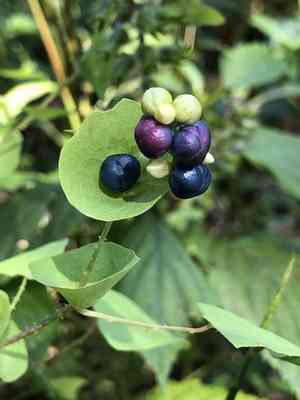
Mile-A-Minute (Persicaria perfoliata)
Also known as: Giant Climbing Tearthumb
Mile-A-Minute (Persicaria perfoliata) is a rapidly spreading annual vine originating from East Asia. Known for its invasive nature, it earns the nickname "mile-a-minute" vine due to its swift growth. Birds consume the berries and spread the seeds through their droppings, aiding in the vine's widespread dissemination.
In This Article
Attributes of Mile-A-Minute
Lifespan
Annual, Perennial
Plant Type
Herb
Plant Height
3 m to 3.5 m
Spread
6 m
Leaf Color
Green
Flower Size
2.5 cm
Flower Color
White Green
Images of Mile-A-Minute
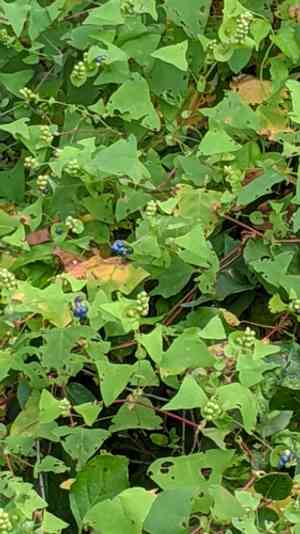
Quickly Identify Mile-A-Minute
1
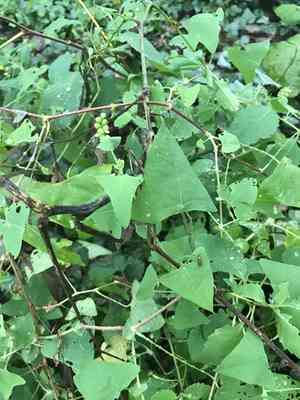
Vining annual extending up to 20 feet (6 meters) in one season.
2
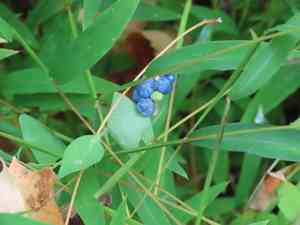
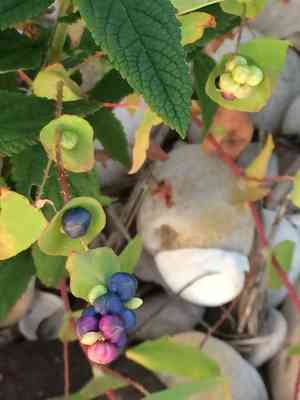
Fruit transitions from green to metallic blue with glossy, black seeds.
3
Triangular, lime green leaves with recurved prickles on undersurface.
4
Slender stem with pink to red color and downward-pointing prickles.
5
Small white flowers in spikes without petals, blooming in axils of upper leaves.
Scientific Classification of Mile-A-Minute
Phylum
Vascular plants
Class
Dicotyledons
Order
Caryophyllales
Family
Buckwheat
Genus
Persicaria
Species
Mile-A-Minute
Planting and Growing of Mile-A-Minute
Care Difficulty
Hard
Watering Schedule
Every 8 days
Sunlight Requirements
Partial sun
Sunshine Duration
6-10 hours
Ideal Temperature
68-77℉
Soil Type
Potting Mix, Peat Mix
Soil pH
6.5-7.5
Fertilizer Type
Balanced
Pruning Season
Spring, Summer
Pruning Area
Branches, Leaves
Pruning Frequency
2 times a year
Repotting Season
Spring
Pot Type
Plastic, Ceramic
 How to Water Mile-A-Minute?
For Persicaria perfoliata, it's essential to keep the soil consistently moist but not overly saturated. Watering it with 250 ml each time ensures that the soil receives adequate moisture without waterlogging. Make sure that the top inch of the soil feels dry before watering again, as this plant thrives best in moist but not wet conditions.
What are the symptoms of an underwatered Mile-A-Minute?
›
What should I do if my Mile-A-Minute is not getting enough water?
›
What are the symptoms of an overwatered Mile-A-Minute?
›
How to save an overwatered Mile-A-Minute?
›
 What Are the Sunlight Requirements for Mile-A-Minute?
Ensuring partial to full sun exposure supports photosynthesis and healthy growth, leading to a more vibrant Persicaria perfoliata.
What is the best lighting condition for Persicaria perfoliata?
›
How to ensure Persicaria perfoliata gets ideal lighting?
›
What benefits does ideal lighting provide to Persicaria perfoliata?
›
 What Is the Ideal Temperature Range for Mile-A-Minute?
The ideal temperature range for Persicaria perfoliata is between 68°F and 77°F. In this temperature window, the plant can flourish and show optimal growth. Conditions with stable temperatures in this range provide a suitable environment for photosynthesis and nutrient uptake.
 What Soil is Best for Mile-A-Minute?
Persicaria perfoliata thrives in well-drained soil conditions to prevent root rot. This is vital as it allows proper aeration and water management, ensuring the roots have optimal access to both oxygen and nutrients, which supports vigorous growth. The plant benefits from nutrient-rich soil, which provides essential minerals necessary for photosynthesis and overall growth. A balanced mix of organic matter can significantly enhance plant health and promote a robust foliage structure. Soil that retains moisture without becoming waterlogged is ideal. Persicaria perfoliata requires consistent moisture to sustain its growth cycle, particularly during dry periods, as this supports lush foliage and flowering.
 How to Fertilize Mile-A-Minute?
Persicaria perfoliata benefits from applying a balanced liquid fertilizer solution at quarter strength to prevent nutrient overdose. Typically, around 100 ml per application is adequate, depending on the plant size and health, ensuring the soil is able to drain well.
 How to Prune Mile-A-Minute?
Begin by using a pair of sharp garden shears or pruners to trim back the Persicaria perfoliata vines. Focus on cutting the plant back to about 6 inches from the soil level. Try to remove the most aggressive runners to control spreading. When cutting, angle your cuts to ensure water can drain off and not sit on the stems, which prevents rot. Collect and dispose of clippings properly to avoid re-rooting. For more intensive care, untangle the vines to more easily access the main stems, then cut them back to manageable lengths. Be sure to prune the ends of the vines that have started wrapping around nearby plants, structures, or even themselves. If possible, guide remaining growth in the desired direction to influence the climbing pattern and coverage of the plant.
 How to Propagate Mile-A-Minute plant?
1
Collect seeds from mature plants towards the end of the growing season. Ensure the seeds are fully ripe and dry them thoroughly to prevent mold during storage. Store them in a cool, dry place until planting.
2
Use sharp pruning shears to take a healthy, disease-free cutting from the plant. Cut just below a node and remove any leaves from the bottom half to prepare it for planting.
3
Sow seeds or plant cuttings into seed trays or pots filled with well-draining soil. Cover seeds lightly with soil and water gently. For cuttings, insert them into soil at least a few inches deep so they stand upright.
 How to Repot Mile-A-Minute plant?
1
Repotting should be considered when Persicaria perfoliata shows signs of being root-bound, such as roots emerging from drainage holes, stunted growth, or yellowing leaves. Ideally, repot during the growing seasons of spring or autumn to minimize stress on the plant.
2
Choose a pot that is only slightly larger than the current one, with good drainage holes to prevent waterlogging. A slightly larger pot helps prevent excess moisture buildup, while allowing enough room for the roots to expand naturally without overwhelming the plant's water requirements.
3
Opt for well-drained potting mix with good aeration properties to keep the roots healthy. The ideal soil will provide the plant with necessary nutrients while ensuring excess water drains away efficiently, thus preventing root rot and other water-related issues.


