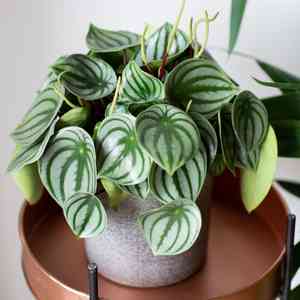
Watermelon peperomia (Peperomia argyreia)
Also known as: Watermelon pepper, Rugby football plant
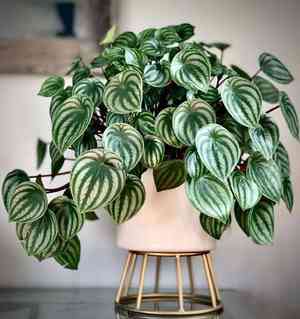
Watermelon Peperomia (Peperomia argyreia) is a favored houseplant, especially among beginners, due to its ease of care. Its distinctive leaves look like watermelon rind, which is how it got its common name. This tropical plant flourishes in indirect light and requires well-draining soil to thrive.
In This Article
Attributes of Watermelon peperomia
Lifespan
Perennial
Plant Type
Herb
Plant Height
20 cm
Spread
20 cm
Leaf Color
Green Silver Gray
Flower Size
2.5 cm
Flower Color
Green
Images of Watermelon peperomia
Quickly Identify Watermelon peperomia
1
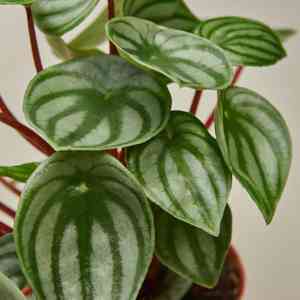
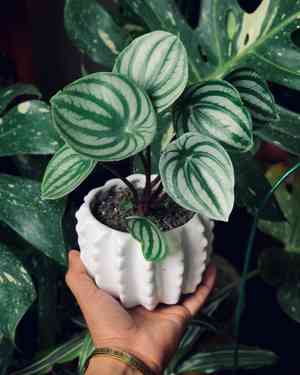
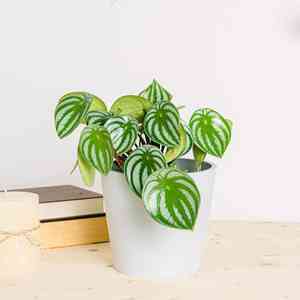
Peltate leaves with silver-gray color and dark stripes, resembling watermelon rind.
2
Red petioles and stems adding a distinctive hue to the plant.
3
White-cream flowers without perianths, on an erect spadix measuring 2-4 inches (5-10 cm).
4
Inconspicuous green berries on thin stalks, easily overlooked due to their small size.
5
Smooth, non-woody stem with dark red color, around 0.25 inches (0.6 cm) in diameter.
Scientific Classification of Watermelon peperomia
Phylum
Vascular plants
Class
Dicotyledons
Order
Pepper plants, birthworts, and allies
Family
Pepper
Genus
Radiator plants
Species
Watermelon peperomia
Planting and Growing of Watermelon peperomia
Care Difficulty
Easy
Watering Schedule
Every 2 days
Sunlight Requirements
Partial sun
Sunshine Duration
4-6 hours
Ideal Temperature
65-75℉
Soil Type
Potting Mix, Peat Mix
Soil pH
6.5-7.5
Fertilizer Type
Balanced
Pruning Season
Spring, Summer
Pruning Area
Branches, Leaves
Pruning Frequency
2 times a year
Repotting Season
Spring
Pot Type
Terracotta, Plastic
 How to Water Watermelon peperomia?
Peperomia argyreia prefers a moderate amount of water; about 100 ml per watering is ideal. This amount ensures the soil is evenly moist but not waterlogged. Check the top inch of soil to see if it’s dry, which indicates that it’s time to water again.
More About Watering Techniques→
What are the symptoms of an underwatered Watermelon peperomia?
›
What should I do if my Watermelon peperomia is not getting enough water?
›
What are the symptoms of an overwatered Watermelon peperomia?
›
How to save an overwatered Watermelon peperomia?
›
 What Are the Sunlight Requirements for Watermelon peperomia?
Peperomia argyreia prefers partial sun to full shade conditions. Ideal light supports optimal photosynthesis, enhancing its lush growth and maintaining vibrant leaf patterns.
More About Sunlight Requirements Techniques→
What is the best lighting for Peperomia argyreia?
›
How can you achieve its ideal lighting conditions?
›
What are the benefits of ideal lighting for Peperomia argyreia?
›
 What Is the Ideal Temperature Range for Watermelon peperomia?
The ideal temperature range for Peperomia argyreia, commonly known as the Watermelon Peperomia, is between 65°F and 75°F. This temperature range mimics the warm, tropical environment that’s native to this plant species. Maintaining this temperature range indoors allows the Peperomia to thrive, encouraging healthy growth and vibrant leaf color.
 What Soil is Best for Watermelon peperomia?
Peperomia argyreia thrives in well-draining soil to prevent root rot. Loamy soil, which balances moisture retention and drainage, is ideal. It ensures the roots have access to oxygen, promoting vigorous growth and healthy foliage. Peat soil rich in organic matter provides essential nutrients and retains moisture without becoming waterlogged. This enriches root growth and sustains the plant through its growing seasons, promoting lush leaf development. Sandy loam introduces air pockets in the soil, preventing compaction and encouraging root expansion. Adequate aeration ensures the roots develop without obstruction, crucial for a resilient plant structure.
More About Soil→
 How to Fertilize Watermelon peperomia?
For Peperomia argyreia, it is crucial to use a balanced fertilizer diluted to half strength. Over-fertilizing can harm the plant, so always err on the side of caution. Use a 10-10-10 liquid fertilizer, applying only a quarter tablespoon per gallon of water.
More About Fertilizing Techniques→
 How to Prune Watermelon peperomia?
Begin by identifying any yellowing, brown, or wilted leaves. These should be removed first to allow the plant to direct its energy to healthier parts. Cut the leaves close to the soil line for best results. Once dead leaves are removed, assess the shape of your Peperomia argyreia. Trim back any excessively long stems to encourage a bushier appearance. Make your cuts just above a node to support new growth and fuller foliage. To stimulate new growth, pinch off the tips of the stems. This action encourages the plant to grow additional branches, promoting a fuller and more lush look. Remember to perform this step during its active growing seasons.
More About Pruning Techniques→
 How to Propagate Watermelon peperomia plant?
1
Choose healthy stems with several leaves from the mother plant. Ensure that these stems are disease-free and ideally, they should measure about 5-7cm in length for optimal results.
2
Cut just below a leaf node using your sharpened tool, removing the lower leaves while retaining two or more leaves at the top. This helps the cutting to focus its energy on rooting rather than sustaining excess foliage.
3
Insert the cut end of the cutting into a container filled with pre-moistened potting soil. Ensure the soil covers the nodes where the leaves have been removed, as roots are likely to develop from these points.
 How to Repot Watermelon peperomia plant?
1
Peperomia argyreia needs repotting when roots protrude from the drainage holes or it shows stunted growth. This typically occurs every few years, and spring or early summer is ideal for repotting, allowing the plant to recover quickly in the growing season.
2
Select a pot that is slightly larger than the current one, with adequate drainage holes. A pot that's too big might lead to waterlogging. A snug pot size ensures a balance, allowing just enough room for root growth, which is critical for stable hydration and nutrient control, preventing root rot.
3
Choose a well-draining mix containing peat, perlite, and pine bark. This combination provides the necessary aeration and drainage, mimicking the plant's native environment and promoting healthy root development by preventing excessive moisture retention.



