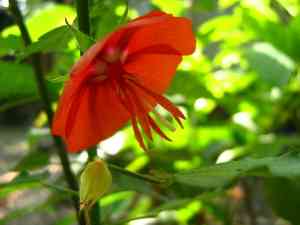
Flor impia (Pentapetes phoenicea)
Also known as: Midday Flower, Scarlet Mallow, Beneti, Noon Flower
**Red Salvia (Salvia coccinea)** is a hardy wildflower that is often featured in tropical gardens. Its striking red blossoms are well-adapted to low-water conditions, making it a resilient choice. This plant is particularly attractive to hummingbirds, butterflies, and bees, drawing them in with its vibrant flowers.
In This Article
Attributes of Flor impia
Lifespan
Annual, Perennial
Plant Type
Herb
Plant Height
1.2 m
Spread
N/A
Leaf Color
Green
Flower Size
2.5 cm to 5 cm
Flower Color
Red Orange
Images of Flor impia
Quickly Identify Flor impia
1
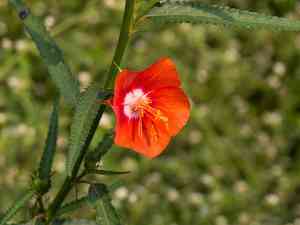
The plant can be identified by its bright red flowers that open around noon and close by evening. The leaves are narrow, ovate to lanceolate, with serrated edges. The stem is usually slender and slightly hairy.
Scientific Classification of Flor impia
Phylum
Vascular plants
Class
Dicotyledons
Order
Mallows, rock-roses, and allies
Family
Mallow
Genus
Noon Flower
Species
Flor impia
Planting and Growing of Flor impia
Care Difficulty
Easy
Watering Schedule
Every 3 days
Sunlight Requirements
Partial sun
Sunshine Duration
4-8 hours
Ideal Temperature
65-75℉
Soil Type
Potting Mix, Peat Mix
Soil pH
6.5-7.5
Fertilizer Type
Balanced
Pruning Season
Spring, Summer
Pruning Area
Branches, Leaves
Pruning Frequency
2 times a year
Repotting Season
Spring
Pot Type
Plastic, Ceramic
 How to Water Flor impia?
Water the plant with around 250ml each time. Aim for the soil to be consistently moist but not waterlogged. It's important to let the top layer dry slightly between waterings to prevent root rot.
What are the symptoms of an underwatered Flor impia?
›
What should I do if my Flor impia is not getting enough water?
›
What are the symptoms of an overwatered Flor impia?
›
How to save an overwatered Flor impia?
›
 What Are the Sunlight Requirements for Flor impia?
Pentapetes phoenicea benefits from partial sunlight. This moderate light exposure encourages lush foliage and prolific flowering, mimicking its native tropical environment and supporting vigorous growth.
More About Sunlight Requirements Techniques→
Optimal Light for Growth
›
How to Achieve Ideal Lighting
›
Benefits of Ideal Lighting Conditions
›
 What Is the Ideal Temperature Range for Flor impia?
The ideal temperature range for growing Pentapetes phoenicea is between 65°F and 75°F. Within this range, the plant achieves optimal growth, showing vibrant colors and healthy leaf development. Maintaining these temperatures ensures that the plant can perform photosynthesis efficiently, leading to stronger, more robust growth.
 What Soil is Best for Flor impia?
Pentapetes phoenicea thrives in well-drained soil that prevents waterlogging, ensuring that its roots can breathe. This benefits the plant by preventing root rot, allowing for healthy growth and vibrant flowering. This plant requires soil rich in organic matter to promote lush foliage and robust flowering. Nutrient-rich soil supplies essential minerals that enhance the plant's natural defense mechanisms and contribute to vibrant blooms. Pentapetes phoenicea thrives best in slightly acidic to neutral pH, ranging from 6.5 to 7.5. This pH level allows optimal nutrient absorption, vital for the plant's metabolism and overall health.
 How to Fertilize Flor impia?
Pentapetes phoenicea prefers a balanced approach when it comes to fertilization. Use a diluted liquid fertilizer at half the recommended strength to avoid root burn. When applying slow-release fertilizers, ensure to distribute around the base evenly, respecting the plant's root structure.
 How to Prune Flor impia?
Begin by inspecting Pentapetes phoenicea for any dead or damaged branches and remove them with sharp, clean shears. Trim back any overgrown branches to maintain a balanced shape, taking care not to remove more than one-third of the plant at a time. To encourage bushier growth, pinch back the tips of the shoots. This process stimulates the plant to develop lateral branches, resulting in a denser structure. Ensure cuts are made just above a node to promote healthy regrowth.
More About Pruning Techniques→
 How to Propagate Flor impia plant?
1
Fill a seed tray with seed starting mix. Sow the seeds of Pentapetes phoenicea evenly over the surface and gently press them into the soil. Water gently and place the tray in a warm, sunny location.
2
Select healthy, non-flowering stems of about 4-6 inches. Using sterilized pruning shears, make a clean cut below a node. Remove lower leaves and dip the end in rooting hormone before planting in moist potting mix.
3
To divide the plant, gently dig up the entire plant. Carefully separate the roots into smaller sections, ensuring each division has roots attached. Replant immediately to encourage quick establishment.
 How to Repot Flor impia plant?
1
Repot Pentapetes phoenicea when you see roots emerging from the drainage holes or when the plant seems to outgrow its container. This typically indicates that the plant is root-bound and requires more space to grow vigorously.
2
Select a pot that's 1-2 inches larger in diameter than the current one. The pot should have good drainage holes to prevent waterlogging, which can cause root rot. A slightly bigger pot ensures enough room for root expansion and supports healthy growth.
3
Use loamy, well-drained soil that is rich in organic matter. This mix provides just the right balance of nutrients and drainage, ensuring the roots have access to oxygen and water without becoming waterlogged.
Learn More About Flor impia Diseases
Anthracnose
Bacterial Leaf Spot
Bacterial Wilt
Crown Gall
Cyst Nematode
Damping-off
Downy Mildew
Drought Stress
Fusarium Wilt
Gray Mold
Leaf Curl
Leaf Spot
Mosaic
Nutrient Deficiency
Nutrient Toxicity
Powdery Mildew
Root Rot
Root-knot Nematode
Rusts
Sooty Mold
Spider Mites
Temperature Stress
Thrips Damage
White Mold
Chemical Injury



