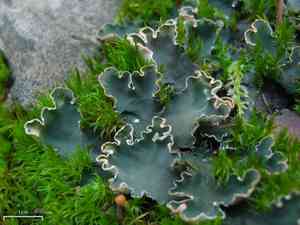
Dog lichen (Peltigera canina)
Also known as: Felt pelt lichen
Dog lichen is a leafy lichen in appearance when growing in small patches. The fungus thrives in sandy and grassy soil, and the round lobes become papery-thin when dry. When the soil is moist, the lobes turn full and soft. The fruiting bodies resemble the teeth of a canine, giving this lichen the name "dog lichen."
In This Article
Attributes of Dog lichen
Lifespan
Perennial
Plant Type
Lichen
Plant Height
1-3 cm
Spread
10–25 mm
Leaf Color
Bluish-green to brownish
Flower Size
Not applicable
Flower Color
Not applicable
Images of Dog lichen
Quickly Identify Dog lichen
1
This lichen can be identified by its large, leaf-like lobes that are often wrinkled or veined. The surface may have a bluish tinge due to cyanobacteria photobionts, and the edges of the lobes are often lifted. It often has a white, fuzzy underside.
Scientific Classification of Dog lichen
Phylum
Sac fungi
Class
Lecanoromycetes
Order
Peltigerales
Family
Lichenized
Genus
Dog lichen
Species
Dog lichen
Planting and Growing of Dog lichen
Care Difficulty
Hard
Watering Schedule
Every 2 days
Sunlight Requirements
Partial sun
Sunshine Duration
4-6 hours
Ideal Temperature
50-59℉
Soil Type
Potting Mix, Peat Mix
Soil pH
6.5-7.5
Fertilizer Type
Balanced
Pruning Season
Spring, Summer
Pruning Area
Branches, Leaves
Pruning Frequency
2 times a year
Repotting Season
Spring
Pot Type
Plastic, Ceramic
 How to Water Dog lichen?
Peltigera canina thrives on moderate moisture levels, similar to conditions in damp forest floors. Watering with 100 ml ensures the substrate remains moist but not swamp-like. The key is to keep it evenly moistened, never letting it dry out completely or become overly saturated.
What are the symptoms of an underwatered Dog lichen?
›
What should I do if my Dog lichen is not getting enough water?
›
What are the symptoms of an overwatered Dog lichen?
›
How to save an overwatered Dog lichen?
›
 What Are the Sunlight Requirements for Dog lichen?
Peltigera canina requires partial sun to full shade; ideally, it thrives in environments where it receives filtered or indirect light, which is essential for maintaining its foliage health and vibrant appearance.
What type of light does Peltigera canina prefer?
›
How can I achieve ideal lighting for this plant?
›
What are the benefits of proper lighting for Peltigera canina?
›
 What Is the Ideal Temperature Range for Dog lichen?
The optimal temperature range for Peltigera canina is between 50°F and 59°F. Within this range, the lichen is most likely to thrive, exhibiting healthy growth and reproduction. Maintaining this temperature ensures the symbiotic relationship between the fungus and algae remains stable and effective for nutrient exchange.
 What Soil is Best for Dog lichen?
Peltigera canina thrives in soil with good moisture retention. Loamy soil provides the ideal texture for maintaining consistent moisture levels without becoming waterlogged, essential for the health of its lichen structure. This plant requires moderately nutrient-rich soil. The presence of clay can contribute to nutrient density, supporting the lichen's need for essential minerals and fostering optimal growth and coloration. While moisture is crucial, proper aeration is also vital. Loamy soils ensure air circulation while retaining moisture, preventing root suffocation and promoting a healthy exchange of gases.
 How to Fertilize Dog lichen?
Peltigera canina, also known as dog lichen, thrives in environments with low nutrient availability. Thus, it requires minimal fertilization. For liquid fertilizers, apply a solution that is diluted to half strength to avoid nutrient burn. Use about 1 teaspoon per gallon of water and adjust based on the plant's response.
 How to Prune Dog lichen?
Begin by carefully inspecting the lichen for any damaged or dead sections. Use sharp scissors or pruning shears to gently trim away these parts without disturbing the base. This process not only removes unsightly parts but also encourages healthier growth. Be meticulous and gentle while handling these delicate structures. Since it's a lichen, avoid heavy-handed techniques that could harm its overall growth and development.
 How to Propagate Dog lichen plant?
1
Ensure that all equipment and surfaces in your work area are sterilized. This includes using sterilizing agents on your tools, workbench, and any containers involved in the propagation process. A sterile environment is critical to successful tissue culture propagation.
2
Choose a healthy piece of tissue from a mature Peltigera canina. This should be free from any visible damage or disease to ensure that the new growth starts on solid footing, minimizing potential failures in propagation due to initial plant health issues.
3
Place the selected tissue into a nutrient-rich growth medium within a petri dish. The growth medium should support cell division and growth, providing all necessary nutrients and a stable environment for the tissue to develop into new organisms.
 How to Repot Dog lichen plant?
1
Peltigera canina shows signs of needing a repot when the substrate starts to break down or becomes compacted, restricting water flow. It's also necessary when its growth is visibly stunted or slowed. Spring and summer offer the best conditions due to active growth, helping the plant adjust swiftly post-repotting.
2
Choosing the right pot for Peltigera canina is crucial. Opt for one slightly larger than the existing pot to give the roots space to grow without overwhelming the plant. Ensure it has excellent drainage holes to prevent water retention, which fungal growth favors.
3
The ideal soil for repotting Peltigera canina should be loamy and well-draining. This type avoids waterlogging while retaining enough moisture for steady nutrient absorption. The soil should mimic its natural rocky habitats, supporting its symbiotic relationships with algae or cyanobacteria.
Toxicity
Ingestion
WARNING
The judgment on toxicity and danger is for reference only. We DO NOT GUARANTEE any accuracy of such judgment. Therefore, you SHALL NOT rely on such judgment. It is IMPORTANT TO SEEK PROFESSIONAL ADVICE in advance when necessary.

