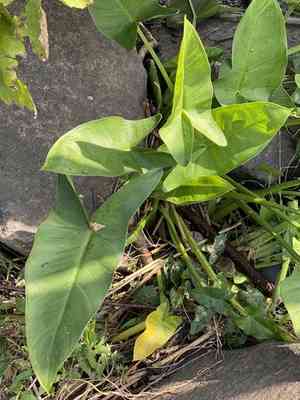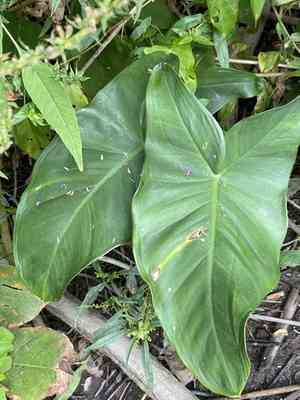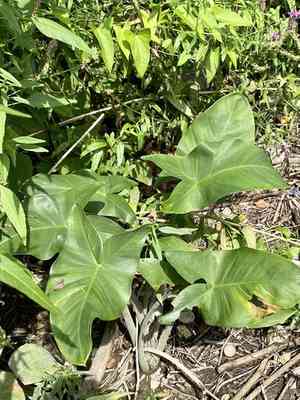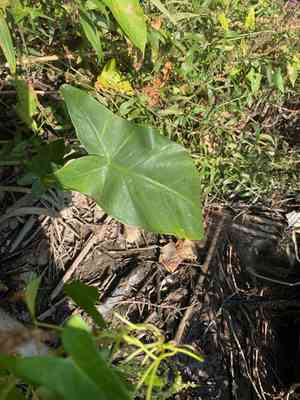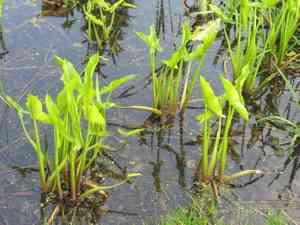
Green arrow arum(Peltandra virginica)

Green arrow arum (Peltandra virginica)

Also known as: Virginian wake-robin

Green arrow arum (Peltandra virginica) is a perennial aquatic plant thriving in wetlands and marshy areas. It features distinctive arrow-shaped leaves and is known to attract flies. While some small mammals and waterfowl may feed on it, the plant poses risks to humans.

**Toxicity**: All parts of Green arrow arum contain calcium oxalate crystals, which can cause severe irritation and swelling in the mouth, throat, and digestive system if ingested. Consumption could also potentially contribute to kidney stone formation.

**Skin Irritation**: Direct contact with the plant may result in skin irritation or allergic reactions in some individuals.

Caution is advised when handling or coming into contact with Green arrow arum.

Attributes of Green arrow arum

Lifespan
Perennial
Plant Type
Herb
Plant Height
91 cm
Spread
45 cm to 60 cm
Leaf Color
Green Gray
Flower Size
7 cm to 25 cm
Flower Color
Green White Yellow

PlantJoy - Identify plants with a snap

Identify and diagnose plants, get toxicity alerts, and explore safety guides for all types of fungi.

Try for Free

Images of Green arrow arum

Green arrow arum(Peltandra virginica)

Quickly Identify Green arrow arum

1
Arrowhead-shaped leaves up to 2 feet (60 cm) long with prominent pinnate veins.
2
Cylindrical spadix inflorescence surrounded by a narrow spathe, blooming from May to June.
3
Oval fruit cluster transitioning from soft green to brown during summer solstice.
4
Variable stem colors including green, green-purple, and deep purple, up to 3 feet (90 cm) tall.
5
Deciduous or evergreen behavior depending on region, showcasing resilience in low-oxygen water environments.

Scientific Classification of Green arrow arum

Phylum
Vascular plants
Class
Monocotyledons
Order
Alismatales
Family
Arum
Genus
Arrow Arums
Species
Green arrow arum

Planting and Growing of Green arrow arum

Care Difficulty
Easy
Watering Schedule
Every 12 days
Sunlight Requirements
Partial sun
Sunshine Duration
4-8 hours
Ideal Temperature
68-77℉
Soil Type
Potting Mix, Peat Mix
Soil pH
6.5-7.5
Fertilizer Type
Balanced
Pruning Season
Spring, Summer
Pruning Area
Branches, Leaves
Pruning Frequency
2 times a year
Repotting Season
Spring
Pot Type
Plastic, Terracotta

water icon How to Water Green arrow arum?

Peltandra virginica, commonly known as the green arrow arum, thrives in wetland environments and prefers generous watering. Generally, providing approximately 1000 milliliters per session ensures the soil remains thoroughly moist without causing waterlogging.
What are the symptoms of an underwatered Green arrow arum?
What should I do if my Green arrow arum is not getting enough water?
What are the symptoms of an overwatered Green arrow arum?
How to save an overwatered Green arrow arum?

sunlight icon What Are the Sunlight Requirements for Green arrow arum?

Sunlight Requirements: Partial sun, Full shade
Duration of light: 3-4 hours daily
Peltandra virginica is best suited for environments offering partial sun to full shade, akin to its natural wetland habitats. These conditions favor robust growth and the preservation of its lush, healthy foliage.
Optimal Sunlight Requirement
Strategies for Achieving Ideal Light
Benefits of Ideal Lighting Conditions
More About Sunlight Requirements Techniques

temperature icon What Is the Ideal Temperature Range for Green arrow arum?

Ideal Temperature: 68 ~ 77℉
Peltandra virginica thrives best in temperatures between 68°F and 77°F. This range provides optimal conditions for photosynthesis and enables the plant to maintain its physiological processes efficiently. Ensuring this temperature range will lead to healthier growth and robust foliage.

soil icon What Soil is Best for Green arrow arum?

Soil type: Loam, Peat soil, Clay soil
Soil PH: 6.5 ~ 7.5
Peltandra virginica thrives in nutrient-rich soil, which provides essential minerals and nutrients needed for robust growth. This ensures the plant has adequate resources to develop strong and healthy foliage. Water retention is key, as Peltandra virginica prefers soils that stay consistently moist. This is crucial for preventing dehydration and ensuring nutrient uptake, contributing to the lushness of the plant. While the soil needs to retain moisture, good drainage is essential to prevent root rot. Balancing water retention with drainage helps maintain healthy roots and vigorous plant growth.

fertilize icon How to Fertilize Green arrow arum?

Fertilizer type: Balanced
For Peltandra virginica, use a balanced water-soluble fertilizer diluted to half the recommended strength. About 100-150 ml per plant is adequate. Be cautious not to over-apply as it can lead to nutrient burn.

prune icon How to Prune Green arrow arum?

Pruning Time: Spring, Autumn
Begin pruning Peltandra virginica from the outermost leaves. Follow the natural shape of the plant, cutting at the base of each leaf to encourage more sprouts. Ensure you do not cut into the main stems or structural parts of the plant. Doing so can harm the plant's ability to absorb nutrients and stunt its growth. After pruning, collect all cuttings and dispose of them properly. Leaving them in the plant's vicinity can lead to pest infestations or fungal growth. More About Pruning Techniques

propagate icon How to Propagate Green arrow arum plant?

Propagate Time: Spring, Early Summer
1
Collect seeds from mature Peltandra virginica plants once the seed pods are dry. Ensure that seeds are stored in a cool, dry place until planting season arrives to maintain viability.
2
Sow the seeds in seedling trays filled with a well-draining soil mix. Cover them lightly with soil and ensure consistent moisture until they germinate, usually within a few weeks.
3
For division, carefully dig up the plant in early summer and split the root ball into several sections. Replant each section immediately to encourage root establishment.
More About Propagating Techniques

repot icon How to Repot Green arrow arum plant?

Repotting frequency: Every 1-2 years
1
Peltandra virginica should be repotted when its roots start crowding the pot or when growth seems stunted. Ideally, the best time is just before new growth begins in spring, allowing the plant to refresh its vigor in the coming growing season.
2
Select a pot slightly larger than the current one, with adequate drainage holes. This allows for growth without retaining excess water, which could lead to root rot. A ceramic or plastic pot can retain moisture while providing enough aeration.
3
An optimal soil mix for Peltandra virginica should be fertile and able to retain moisture while allowing excess water to drain efficiently. A mix of peat, pine bark, and perlite is recommended as it maintains the delicate balance of moisture and aeration.

PlantJoy - Identify plants with a snap

Find the best spots for them to optimize their health, simply using your phone.

Try for Free

Toxicity of Green arrow arum

Is Green arrow arum toxic to humans?

The green arrow arum is considered toxic because it contains calcium oxalate, which is present in every part of the plant. Consuming this plant can lead to moderate to severe health issues. However, when the plant is cooked or dried, the calcium oxalate is destroyed. Many individuals experience poisoning from green arrow arum due to consuming it without adequate cooking. The primary symptom associated with green arrow arum poisoning is a sensation resembling hundreds of needles pricking the mouth and digestive system. In more critical cases, calcium oxalate can cause significant irritation to the gastrointestinal tract and may lead to kidney failure.

Is Green arrow arum toxic to cat?

The green arrow arum presents a significant toxicity hazard to cats. If these animals inadvertently consume any portion of the green arrow arum, they risk suffering from poisoning due to the plant's noxious properties. Following ingestion, symptoms may encompass general physical unease and various indications of illness, which can differ based on the specific animal and the quantity consumed. Should a cat ingest green arrow arum, it is crucial to promptly obtain professional assistance at a veterinary facility for suitable treatment.

Is Green arrow arum toxic to dog?

The green arrow arum plant is recognized as toxic to dogs. Any part of this plant contains harmful substances, posing a danger if ingested by dogs. Symptoms following ingestion may include vomiting, diarrhea, excessive drooling, and in more severe cases, difficulty breathing or irregular heart rates. Therefore, it is essential for dog owners to keep their pets away from green arrow arum and to closely observe them for any distress signals that might suggest poisoning. If a dog has ingested this plant, prompt veterinary attention is vital for symptom management and suitable treatment.

Identify toxic plants for your safety

Learn which plants are harmful to you and your pets, and make informed choices for a safer home!

Try for Free
WARNING
The judgment on toxicity and danger is for reference only. We DO NOT GUARANTEE any accuracy of such judgment. Therefore, you SHALL NOT rely on such judgment. It is IMPORTANT TO SEEK PROFESSIONAL ADVICE in advance when necessary.
More About Toxic Techniques