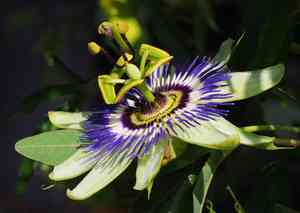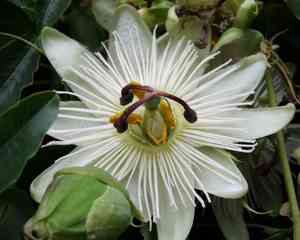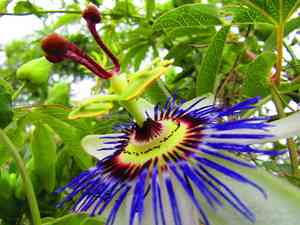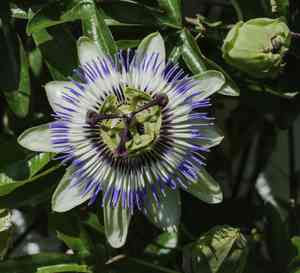
Blue passionflower(Passiflora caerulea)

Blue passionflower (Passiflora caerulea)

Also known as: Blue passionfruit, Southern beauty, Jesus flower

The blue passionflower (Passiflora caerulea) is indigenous to South America, specifically Argentina, Paraguay, and Brazil. This climbing vine is notable for its striking flowers, which feature a combination of blue and white petals along with a central arrangement of filaments that give it a clock-like appearance. The plant also produces orange, egg-shaped fruit. The term "passion" in its name reflects the flower's historical connection to the Christian narrative of the "Passion of Jesus."

Attributes of Blue passionflower

Lifespan
Perennial
Plant Type
Vine, Herb
Plant Height
3 m to 9 m
Spread
4 m
Leaf Color
Green
Flower Size
6 cm to 10 cm
Flower Color
White Blue Purple Green Pink Violet

PlantJoy - Identify plants with a snap

Identify and diagnose plants, get toxicity alerts, and explore safety guides for all types of fungi.

Try for Free

Images of Blue passionflower

Blue passionflower(Passiflora caerulea)

Quickly Identify Blue passionflower

1
Climbing habit, reaching heights of 10 to over 40 feet (3 to over 12 meters)
2
Striking blue and white flowers with blue filaments and orange fruits
3
Saucer-shaped flowers, 2.5 to 3 inches (6.4 to 7.6 cm) wide
4
Distinctive egg-shaped fruit, transitioning from green to yellow or deep orange
5
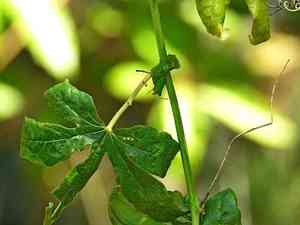
Palmately lobed leaves, 4 to 6 inches (10 to 15 cm) wide with twining tendrils

Scientific Classification of Blue passionflower

Phylum
Vascular plants
Class
Dicotyledons
Order
Nances, spurges, willows and allies
Family
Passionflowers
Genus
Passion flowers
Species
Blue passionflower

Planting and Growing of Blue passionflower

Care Difficulty
Easy
Watering Schedule
Every 8 days
Sunlight Requirements
Full sun
Sunshine Duration
4-8 hours
Ideal Temperature
68-77℉
Soil Type
Potting Mix, Peat Mix
Soil pH
6.5-7.5
Fertilizer Type
Balanced
Pruning Season
Spring, Summer
Pruning Area
Branches, Leaves
Pruning Frequency
2 times a year
Repotting Season
Spring
Pot Type
Plastic, Ceramic

water icon How to Water Blue passionflower?

Passiflora caerulea requires a moderate amount of water, approximately 500 ml per session. It prefers the soil to be consistently moist but not waterlogged. The key is to allow the top layer of soil to dry out slightly before watering again to ensure that the roots receive adequate moisture without drowning.
What are the symptoms of an underwatered Blue passionflower?
What should I do if my Blue passionflower is not getting enough water?
What are the symptoms of an overwatered Blue passionflower?
How to save an overwatered Blue passionflower?
More About Watering Techniques

sunlight icon What Are the Sunlight Requirements for Blue passionflower?

Sunlight Requirements: Full sun, Partial sun
Duration of light: 6 to 8 hours daily
Passiflora caerulea's ideal light conditions include partial to full sunlight. This range supports vigorous flowering and structural integrity, ensuring the plant remains resilient and productive throughout its growing season.
How much light does Passiflora caerulea ideally need?
What is the solution to attain the ideal light conditions?
What are the benefits of providing the ideal light for Passiflora caerulea?
More About Sunlight Requirements Techniques

temperature icon What Is the Ideal Temperature Range for Blue passionflower?

Ideal Temperature: 68 ~ 77℉
The ideal temperature range for Passiflora caerulea, commonly known as the blue passionflower, is between 68°F and 77°F. This range provides optimal growing conditions, supporting healthy foliage, vibrant flowers, and sustained growth. Moderate temperatures also ensure that the plant has sufficient energy for photosynthesis and nutrient uptake.

soil icon What Soil is Best for Blue passionflower?

Soil type: Loam, Sandy loam
Soil PH: 6.5 ~ 7.5
Passiflora caerulea thrives in nutrient-rich soil, which provides the essential minerals and elements needed for robust growth and vibrant flowers. Good drainage prevents waterlogging, which is crucial for preventing root rot and ensuring healthy growth. The soil should neither be too dense nor too loose, to allow excess water to escape easily. While it enjoys consistent moisture, the soil should not be soggy. Maintaining moderate moisture helps in sustaining the plant during dry spells without drowning its roots. More About Soil

fertilize icon How to Fertilize Blue passionflower?

Fertilizer type: Balanced
Passiflora caerulea thrives on balanced nutrition, typically requiring about 1/2 to 1 teaspoon of liquid fertilizer per gallon of water during the growing season. This provides ample nutrients without overwhelming the plant, fostering vibrant growth and blooms. More About Fertilizing Techniques

prune icon How to Prune Blue passionflower?

Pruning Time: Spring, Summer, Autumn
Look for stems and branches that appear old or are not producing as many flowers. These should be reduced to encourage new growth. Identify and carefully remove any dead or diseased stems at the base. Make cuts at a 45-degree angle approximately 1/4 inch above a leaf node or bud. This angle and position help to promote healthy new growth and prevent water accumulation. Trim long stems by about one-third to keep the plant manageable and promote a bushier appearance. This will result in a more compact plant that is full of vibrant flowers. Remove any crossing branches to improve airflow through the plant. This is essential to reduce the risk of fungal diseases and ensure all parts receive adequate sunlight. More About Pruning Techniques

propagate icon How to Propagate Blue passionflower plant?

Propagate Time: Spring,Summer
1
Choose mature and healthy seeds from a reliable source for optimal germination. Inspect them closely for any signs of disease or damage.
2
Select a healthy parent plant and use pruning shears to cut segments of about 4-6 inches. Remove lower leaves to expose nodes that will develop roots.
3
Plant seeds directly into a potting mix or insert cutting bases into soil. Ensure the environment is warm and humid to encourage germination and rooting.
More About Propagating Techniques

repot icon How to Repot Blue passionflower plant?

Repotting frequency: Every 2-3 years
1
Repotting Passiflora caerulea requires attention to signals like roots growing through drainage holes or water taking too long to drain. Ideal timing is during active growth in spring or early summer when the plant is most resilient.
2
When selecting a pot for your Passiflora caerulea, opt for one that is one size larger than the current pot with ample drainage holes. This prevents root rot while allowing roots to expand, ensuring healthy growth and stability.
3
A well-draining potting mix with organic matter, such as peat moss or compost, ensures your Passiflora caerulea receives necessary nutrients while preventing waterlogging. This balance is vital for vibrant blooms and robust growth.
More About Repotting Techniques

PlantJoy - Identify plants with a snap

Find the best spots for them to optimize their health, simply using your phone.

Try for Free

Toxicity of Blue passionflower

Is Blue passionflower toxic to cat?

Blue passionflower poses a toxicity risk to cats. If they accidentally consume the plant, particularly its roots, it can lead to poisoning. After ingestion, cats may display signs of discomfort or health issues. Given that cats are inherently inquisitive, it is essential for cat owners to restrict their access to blue passionflower to prevent unintentional poisoning. Should there be any suspicion that a cat has ingested any part of the blue passionflower, it is vital to seek prompt veterinary assistance to protect the cat's health and well-being.

Is Blue passionflower toxic to dog?

The blue passionflower is regarded as toxic to dogs. Canines might unintentionally consume various sections of the plant, especially the roots, which are recognized for their poisonous properties. If a dog ingests any part of the blue passionflower, it may show signs such as vomiting, diarrhea, lethargy, or even more serious symptoms depending on the quantity consumed. It is vital for dog owners to keep a close eye on their pets and restrict access to blue passionflower to prevent accidental poisoning. Should a dog consume this plant, prompt veterinary assistance is critical to ensure suitable treatment and recovery.

Identify toxic plants for your safety

Learn which plants are harmful to you and your pets, and make informed choices for a safer home!

Try for Free
WARNING
The judgment on toxicity and danger is for reference only. We DO NOT GUARANTEE any accuracy of such judgment. Therefore, you SHALL NOT rely on such judgment. It is IMPORTANT TO SEEK PROFESSIONAL ADVICE in advance when necessary.
More About Toxic Techniques