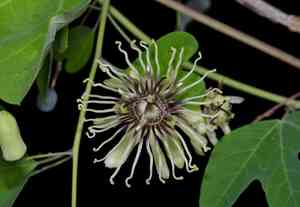
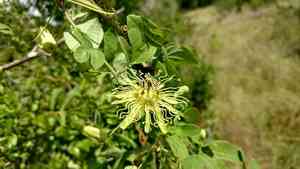
Bracted passionflower (Passiflora affinis)
Also known as: Bristly Passionflower, Corona de Cristo
The plant you're referring to is the passionflower (Passiflora incarnata). This perennial vine features stunning purple-bordered white flowers and small oval green leaves. It flourishes in temperate regions, using its tendrils to climb and find support. Often found in forest clearings or edges, its unique and intricate blooms attract various pollinators, showcasing its role in the local ecosystem.
In This Article
Attributes of Bracted passionflower
Lifespan
Perennial
Plant Type
Vine
Plant Height
91 cm to 1.8 m
Spread
Not applicable, as it is a vine
Leaf Color
Dark green
Flower Size
Approximately 5-7 centimeters
Flower Color
White with purple and blue tones
Images of Bracted passionflower
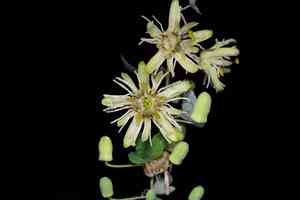
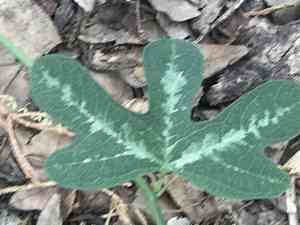
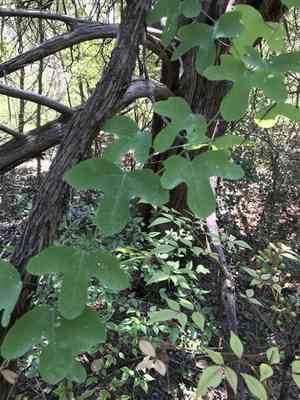
Quickly Identify Bracted passionflower
1
Identify Passiflora affinis by its unique bristly fruit and intricate, star-shaped flowers. The leaves are typically trilobed, and the plant is a climbing vine, often found in wild or untamed areas.
Scientific Classification of Bracted passionflower
Phylum
Vascular plants
Class
Dicotyledons
Order
Malpighiales
Family
Passionflowers
Genus
Passion flowers
Species
Bracted passionflower
Planting and Growing of Bracted passionflower
Care Difficulty
Moderate
Watering Schedule
Every 4 days
Sunlight Requirements
Full sun
Sunshine Duration
6-10 hours
Ideal Temperature
68-77℉
Soil Type
Potting Mix, Peat Mix
Soil pH
6-7.5
Fertilizer Type
Balanced
Pruning Season
Spring, Summer
Pruning Area
Branches, Leaves
Pruning Frequency
2 times a year
Repotting Season
Spring
Pot Type
Plastic, Ceramic
 How to Water Bracted passionflower?
When watering Passiflora affinis, aim to thoroughly saturate the soil until water begins to drain from the bottom of the pot. This ensures that the roots get adequate moisture, following the principle of letting the soil become almost dry between waterings.
What are the symptoms of an underwatered Bracted passionflower?
›
What should I do if my Bracted passionflower is not getting enough water?
›
What are the symptoms of an overwatered Bracted passionflower?
›
How to save an overwatered Bracted passionflower?
›
 What Are the Sunlight Requirements for Bracted passionflower?
Partial sun to full sun is optimal. Ensuring proper light exposure enhances photosynthesis, promoting vigorous growth, abundant flowering, and disease resilience in Passiflora affinis.
How much sun does Passiflora affinis need daily?
›
What are the steps to ensure Passiflora affinis gets ideal lighting?
›
What benefits does Passiflora affinis gain from optimal sunlight?
›
 What Is the Ideal Temperature Range for Bracted passionflower?
The ideal temperature range for Passiflora affinis is between 68°F and 77°F. This range allows the plant to thrive, promoting healthy growth and optimal flowering conditions. Maintaining this temperature regime helps ensure resistance to diseases and pests while supporting overall plant vigor.
 What Soil is Best for Bracted passionflower?
Passiflora affinis thrives in well-draining soil, ensuring its roots do not sit in water, which can lead to root rot. The well-drained environment also allows for adequate aeration and nutrient absorption, making it crucial for optimal growth. Rich in organic matter, the soil must support robust growth. This nutrient richness fuels the plant's flowering and fruiting stages, enhancing its ornamental and ecological value. While well-drained, the soil should retain enough moisture to support continuous growth. It strikes a balance, preventing drought stress while avoiding waterlogging, ideal for sustained health.
 How to Fertilize Bracted passionflower?
Passiflora affinis, commonly known as the Bracted Passionflower, requires careful attention to its fertilization. This plant should be given a balanced fertilizer diluted to half strength to prevent burning the roots. The recommended rate is about 1 tablespoon per gallon of water.
 How to Prune Bracted passionflower?
Start by identifying and removing any dead, damaged, or diseased twigs and leaves. This should be done both for aesthetic purposes and to protect the rest of the plant from disease spread. Trim back any excessively long or unruly vines to control the size and shape of the plant. Aim to make your cuts just above a node to encourage new growth from that point. If any sections of the plant are too dense, selectively prune to allow for increased airflow and light penetration. This can help prevent fungal diseases and improve the plant's overall health and appearance.
More About Pruning Techniques→
 How to Propagate Bracted passionflower plant?
1
Gather seeds from ripe Passiflora affinis fruits. Clean them under running water to remove any pulp and allow them to dry completely before sowing to prevent fungal infections.
2
Select healthy, non-flowering stems and cut segments about 4-6 inches in length. Remove the lower leaves to reduce water loss and dip the cut end in rooting hormone.
3
Plant seeds in a well-draining seed-starting mix or insert cuttings into a pot filled with the same medium. Water regularly and provide bright, indirect sunlight to promote germination and root development.
 How to Repot Bracted passionflower plant?
1
Passiflora affinis thrives when roots have space. Signs for repotting include roots growing out of drainage holes, diminished growth, or persistent waterlogging of soil. Optimal repotting occurs in spring or summer, offering warm temperatures and active growth for swift recovery.
2
Choose a pot one size larger with good drainage to prevent water accumulation. Terra cotta pots are ideal, offering breathability and helping regulate moisture levels. They maintain humidity balance, promoting optimal root health and preventing potential root rot.
3
Opt for a well-draining potting mix, blending peat, perlite, and compost. This mix supports good aeration and nutrient exchange while preventing water stagnation. This setup is crucial for the robust health of Passiflora affinis.



