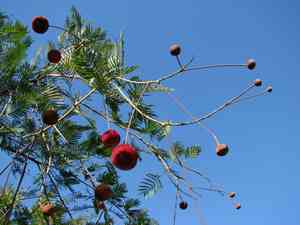
Parkia (Parkia) (Parkia)
Also known as: Tree Bean, Yongo Bean, Parkia
Erythrina is a genus of flowering plants belonging to the Fabaceae family. It encompasses around 35 species and is distributed across tropical regions globally.
In This Article
Attributes of Parkia (Parkia)
Lifespan
Perennial
Plant Height
15-30 meters
Spread
10-20 meters
Leaf Color
Green
Flower Size
1-2 cm (individual flowers, up to 20 cm in diameter for the entire inflorescence)
Flower Color
Yellow to red
Images of Parkia (Parkia)
Quickly Identify Parkia (Parkia)
1
Parkia trees can be identified by their compound leaves, spherical inflorescences, and elongated seed pods. The trees often have a distinctive umbrella-shaped canopy and can reach considerable heights.
Scientific Classification of Parkia (Parkia)
Phylum
Magnoliophyta
Class
Magnoliopsida
Order
Fabales
Family
Fabaceae
Genus
Parkia
Planting and Growing of Parkia (Parkia)
Care Difficulty
Moderate
Watering Schedule
Every 2 days
Sunlight Requirements
Partial sun
Sunshine Duration
4-6 hours
Ideal Temperature
68-86℉
Soil Type
Potting Mix, Peat Mix
Soil pH
6-7.5
Fertilizer Type
Balanced
Pruning Season
Spring, Summer
Pruning Area
Branches, Leaves
Pruning Frequency
2 times a year
Repotting Season
Spring
Pot Type
Plastic, Ceramic
 How to Water Parkia (Parkia)?
When watering Parkia, ensure the soil is moist but not soggy, allowing it to dry slightly between sessions. The general guideline is 800 ml per watering, catching the balance of maintaining moisture without waterlogging the roots.
What are the symptoms of an underwatered Parkia (Parkia)?
›
What should I do if my Parkia (Parkia) is not getting enough water?
›
What are the symptoms of an overwatered Parkia (Parkia)?
›
How to save an overwatered Parkia (Parkia)?
›
 What Are the Sunlight Requirements for Parkia (Parkia)?
Parkia thrives best under partial sun conditions, receiving 4-6 hours of sunlight daily. Adequate natural light facilitates the plant’s metabolic activities, promoting healthy growth and enhancing its overall vitality.
What is the best location for Parkia?
›
How can I simulate ideal lighting indoors?
›
What are the benefits of ideal lighting for Parkia?
›
 What Is the Ideal Temperature Range for Parkia (Parkia)?
The ideal temperature range for cultivating Parkia species, such as Parkia biglobosa, is between 68 and 86 degrees Fahrenheit. In this range, the plant can photosynthesize efficiently, grow robustly, and initiate flowering without stress. These temperatures correspond to the tropical climates where these plants naturally thrive. Stability is key, as fluctuations outside of this range can impair growth and development processes.
 What Soil is Best for Parkia (Parkia)?
Parkia thrives in well-drained soils that prevent waterlogging, which can lead to root rot. This soil characteristic ensures that the plant's roots receive adequate oxygen and provides an optimal environment for growth. The plant prefers moderately fertile soil that provides balanced nutrients for robust growth. A loamy soil type with organic matter maintains soil structure and fertility, promoting healthy foliage and pod production. The ability of the soil to retain moisture without becoming saturated is crucial for Parkia. This prevents dehydration during dry periods while avoiding sogginess, supporting steady and resilient plant development.
 How to Fertilize Parkia (Parkia)?
When fertilizing Parkia, it's important to apply a balanced quantity to maintain its health without overwhelming the plant. Ideally, use about 1/4 to 1/2 strength of liquid fertilizer per application, ensuring not to saturate the soil excessively. For slow-release fertilizers, use about 50 grams spread evenly around the root zone and slightly worked into the soil to minimize nutrient leaching.
 How to Prune Parkia (Parkia)?
Prune Parkia by first removing any dead or diseased branches to prevent the spread of decay. Trim back lush growth to maintain the desired size and shape of the plant. Always use sterilized tools to prevent introducing pathogens. During its formative years, trim Parkia to encourage a strong central leader and evenly spaced lateral branches. This helps in establishing a sturdy structure for the tree to support itself as it grows taller. Regularly cut back any branches that are growing disproportionately to ensure even distribution of sunlight and nutrients. A balanced canopy allows for uniform growth and stability against strong winds.
 How to Propagate Parkia (Parkia) plant?
1
Begin by filling your seed trays with the appropriate soil mix, ensuring it is moist but not soggy. Level the surface and slightly press down to remove large air pockets, providing a stable environment for seeds.
2
Sow the Parkia seeds evenly across the soil surface, maintaining spacing to prevent overcrowding. Cover lightly with additional soil, as seeds require light to moderate exposure for successful germination.
3
Gently water the trays using a spray bottle to avoid displacing seeds. Maintain consistent moisture levels and place the trays in a warm, light area. Regularly check for germination and ensure no mold or fungi develop.
 How to Repot Parkia (Parkia) plant?
1
Repotting should be considered when the roots of Parkia begin to outgrow their container, appearing through drainage holes, or when growth stunts despite regular watering and feeding. These signs usually indicate it's time to refresh the soil and provide more space for the roots.
2
Opt for a new pot that is 1 to 2 inches larger in diameter than the current one. This prevents excessive soil moisture, which can lead to root rot, while still allowing enough space for root expansion. Make sure your chosen pot has ample drainage holes to ensure that water can easily exit, preventing waterlogging.
3
Choose a loamy, well-draining potting mix to promote healthy root growth. This type of soil retains necessary moisture while allowing excess water to escape. A soil mix tailored to tropical plants or houseplants often suits Parkia well, providing balanced aeration and nutrients.

