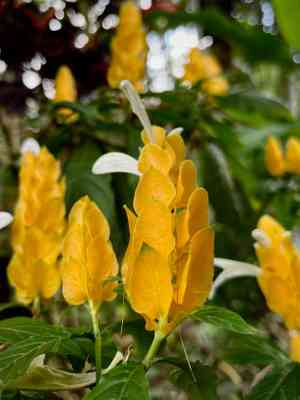
Golden shrimp plant (Pachystachys lutea)
Also known as: Golden candle
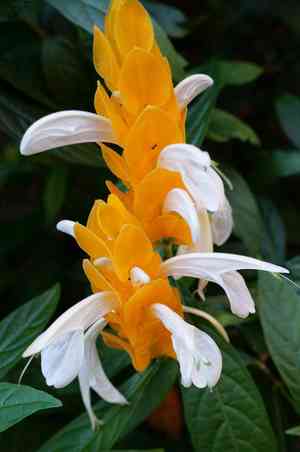
The Lollipop Plant, scientifically known as Pachystachys lutea, is an evergreen perennial shrub that thrives in full sunlight. Its striking, bright yellow flower bracts overlap in a way that resembles a crustacean, hence its common name. This plant is a favorite among butterflies and hummingbirds, thanks to its abundant nectar.
In This Article
Attributes of Golden shrimp plant
Lifespan
Perennial
Plant Type
Herb, Shrub
Plant Height
30 cm to 50 cm
Spread
30 cm to 45 cm
Leaf Color
Green
Flower Size
2.5 cm
Flower Color
White Yellow Gold
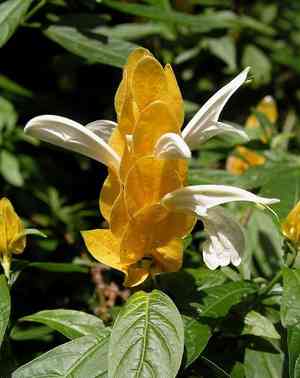
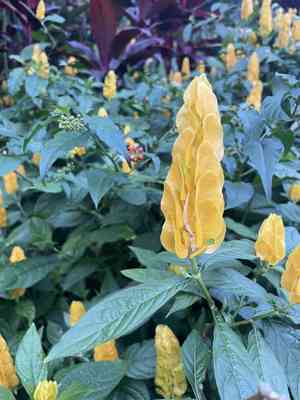
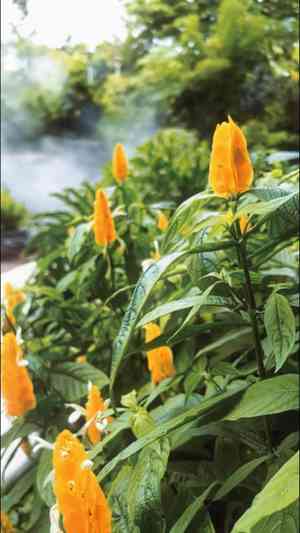
Images of Golden shrimp plant
Quickly Identify Golden shrimp plant
1
Recognize Pachystachys lutea by its bright yellow bracts that stand upright like candles. The actual flowers are small, white, and tubular, emerging from between the bracts. The leaves are dark green, elliptical, and have a slightly fuzzy texture.
Scientific Classification of Golden shrimp plant
Phylum
Vascular plants
Class
Dicotyledons
Order
Mints plantains olives and allies
Family
Acanthus
Genus
Pachystachys
Species
Golden shrimp plant
Planting and Growing of Golden shrimp plant
Care Difficulty
Easy
Watering Schedule
Every 8 days
Sunlight Requirements
Partial sun
Sunshine Duration
4-8 hours
Ideal Temperature
65-75℉
Soil Type
Potting Mix, Peat Mix
Soil pH
6.5-7.5
Fertilizer Type
Balanced
Pruning Season
Spring, Summer
Pruning Area
Branches, Leaves
Pruning Frequency
2 times a year
Repotting Season
Spring
Pot Type
Plastic, Ceramic
 How to Water Golden shrimp plant?
Water the Pachystachys lutea with roughly 250 ml each session, aiming for a point where the soil feels moist but not overly soaked. Ensure the top inch of soil has dried before the next watering.
More About Watering Techniques→
What are the symptoms of an underwatered Golden shrimp plant?
›
What should I do if my Golden shrimp plant is not getting enough water?
›
What are the symptoms of an overwatered Golden shrimp plant?
›
How to save an overwatered Golden shrimp plant?
›
 What Are the Sunlight Requirements for Golden shrimp plant?
Pachystachys lutea benefits from partial sun conditions. Consistent access to moderate lighting helps maintain its bright bracts and compact shape, maximizing aesthetic appeal and overall health.
More About Sunlight Requirements Techniques→
How much light does Pachystachys lutea need daily?
›
What solution ensures ideal lighting for this plant?
›
What are the benefits of providing this plant with ideal lighting?
›
 What Is the Ideal Temperature Range for Golden shrimp plant?
Pachystachys lutea thrives best in a temperature range from 65°F to 75°F. This range ensures optimal growth and blooming. It mimics the plant's native tropical climate, providing warmth and consistency critical for photosynthesis and metabolic activities.
 What Soil is Best for Golden shrimp plant?
Pachystachys lutea thrives in well-drained soil, which helps to prevent root rot, ensuring healthy growth and vibrant foliage. The soil should have moderate moisture retention capabilities, balancing moisture for the plant’s hydration without causing waterlogging. This plant benefits from a nutrient-rich soil that provides essential minerals and organic matter, promoting strong development and flowering.
More About Soil→
 How to Fertilize Golden shrimp plant?
Pachystachys lutea plants thrive with moderate fertilization. When using liquid fertilizer, mix it at half the strength recommended by the manufacturer. For slow-release fertilizers, use around 1 tablespoon per plant, ensuring the nutrients aren't overwhelming. The balance is key for growth without causing toxic buildup.
More About Fertilizing Techniques→
 How to Prune Golden shrimp plant?
Begin by examining your plant for any dead or damaged leaves and stems, and remove them first. Next, identify any leggy or sparse areas and trim these back to just above a leaf node to encourage bushiness. Maintain a balanced shape by trimming branches back to a uniform size. Ensure you prune to maintain the natural shape of the Pachystachys lutea, focusing on fostering a vibrant and dense appearance.
More About Pruning Techniques→
 How to Propagate Golden shrimp plant plant?
1
Choose a healthy stem that is free from disease and has new growth. Ideally, select a non-flowering stem as it will focus its energy on root production rather than flower production.
2
Make a clean cut just below a node using sterilized pruning shears. Remove the lower leaves to allow more space for root growth and reduce moisture loss from the foliage.
3
After dipping the end in rooting hormone, plant the cutting in a potting mix. Ensure the environment is humid and cover with a plastic bag if necessary to maintain moisture levels.
 How to Repot Golden shrimp plant plant?
1
You should consider repotting your Pachystachys lutea when you notice roots growing out of the drainage holes, or if the plant becomes top-heavy and unstable. Another indicator could be reduced growth or wilting leaves despite proper care, suggesting it might be root-bound.
2
Select a pot that is one size larger than the current one, ensuring it has sufficient drainage holes. A suitable pot allows for better aeration and water flow, preventing root rot and fostering healthy root development, crucial for the vibrant blooms of the Pachystachys lutea.
3
Opt for a rich, well-draining potting mix containing peat, perlite, and organic matter. This combination ensures adequate moisture retention while preventing waterlogging, promoting strong growth and vibrant foliage — perfect for the flourishing Pachystachys lutea.
Learn More About Golden shrimp plant Diseases
Anthracnose
Bacterial Leaf Spot
Bacterial Soft Rot
Bacterial Wilt
Black Spot
Chemical Injury
Crown Gall
Damping-off
Downy Mildew
Drought Stress
Fusarium Wilt
Gray Mold
Leaf Spot
Mosaic
Nutrient Deficiency
Nutrient Toxicity
Powdery Mildew
Root Rot
Root-knot Nematode
Rusts
Sooty Mold
Spider Mites
Temperature Stress
Thrips Damage
White Mold



