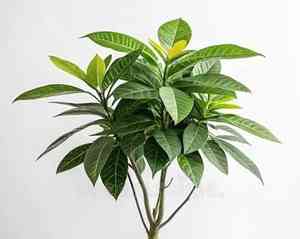
Money tree (Pachira aquatica)
Also known as: Saba Nut, Guiana chestnut, French peanut, Water Cocoa
Commonly referred to as the money tree, this tropical plant thrives in warm, humid environments. Its name originates from folklore that associates it with bringing good luck. Often, money trees are grown with braided trunks for an appealing look. Despite its popularity, it's important to note that the nuts of this plant may have carcinogenic properties and are not safe to eat.
In This Article
Attributes of Money tree
Lifespan
Perennial
Plant Type
Tree
Plant Height
4 m to 18 m
Spread
50 cm
Leaf Color
Green
Flower Size
1.3 cm
Flower Color
Red Cream White Yellow Gold
Images of Money tree

Quickly Identify Money tree
1
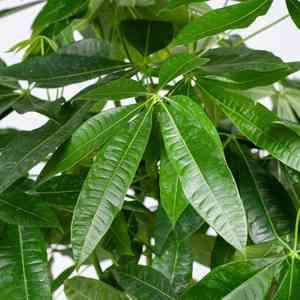
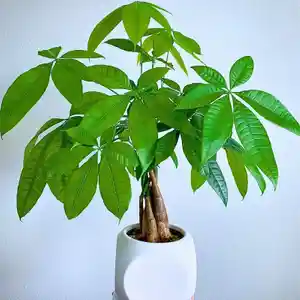
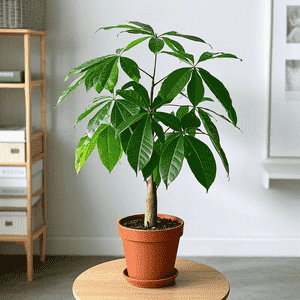
Identify Pachira aquatica by its braided trunk, shiny green palmate leaves with 5-7 leaflets, and large, showy white or cream-colored flowers that have long, stringy petals.
Scientific Classification of Money tree
Phylum
Vascular plants
Class
Dicotyledons
Order
Mallows, rock-roses, and allies
Family
Mallow
Genus
Pachira
Species
Money tree
Planting and Growing of Money tree
Care Difficulty
Easy
Watering Schedule
Every 2 days
Sunlight Requirements
Partial sun
Sunshine Duration
4-8 hours
Ideal Temperature
65-75℉
Soil Type
Potting Mix, Peat Mix
Soil pH
6-7.5
Fertilizer Type
Balanced
Pruning Season
Spring, Summer
Pruning Area
Branches, Leaves
Pruning Frequency
2 times a year
Repotting Season
Spring
Pot Type
Plastic, Ceramic
 How to Water Money tree?
For Pachira aquatica, the watering amount should be sufficient to moisten the soil, but not waterlogged. Aim for about 400 ml per session, or until the water slightly drains from the pot’s drainage holes. This ensures that the roots receive enough moisture without drowning.
More About Watering Techniques→
What are the symptoms of an underwatered Money tree?
›
What should I do if my Money tree is not getting enough water?
›
What are the symptoms of an overwatered Money tree?
›
How to save an overwatered Money tree?
›
 What Are the Sunlight Requirements for Money tree?
Partial sun exposure is optimal, providing a mix of natural light without direct harshness. Ideal light promotes vibrant, bushy growth and enhances the Pachira aquatica's resilience and foliage health.
More About Sunlight Requirements Techniques→
Optimal Placement
›
Using Sheer Curtains
›
Rotating the Plant
›
 What Is the Ideal Temperature Range for Money tree?
For optimal growth, Pachira aquatica thrives at temperatures ranging from 65°F to 75°F. These conditions closely mimic the plant’s native environment in Central and South America. Maintaining this temperature range helps ensure vibrant growth and healthy foliage. Cooler temperatures can inhibit growth or even damage the plant, while excessively high temperatures can lead to dehydration and stress.
 What Soil is Best for Money tree?
Pachira aquatica, also known as the Money Tree, flourishes in soil that drains well, avoiding waterlogging. Well-draining soil helps prevent root rot, ensuring the roots can access oxygen and nutrients efficiently. Rich in organic matter, the soil should provide a steady supply of nutrients. This nutrient-rich environment supports healthy growth and vibrant foliage, keeping the plant lush and vigorous. While retaining some moisture, the soil should also allow for adequate air circulation. This balance prevents excessive drying out while ensuring the roots breathe, promoting healthy development.
More About Soil→
 How to Fertilize Money tree?
Pachira aquatica is not very demanding in terms of fertilization, but maintaining an optimal nutrient balance is crucial. During the growing season, a monthly application of a balanced liquid fertilizer at half the usual strength is sufficient. Avoid over-fertilization which could harm the plant.
More About Fertilizing Techniques→
 How to Prune Money tree?
Choose branches that disrupt the natural shape of your Pachira aquatica or those that have outgrown their space. Cut back these branches to just above a pair of leaves or a node to encourage fuller regrowth. If the plant’s canopy is dense, selectively remove some interior branches to allow more light and air circulation. This step helps to promote overall plant health and reduces the risk of pest infestations. While pruning is beneficial, over-pruning can stress the plant. Never remove more than one-third of the plant at a time, as this can hinder its ability to photosynthesize and recover efficiently.
More About Pruning Techniques→
 How to Propagate Money tree plant?
1
Collect seeds from mature Pachira aquatica fruits. Ensure that the seeds are healthy and free from mold. Dry them completely in a cool, dry, and shaded place before planting.
2
Choose a healthy stem and make a diagonal cut. Make sure each cutting is about 6 inches long. Remove the leaves from the lower half to prevent rotting when placed in soil.
3
Plant seeds or cuttings in a well-draining potting mix. Firm the soil gently around them and water moderately. Keep them in a warm, bright place, but away from direct sunlight.
 How to Repot Money tree plant?
1
Repot your Pachira aquatica when you notice it is becoming root-bound. Signs include roots growing out of the drainage holes, a decrease in growth rate, leaf yellowing, or wilting despite proper watering. The best time to repot is during its active growing season in spring or early summer, when the plant is more resilient to changes.
2
Select a pot that is one to two inches larger in diameter than the current one. Ensure it has adequate drainage holes to prevent waterlogging, which can lead to root rot. A slightly larger pot allows room for growth, while ample drainage ensures that excess water does not harm the roots.
3
Opt for a well-draining potting mix, like a blend of peat, sand, and perlite, to mimic the plant's natural habitat. This type of substrate allows for adequate aeration and prevents compaction, ensuring healthy root development. Good drainage is crucial for preventing root rot and promoting a robust growth environment.



