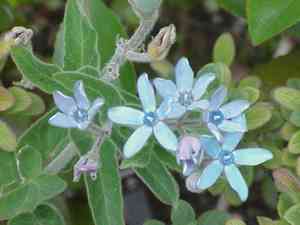
Oxypetalum (Oxypetalum) (Oxypetalum)
Also known as: Tweedia, Southern Star, Blue Star
Mandevilla is a genus of flowering plants belonging to the Apocynaceae family. This genus originates from South America.
In This Article
Attributes of Oxypetalum (Oxypetalum)
Lifespan
Perennial
Plant Height
30-60 cm (12-24 inches)
Spread
Varies as it is vine-like and spreads
Leaf Color
Light green
Flower Size
2-3 cm (0.8-1.2 inches)
Flower Color
Sky blue, sometimes white
Images of Oxypetalum (Oxypetalum)
Quickly Identify Oxypetalum (Oxypetalum)
1
Look for star-shaped blue flowers, milky sap, and light green foliage. It tends to twine and has a vine-like growth habit.
Scientific Classification of Oxypetalum (Oxypetalum)
Phylum
Magnoliophyta
Class
Magnoliopsida
Order
Gentianales
Family
Apocynaceae
Genus
Oxypetalum
Planting and Growing of Oxypetalum (Oxypetalum)
Care Difficulty
Moderate
Watering Schedule
Every 3 days
Sunlight Requirements
Partial sun
Sunshine Duration
4-8 hours
Ideal Temperature
65-75℉
Soil Type
Potting Mix, Peat Mix
Soil pH
6.5-7.5
Fertilizer Type
Balanced
Pruning Season
Spring, Summer
Pruning Area
Branches, Leaves
Pruning Frequency
2 times a year
Repotting Season
Spring
Pot Type
Plastic, Ceramic
 How to Water Oxypetalum (Oxypetalum)?
For Oxypetalum, aim to provide about 500ml of water per session. Ensure the soil is well-drained and the water penetrates deeply without leaving excess moisture, which can encourage root rot.
What are the symptoms of an underwatered Oxypetalum (Oxypetalum)?
›
What should I do if my Oxypetalum (Oxypetalum) is not getting enough water?
›
What are the symptoms of an overwatered Oxypetalum (Oxypetalum)?
›
How to save an overwatered Oxypetalum (Oxypetalum)?
›
 What Are the Sunlight Requirements for Oxypetalum (Oxypetalum)?
Partial sun exposure is ideal for Oxypetalum, as it encourages robust growth and vibrant flowering, while minimizing stress from excessive heat and light intensity.
What is the ideal lighting condition for Oxypetalum?
›
How can I ensure Oxypetalum gets its ideal lighting?
›
What benefits does ideal lighting bring to Oxypetalum?
›
 What Is the Ideal Temperature Range for Oxypetalum (Oxypetalum)?
The ideal temperature range for Oxypetalum is between 65°F and 75°F. This range ensures optimal growth and helps prevent stress on the plant. Maintaining these temperatures provides a consistent environment that mimics its natural habitat, supporting photosynthesis and nutrient uptake efficiently.
 What Soil is Best for Oxypetalum (Oxypetalum)?
Oxypetalum thrives in well-drained soil that prevents waterlogging and root rot. Ensuring that the substrate offers good drainage is vital for the plant's root health, enabling it to absorb nutrients effectively. The plant prefers a soil rich in organic nutrients, which promote vigorous growth and vibrant blooms. Adding compost or organic matter can significantly boost the soil's fertility, benefiting Oxypetalum's overall vitality. While well-draining, the soil should also retain enough moisture to support the plant's needs without becoming soggy. Balancing moisture retention with drainage prevents stress and dehydration in Oxypetalum.
 How to Fertilize Oxypetalum (Oxypetalum)?
For Oxypetalum, apply a balanced liquid fertilizer at the rate of ¼ teaspoon per gallon of water. If using a slow-release granular fertilizer, apply 1 tablespoon evenly around the base of the plant, ensuring not to directly touch the stem.
 How to Prune Oxypetalum (Oxypetalum)?
Begin by identifying the plant's main stems and any dead or yellowing leaves. Use sharp, clean pruners to cut away these non-productive parts. Aim to make your cuts just above a leaf node to encourage new growth. If the plant is looking leggy, pruning back up to one-third of the longest stems can help promote a bushier appearance. Always step back and assess the overall shape to maintain balance and symmetry.
 How to Propagate Oxypetalum (Oxypetalum) plant?
1
Use a sterile seed-starting mix or a well-draining potting soil to fill the seed tray. Moisten the soil lightly to prepare it for planting.
2
Place the seeds on the surface of the soil and cover them with a thin layer of soil. Ensure the seeds are not crowded to give each one space to grow.
3
Select healthy stems and make cuts about 3-6 inches down. Remove lower leaves and plant the cuttings in the prepared soil. Keep them in a humid environment.
 How to Repot Oxypetalum (Oxypetalum) plant?
1
You should repot Oxypetalum when you notice roots emerging from the drainage holes or if the plant seems to be stunted in growth. Another signal is the quick drying out of soil after watering, indicating the roots have filled the pot.
2
Select a pot that's about 2 inches larger in diameter than the current one. Ceramic or terracotta pots with drainage holes are ideal as they allow for better air circulation around the roots and prevent water accumulation, which Oxypetalum dislikes.
3
Choose a well-draining potting mix with some perlite or pumice incorporated. This type of soil ensures that water drains quickly, preventing waterlogging. Oxypetalum prefers slightly acidic to neutral pH soils, enhancing nutrient uptake.
Toxicity
Ingestion or contact with sap
WARNING
The judgment on toxicity and danger is for reference only. We DO NOT GUARANTEE any accuracy of such judgment. Therefore, you SHALL NOT rely on such judgment. It is IMPORTANT TO SEEK PROFESSIONAL ADVICE in advance when necessary.
Learn More About Oxypetalum (Oxypetalum) Diseases
Anthracnose
Bacterial Leaf Spot
Bacterial Soft Rot
Bacterial Wilt
Chemical Injury
Crown Gall
Cyst Nematode
Damping-off
Downy Mildew
Drought Stress
Fusarium Wilt
Gray Mold
Leaf Curl
Leaf Spot
Mosaic
Nutrient Deficiency
Nutrient Toxicity
Powdery Mildew
Root Rot
Root-knot Nematode
Rusts
Sooty Mold
Spider Mites
Temperature Stress
Thrips Damage
White Mold

