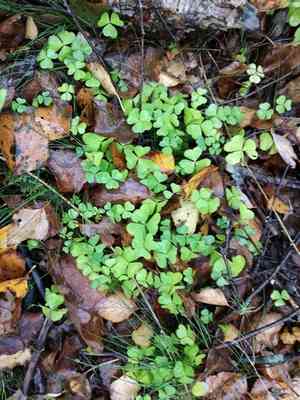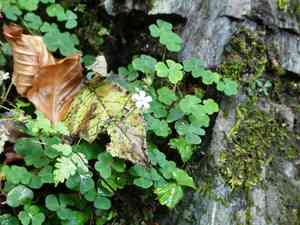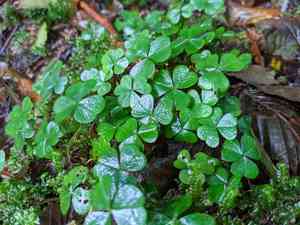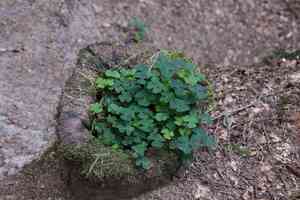
Common wood sorrel(Oxalis acetosella)

Common wood sorrel (Oxalis acetosella)

Also known as: White wood sorrel, Alleluia wood-sorrel

Wood sorrel (Oxalis acetosella) is a low-growing herb commonly found in the shaded woodlands of Europe and much of Asia. This plant is notable for its tangy, lemon-like flavor. Its leaves uniquely fold up at night and when it rains. In Irish culture, wood sorrel is one of the plants referred to as shamrock, symbolizing St. Patrick's Day.

Attributes of Common wood sorrel

Lifespan
Perennial, Annual
Plant Type
Herb
Plant Height
10 cm
Spread
15 cm
Leaf Color
Green
Flower Size
2.5 cm to 5 cm
Flower Color
White Pink

ForwardPlant - Identify plants with a snap

Identify and diagnose plants, get toxicity alerts, and explore safety guides for all types of fungi.

Try for Free

Images of Common wood sorrel

Common wood sorrel(Oxalis acetosella)

Quickly Identify Common wood sorrel

1
Identifying Oxalis acetosella can be done by looking for its trifoliate leaves, which resemble those of clover, and its small, five-petaled white or pink flowers with purple veins. The plant often folds its leaves and closes its flowers at night or in rainy weather.

Scientific Classification of Common wood sorrel

Phylum
Vascular plants
Class
Dicotyledons
Order
Oxalidales
Family
Wood sorrel
Genus
Wood sorrels
Species
Common wood sorrel

Planting and Growing of Common wood sorrel

Care Difficulty
Easy
Watering Schedule
Every 2 days
Sunlight Requirements
Full shade
Sunshine Duration
6-10 hours
Ideal Temperature
50-65℉
Soil Type
Potting Mix, Peat Mix
Soil pH
4-6
Fertilizer Type
Balanced
Pruning Season
Spring, Summer
Pruning Area
Branches, Leaves
Pruning Frequency
2 times a year
Repotting Season
Spring
Pot Type
Plastic, Ceramic

water icon How to Water Common wood sorrel?

For Oxalis acetosella, ensure the soil remains consistently moist but not waterlogged. When watering, apply approximately 100ml per pot, making sure the soil is evenly damp. This supports the plant's preference for a humid environment similar to its natural habitat.
What are the symptoms of an underwatered Common wood sorrel? ›
What should I do if my Common wood sorrel is not getting enough water? ›
What are the symptoms of an overwatered Common wood sorrel? ›
How to save an overwatered Common wood sorrel? ›

sunlight icon What Are the Sunlight Requirements for Common wood sorrel?

Sunlight Requirements: Full shade, Partial sun
Duration of light: 2-5 hours of sun
Partial sun is ideal, ensuring 2-5 hours of dappled or filtered sunlight daily, which encourages healthy growth and vibrant foliage in Oxalis acetosella.
What kind of sunlight does Oxalis acetosella prefer? ›
How can you provide ideal lighting for Oxalis acetosella? ›
Why is ideal lighting important for Oxalis acetosella? ›
More About Sunlight Requirements Techniques→

temperature icon What Is the Ideal Temperature Range for Common wood sorrel?

Ideal Temperature: 50 ~ 65℉
The ideal temperature range for growing Oxalis acetosella is between 50°F and 65°F. This range supports optimal physiological activities including photosynthesis and nutrient uptake, ensuring healthy growth and vibrant foliage.

soil icon What Soil is Best for Common wood sorrel?

Soil type: Loam, Acidic soil, Sandy loam
Soil PH: 4 ~ 6
Oxalis acetosella thrives in well-draining soil, which prevents water from pooling around the roots and causing rot. This not only ensures healthier root development but also keeps the plant vibrant and flourishing. The plant benefits from soil that retains moisture, allowing consistent hydration, essential for its lush foliage and delicate flowers, particularly in drier seasons. Rich, nutrient-dense soil ensures adequate nourishment, promoting robust growth and a more prolific blooming cycle, enhancing its appeal in natural settings.

fertilize icon How to Fertilize Common wood sorrel?

Fertilizer type: Balanced
Oxalis acetosella benefits from a balanced application of fertilizer. Use a diluted liquid fertilizer at a quarter strength, ensuring you do not overwhelm its delicate root system. A little goes a long way with this plant, which thrives in nutrient-rich yet gently maintained soil.

prune icon How to Prune Common wood sorrel?

Pruning Time: Spring, Summer, Autumn
Start by identifying any dead or damaged leaves and remove them with clean, sharp scissors. Trim back any excessively long stems to promote bushier growth. Aim to maintain a pleasant shape and size that won't overwhelm its planting area. If Oxalis acetosella becomes too dense, thin out the middle sections to promote air circulation and light penetration. This prevents fungal diseases and encourages healthier plant development. More About Pruning Techniques→

propagate icon How to Propagate Common wood sorrel plant?

Propagate Time: Spring, Early spring
1
Begin by filling seed trays with a quality potting mix. Evenly sow Oxalis acetosella seeds on the surface, then lightly cover them with a thin layer of potting mix. This helps to protect the seeds while still allowing light to penetrate for germination.
2
Lightly water the seed trays to settle the soil and ensure the seeds have the necessary moisture. It's important to keep the soil consistently moist but not soggy, as excessive water can hinder germination.
3
Place the seed trays in a location with indirect sunlight. Oxalis acetosella requires light to germinate, but direct sunlight can be too intense for young seedlings. If indoor conditions are too dim, consider using a grow light.
More About Propagating Techniques→

repot icon How to Repot Common wood sorrel plant?

Repotting frequency: Once every 2-3 years
1
Look for signs such as roots emerging from the drainage holes, soil drying out too quickly, or stagnant growth. These signals suggest that Oxalis acetosella is outgrowing its current container and needs to be repotted. Repotting during spring or autumn ensures the plant experiences minimal stress and adapts well to its new environment.
2
Select a pot that is slightly larger than the current one, with adequate drainage holes to prevent waterlogging. Opting for a clay or terracotta pot can aid in moisture regulation. Ensure the pot is not too large, as this can lead to excessive soil moisture, causing root rot. The right size ensures the plant has room to grow without overwhelming its root system.
3
Choose a well-draining, acidic soil mix. A combination of peat moss, sand, and perlite works well by providing necessary aeration and drainage, mimicking the natural habitat of Oxalis acetosella. This type of soil ensures the roots remain healthy and can readily absorb essential nutrients, propelling the plant's growth.

ForwardPlant - Identify plants with a snap

Find the best spots for them to optimize their health, simply using your phone.

Try for Free

Toxicity of Common wood sorrel

Is Common wood sorrel toxic to humans?

Common wood sorrel exhibits a mild degree of toxicity to humans, mainly through consumption. This plant contains soluble oxalates throughout, which can be detrimental if ingested. Individuals who consume it may experience symptoms like nausea, diarrhea, and abdominal discomfort. Notably, large quantities can result in more severe conditions, such as kidney stones and issues with calcium absorption. Although every part of common wood sorrel is toxic, foragers and outdoor enthusiasts should be alert to the risk of unintentional ingestion and take necessary precautions. Awareness of the plant's mild toxicity is essential to avoid any potential health complications.

Is Common wood sorrel toxic to cat?

Common wood sorrel presents a low toxicity hazard to cats if unknowingly consumed. The whole plant contains toxic compounds that can be detrimental to their health. When affected by poisoning, cats may show signs of physical discomfort. If ingestion occurs, it is crucial to seek prompt veterinary assistance to address any potential health concerns and to safeguard the welfare of the cat.

Is Common wood sorrel toxic to dog?

The plant species known as common wood sorrel is categorized as possessing mild toxicity towards dogs. If dogs accidentally consume this plant, they can experience poisoning, which raises concerns since all parts of the plant are toxic. Symptoms of poisoning upon ingestion may include vomiting, diarrhea, low energy, or tremors. The toxic characteristics of common wood sorrel are primarily due to the presence of soluble oxalates. If a dog exhibits signs of poisoning after consuming common wood sorrel, it is imperative to seek immediate treatment at a veterinary clinic to address the symptoms and avert additional complications.

Identify toxic plants for your safety

Learn which plants are harmful to you and your pets, and make informed choices for a safer home!

Try for Free
WARNING
The judgment on toxicity and danger is for reference only. We DO NOT GUARANTEE any accuracy of such judgment. Therefore, you SHALL NOT rely on such judgment. It is IMPORTANT TO SEEK PROFESSIONAL ADVICE in advance when necessary.
More About Toxic Techniques→