
Miner's candle (Oreocarya virgata)
Also known as: Narrow-leaved Cryptantha
Miner's candle (Cryptantha flava) exhibits a number of distinctive traits that allow it to thrive in dry environments. The plant features an upright, slender growth form with a bristly texture. One of its most notable characteristics is the cluster of small, tubular flowers, which bloom in soft shades of purple to blue. Adaptations to arid conditions include narrow, hairy leaves that minimize water loss and a preference for rocky, well-drained soils, showcasing its ability to endure harsh climates.
In This Article
Attributes of Miner's candle
Lifespan
Biennial
Plant Type
Herb
Plant Height
20 - 50 cm
Spread
10 - 30 cm
Leaf Color
Green, often with a slight grayish or silvery hue
Flower Size
0.5 - 1 cm
Flower Color
White
Images of Miner's candle
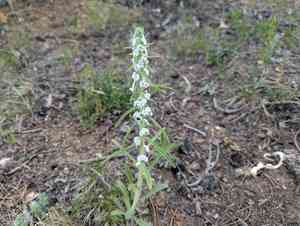
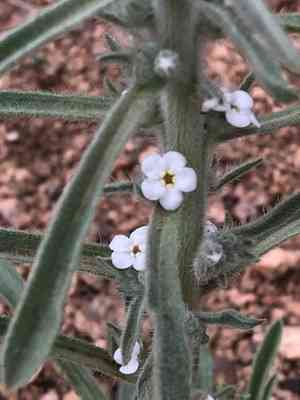
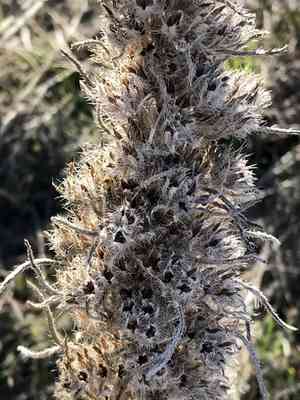
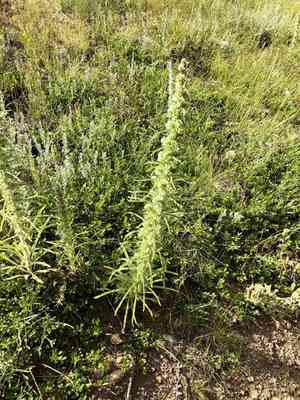
Quickly Identify Miner's candle
1
This plant can be identified by its narrow, linear leaves, and small, white, tube-shaped flowers that form clusters. The flowers often have a hairy or bristly texture.
Scientific Classification of Miner's candle
Phylum
Vascular plants
Class
Dicotyledons
Order
Boraginales
Family
Borage
Genus
Oreocarya
Species
Miner's candle
Planting and Growing of Miner's candle
Care Difficulty
Moderate
Watering Schedule
Every 2 days
Sunlight Requirements
Full sun
Sunshine Duration
4-8 hours
Ideal Temperature
60-75℉
Soil Type
Potting Mix, Peat Mix
Soil pH
6.5-7.5
Fertilizer Type
Balanced
Pruning Season
Spring, Summer
Pruning Area
Branches, Leaves
Pruning Frequency
2 times a year
Repotting Season
Spring
Pot Type
Plastic, Terracotta
 How to Water Miner's candle?
For Oreocarya virgata, it's essential to ensure the soil is lightly moist but not soaked. You should aim for about 250 ml per watering session, allowing excess water to fully drain. This ensures roots are hydrated without sitting in water, which can lead to root rot.
What are the symptoms of an underwatered Miner's candle?
›
What should I do if my Miner's candle is not getting enough water?
›
What are the symptoms of an overwatered Miner's candle?
›
How to save an overwatered Miner's candle?
›
 What Are the Sunlight Requirements for Miner's candle?
For Oreocarya virgata, the ideal range is full to partial sun. Maintaining this light exposure will optimize growth, facilitating photosynthesis and encouraging a more robust and floriferous plant.
What is the best lighting condition for Oreocarya virgata?
›
How can I provide the ideal lighting for Oreocarya virgata?
›
What are the benefits of optimal lighting for Oreocarya virgata?
›
 What Is the Ideal Temperature Range for Miner's candle?
Oreocarya virgata thrives best in environments where the temperature remains consistently between 60°F and 75°F. This range ensures that the plant has adequate warmth for metabolism without experiencing stress from excessive heat. Maintaining this temperature can lead to optimal growth and development.
 What Soil is Best for Miner's candle?
Oreocarya virgata thrives best in well-drained soil, ensuring excess water does not accumulate around its roots, preventing root rot and promoting healthy plant growth. The plant benefits from a soil rich in organic matter, which offers essential nutrients necessary for robust foliage and flowering, enhancing the plant's overall vigor and resilience. While good drainage is critical, the soil should retain enough moisture to keep the roots hydrated, supporting steady growth especially during dry spells.
 How to Fertilize Miner's candle?
For Oreocarya virgata, it is important to use a balanced approach to fertilization. Typically, 1 tablespoon of all-purpose liquid fertilizer diluted in a gallon of water per plant is recommended every two weeks. This will ensure that the plant receives enough nutrients without the risk of overfeeding.
 How to Prune Miner's candle?
Start your pruning by removing any dead or damaged stems, cutting them back to the base or the nearest healthy node. This step is crucial as it helps the plant focus resources on healthy growth. Focus on shaping the plant by selectively thinning out excessive or crossing branches. This not only maintains an attractive form but also improves air circulation and light penetration, promoting vibrant blooms. After the main pruning, step back and assess the overall shape. Make minor adjustments by trimming any stray or uneven stems to achieve a harmonious and balanced appearance for Oreocarya virgata.
More About Pruning Techniques→
 How to Propagate Miner's candle plant?
1
Choose seeds that are plump and free of blemishes; select cuttings that are disease-free, ideally from a non-flowering part of the plant to encourage growth.
2
Use a well-draining soil mixture; a blend of perlite, sand, and peat moss can provide optimal conditions for seed germination and root establishment in cuttings.
3
Sow the seeds or insert cuttings gently into the soil mixture, then water them lightly to settle the soil without causing saturation, which can lead to rot.
 How to Repot Miner's candle plant?
1
Repot Oreocarya virgata when you notice roots growing out of the drainage holes or the plant starts showing stunted growth. These signs typically indicate the plant has outgrown its current pot and needs more space for root expansion.
2
Select a pot that is one size larger than the current one. It should have ample drainage holes to prevent waterlogging, which helps avoid root rot and promotes healthy growth. A slightly deep pot is preferable to accommodate its root structure.
3
Opt for well-draining sandy loam soil to mimic its natural habitat. This type of soil ensures good drainage and prevents water from pooling around the roots, reducing the risk of root rot and ensuring optimal plant health.


