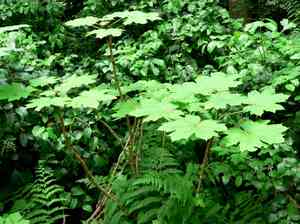
Devil's Club (Oplopanax horridus)
Also known as: Alaskan Ginseng
Devil's Club (Oplopanax horridus) is a spiny shrub native to the Pacific Northwest and parts of Alaska. Alaskan Native tribes have traditionally used this plant for several purposes. Medicinally, its inner bark is crafted into teas or poultices to address conditions like arthritis, digestive problems, and respiratory issues. Additionally, Devil's Club holds spiritual importance and is employed as a protective talisman to ward off negative energies. The burnt stems have also been historically utilized to make face paint and deodorant. Despite its potentially irritating spines, it remains a valuable resource within these communities.
Attributes of Devil's Club
Images of Devil's Club
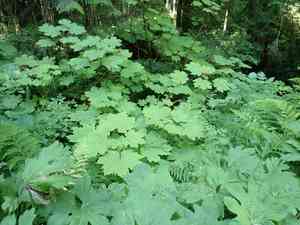
Quickly Identify Devil's Club
Scientific Classification of Devil's Club
Planting and Growing of Devil's Club
 How to Water Devil's Club?
 What Are the Sunlight Requirements for Devil's Club?
 What Is the Ideal Temperature Range for Devil's Club?
 What Soil is Best for Devil's Club?
 How to Fertilize Devil's Club?
 How to Prune Devil's Club?
 How to Propagate Devil's Club plant?
 How to Repot Devil's Club plant?
Toxicity of Devil's Club
Is Devil's Club toxic to humans?
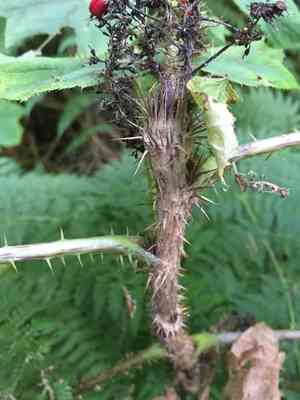
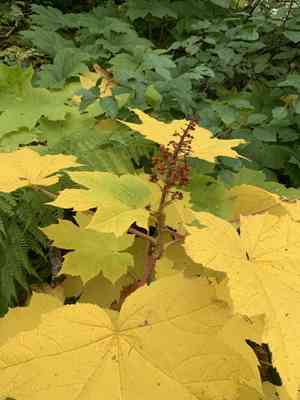
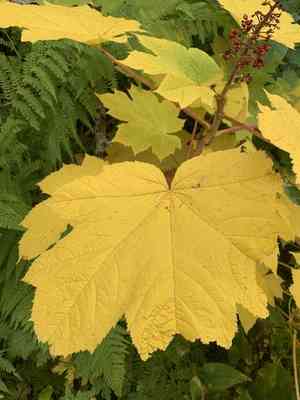
Devil's Club bears striking, red berries that are toxic to humans when consumed. Fortunately, the fruit does not resemble common edible varieties. If ingested, individuals may experience symptoms such as nausea, vomiting, and diarrhea. Cases of overdose are incredibly rare due to the fruit's bitter flavor. This tall, invasive plant also features leaves that have spines on their undersides. These spines can easily detach upon contact, leading to irritation and potential infection. The spines present a significant hazard to small children and pets, as they can inadvertently come into contact with the leaves.



