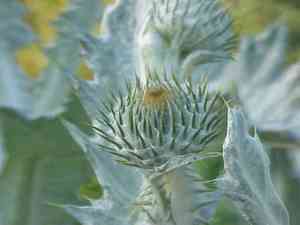
Cottonthistles (Onopordum) (Onopordum)
Also known as: Cotton Thistle, Scotch Thistle
The genus *Cirsium* consists of biennial and perennial thistle plants originally from Europe, Africa, and Asia. These plants have been introduced to North America and Australia as ornamentals, although some species have become invasive. *Cirsium* thistles are famously recognized as the national emblem of Scotland.
In This Article
Attributes of Cottonthistles (Onopordum)
Lifespan
Biennial
Plant Height
1.5 to 2.5 meters
Spread
Up to 1 meter
Leaf Color
Green, often with a white or silver tint
Flower Size
4 to 6 centimeters
Flower Color
Purple, Pink
Images of Cottonthistles (Onopordum)
Quickly Identify Cottonthistles (Onopordum)
1
Onopordum can be identified by their large spiny leaves, silvery appearance due to a covering of fine hairs, and prominent purple or pink flower heads. The plants generally have a robust, upright growth habit.
Scientific Classification of Cottonthistles (Onopordum)
Phylum
Magnoliophyta
Class
Magnoliopsida
Order
Asterales
Family
Asteraceae
Genus
Onopordum
Planting and Growing of Cottonthistles (Onopordum)
Care Difficulty
Moderate
Watering Schedule
Every day
Sunlight Requirements
Full sun
Sunshine Duration
4-8 hours
Ideal Temperature
68-86℉
Soil Type
Potting Mix, Peat Mix
Soil pH
6.5-7.5
Fertilizer Type
Balanced
Pruning Season
Spring, Summer
Pruning Area
Branches, Leaves
Pruning Frequency
2 times a year
Repotting Season
Spring
Pot Type
Plastic, Ceramic
 How to Water Cottonthistles (Onopordum)?
Onopordum, commonly known as the cotton thistle, prefers its natural habitat of dry, sunny areas. When watering, ensure that the soil is thoroughly moist but not waterlogged. This is typically achieved with about 500 milliliters of water, which allows the water to penetrate deeply, promoting strong, healthy root growth. However, ensure the excess water drains freely to prevent root rot.
What are the symptoms of an underwatered Cottonthistles (Onopordum)?
›
What should I do if my Cottonthistles (Onopordum) is not getting enough water?
›
What are the symptoms of an overwatered Cottonthistles (Onopordum)?
›
How to save an overwatered Cottonthistles (Onopordum)?
›
 What Are the Sunlight Requirements for Cottonthistles (Onopordum)?
Onopordum's ideal light range is full sun with exposure to 6 to 8 hours of sunlight daily. This range supports optimal growth and blooming.
How does Onopordum prefer its light?
›
How can you ensure Onopordum receives ideal light?
›
What benefits does ideal lighting provide to Onopordum?
›
 What Is the Ideal Temperature Range for Cottonthistles (Onopordum)?
Onopordum thrives in temperatures ranging from 68 to 86 degrees Fahrenheit. This range provides optimal conditions for photosynthesis, ensuring healthy growth and flowering. Maintaining this environment can help this drought-tolerant plant maximize its growth potential and resilience.
 What Soil is Best for Cottonthistles (Onopordum)?
Onopordum thrives in well-drained soils, which prevent root rot and provide a stable environment for root development. Ensuring good drainage can lead to healthier plant growth and increased resistance to diseases. These plants benefit from soils enriched with organic matter or fertilizers. A nutrient-rich environment supports robust growth and more vibrant flowering, enhancing the aesthetic appeal of the plant. While Onopordum requires good drainage, it benefits from soils that can retain some moisture. This balance ensures the plant has access to water during dry periods without the risk of waterlogging.
 How to Fertilize Cottonthistles (Onopordum)?
Onopordum plants thrive with moderate fertilization. Use 1 tablespoon of balanced liquid fertilizer per gallon of water for liquid feedings. For slow-release fertilizers, apply around 1/2 cup per square meter to ensure the plant gets necessary nutrients without overloading the soil.
 How to Prune Cottonthistles (Onopordum)?
Begin by removing any dead or damaged leaves and stems to encourage new growth. Trim back overgrown or unruly branches to maintain the plant's natural shape. Always cut at a slight angle just above a node or bud. To give Onopordum an aesthetically pleasing shape, you can selectively prune to create a more compact form. Be cautious not to over-prune, as this could stunt the plant's growth. Aim for a balanced shape with an open center to enhance light penetration.
 How to Propagate Cottonthistles (Onopordum) plant?
1
Begin by filling the seed tray with well-draining potting soil. Scatter the Onopordum seeds over the soil surface, lightly pressing them into the soil. Be careful not to bury the seeds too deeply, as they require light to germinate.
2
After sowing the seeds, gently water the soil to ensure moisture penetrates without disturbing the seeds. Maintain consistent moisture levels, but be cautious of overwatering, which can lead to fungal growth and hinder germination.
3
Place the seed tray in a location with plenty of sunlight or use artificial grow lights to stimulate germination. Adequate light is necessary for the seeds to sprout and for the seedlings to grow vigorously.
 How to Repot Cottonthistles (Onopordum) plant?
1
Onopordum exhibits budding signs in early spring, indicating vigorous root growth. If you observe roots circling the pot bottom or reduced flower production, it’s time for a new pot. Such indicators suggest space constraints, necessitating repotting to ensure further healthy development.
2
Opt for a pot slightly larger than the current one, with ample drainage holes. Terracotta pots are recommended as they allow air circulation, preventing root rot. The pot's weight also provides stability, which is beneficial for tall, top-heavy plants like Onopordum.
3
Select a well-draining gritty soil, enriched with peat and sand. The composition should simulate Onopordum's natural habitat, promoting aeration and preventing waterlogging. This soil type ensures that nutrients are sufficiently retained without compacting.
Learn More About Cottonthistles (Onopordum) Diseases
Anthracnose
Bacterial Leaf Spot
Bacterial Soft Rot
Bacterial Wilt
Black Spot
Chemical Injury
Crown Gall
Cyst Nematode
Damping-off
Downy Mildew
Drought Stress
Fusarium Wilt
Gray Mold
Leaf Spot
Mosaic
Nutrient Deficiency
Nutrient Toxicity
Powdery Mildew
Root Rot
Root-knot Nematode
Rusts
Sooty Mold
Spider Mites
Temperature Stress
Thrips Damage
White Mold

