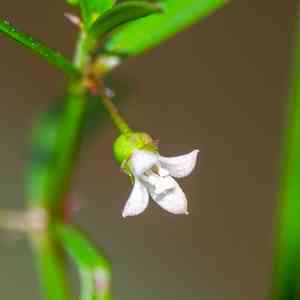
Flat-top mille graines (Oldenlandia corymbosa)
Also known as: Oldenlandia, Diamond Flower, Flat-top Mille Graines
The plant you are referring to is the Flat-top mille graines (Oldenlandia corymbosa), an annual flowering species native to regions including Africa, the Middle East, and southern Asia. This plant thrives in tropical and subtropical areas around the globe. The leaves of flat-top mille graines are high in vitamin C and can be cooked with other vegetables. Additionally, its roots are utilized to produce green dye.
In This Article
Attributes of Flat-top mille graines
Lifespan
Perennial, Annual
Plant Type
Herb
Plant Height
30 cm to 40 cm
Spread
10-25 cm
Leaf Color
Green
Flower Size
2 cm
Flower Color
White
Images of Flat-top mille graines
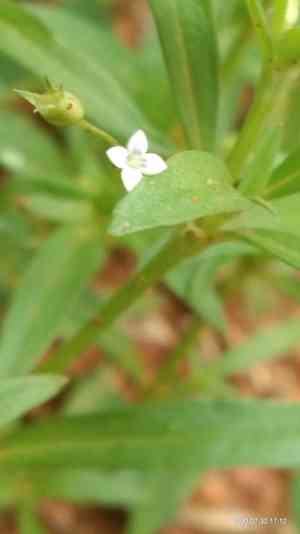
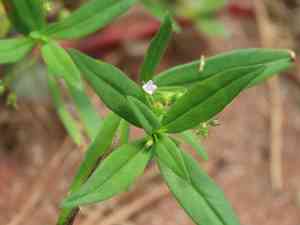
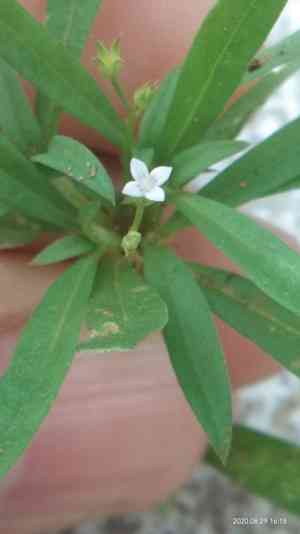
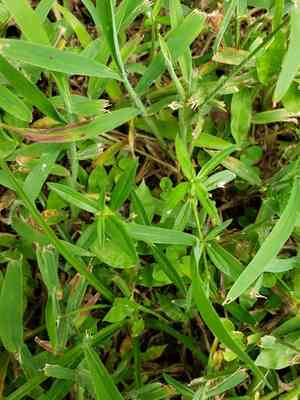
Quickly Identify Flat-top mille graines
1
Oldenlandia corymbosa can be identified by its small, white, star-shaped flowers and opposite, linear leaves. The plant usually grows close to the ground and forms a mat-like structure. The stems are slender and may be slightly hairy.
Scientific Classification of Flat-top mille graines
Phylum
Vascular plants
Class
Dicotyledons
Order
Gentianales
Family
Madder
Genus
Oldenlandia
Species
Flat-top mille graines
Planting and Growing of Flat-top mille graines
Care Difficulty
Easy
Watering Schedule
Every 8 days
Sunlight Requirements
Full sun
Sunshine Duration
4-8 hours
Ideal Temperature
68-86℉
Soil Type
Potting Mix, Peat Mix
Soil pH
6.5-7.5
Fertilizer Type
Balanced
Pruning Season
Spring, Summer
Pruning Area
Branches, Leaves
Pruning Frequency
Once a year
Repotting Season
Spring
Pot Type
Plastic, Ceramic
 How to Water Flat-top mille graines?
Oldenlandia corymbosa prefers soil that is consistently moist but not waterlogged. Water it with about 100 milliliters to make sure the soil remains damp but not drenched. The key is to ensure water penetrates the root zone without pooling excessively at the base.
What are the symptoms of an underwatered Flat-top mille graines?
›
What should I do if my Flat-top mille graines is not getting enough water?
›
What are the symptoms of an overwatered Flat-top mille graines?
›
How to save an overwatered Flat-top mille graines?
›
 What Are the Sunlight Requirements for Flat-top mille graines?
Oldenlandia corymbosa thrives best in full sun to partial sun exposure, translating to robust growth, vibrant foliage, and enhanced flowering.
How to achieve optimal lighting?
›
What are the solutions to achieve ideal lighting?
›
What effects does ideal lighting have?
›
 What Is the Ideal Temperature Range for Flat-top mille graines?
Oldenlandia corymbosa thrives best in temperatures ranging from 68 to 86 °F. This range provides optimal conditions for growth and flowering, mimicking its natural tropical environment. Consistent temperatures within this range will promote vigorous growth and robust health in the plant.
 What Soil is Best for Flat-top mille graines?
Oldenlandia corymbosa thrives in well-drained soil. Good drainage helps prevent root rot by avoiding waterlogging, which can smother roots and hinder oxygen passage. Though it’s not particularly picky, moderately fertile soil ensures that Oldenlandia corymbosa gets a balanced nutrient supply for its growth and development. Keeping the soil lightly moist is key for Oldenlandia corymbosa. Consistent moisture levels aid in nutrient absorption and help maintain the plant’s vitality.
 How to Fertilize Flat-top mille graines?
For Oldenlandia corymbosa, use a balanced fertilizer diluted to half the recommended strength. This plant benefits from a modest approach—avoid over-fertilizing because the roots are sensitive and can be susceptible to nutrient burn. Typically, 1 teaspoon of liquid fertilizer mixed in a gallon of water every two weeks works well.
 How to Prune Flat-top mille graines?
Avoid pruning during extreme heat waves or cold snaps, as this can stress the plant. Choose a mild day to minimize stress on the plant and ensure a quick recovery after pruning. While pruning, inspect the plant for signs of pests or diseases that may need attention. Removing affected areas promptly can prevent further spread and keep the plant healthy.
 How to Propagate Flat-top mille graines plant?
1
Fill the seed tray with a well-draining potting mix. Moisten the soil evenly without making it soggy. This provides an ideal condition for seed germination.
2
Sprinkle the seeds evenly over the prepared soil surface. Cover them with a thin layer of soil or vermiculite. Do not bury the seeds too deep as they need light to germinate.
3
Place the seed tray in a warm, bright location. Maintain consistent moisture by using a spray bottle. Ensure good air circulation to avoid fungal growth on the soil surface.
 How to Repot Flat-top mille graines plant?
1
Oldenlandia corymbosa needs repotting when it outgrows its current pot, evidenced by roots emerging from the drainage holes. Another indicator is poor growth due to depleted soil nutrients. Typically, this happens every two years. Repotting should ideally be done in the spring or early summer when the plant is actively growing, allowing it to quickly establish itself in its new environment.
2
Select a pot that's slightly larger than the current one, with sufficient drainage holes to prevent waterlogging, which could lead to root rot. A pot 1-2 inches larger in diameter is ideal, ensuring room for root growth without excessive soil that retains too much moisture. Clay pots are recommended as they allow for better air circulation.
3
Use a well-draining sandy soil mix that mimics the plant’s natural habitat. This helps avoid water retention, promoting healthy root growth. A mix with equal parts sand, loam, and a bit of organic matter like coco peat or pine bark is beneficial. This blend facilitates good drainage while retaining necessary moisture and nutrients.

