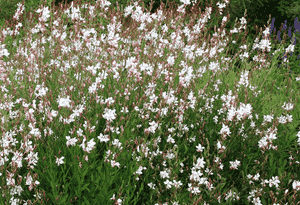
Lindheimer's beeblossom (Oenothera lindheimeri)
Also known as: Lindheimer's Gaura, Butterfly gaura, Indian feather
Lindheimer's beeblossom, scientifically known as Oenothera lindheimeri (formerly Gaura lindheimeri), is a perennial plant indigenous to Texas and Louisiana. Often cultivated for ornamental purposes in gardens and containers, this plant thrives in full sunlight and is tolerant of drought.
In This Article
Attributes of Lindheimer's beeblossom
Lifespan
Perennial
Plant Type
Herb
Plant Height
50 cm to 1.5 m
Spread
60 cm to 90 cm
Leaf Color
Green Yellow Gold
Flower Size
2 cm to 3 cm
Flower Color
White Pink Cream Purple Red
Images of Lindheimer's beeblossom
Quickly Identify Lindheimer's beeblossom
1
Lance-shaped leaves with fine hairs and toothed margins, ranging from dark green to burgundy.
2
White to pink-tinted flowers, 0.5-1 inch wide, with eight yellow stamens per flower.
3
Distinct nutlike fruit, green to grayish-brown, housing reddish-brown seeds.
4
Wiry, erect or arching stem, up to 4 feet tall, with smooth texture and moderate branching.
5
Basal tuft of foliage, 3-5 feet tall, 1-2 feet wide, forming a sturdy and robust plant.
Scientific Classification of Lindheimer's beeblossom
Phylum
Vascular plants
Class
Dicotyledons
Order
Myrtales
Family
Evening primrose
Genus
Evening Primrose
Species
Lindheimer's beeblossom
Planting and Growing of Lindheimer's beeblossom
Care Difficulty
Easy
Watering Schedule
Every 3 days
Sunlight Requirements
Full sun
Sunshine Duration
6-10 hours
Ideal Temperature
60-75℉
Soil Type
Potting Mix, Peat Mix
Soil pH
6.5-7.5
Fertilizer Type
Balanced
Pruning Season
Spring, Summer
Pruning Area
Branches, Leaves
Pruning Frequency
2 times a year
Repotting Season
Spring
Pot Type
Plastic, Ceramic
 How to Water Lindheimer's beeblossom?
For Oenothera lindheimeri, aim to water until the soil is thoroughly moist but not soggy, approximately 500ml of water per session. The plant thrives in well-drained soil, so avoid letting it sit in water to prevent root rot.
More About Watering Techniques→
What are the symptoms of an underwatered Lindheimer's beeblossom?
›
What should I do if my Lindheimer's beeblossom is not getting enough water?
›
What are the symptoms of an overwatered Lindheimer's beeblossom?
›
How to save an overwatered Lindheimer's beeblossom?
›
 What Are the Sunlight Requirements for Lindheimer's beeblossom?
The ideal light for Oenothera lindheimeri is full sun to partial sun, providing robust growth and vibrant blooms. Receiving ample sunlight boosts metabolic processes, increasing flower production and overall plant vitality.
More About Sunlight Requirements Techniques→
How much sunlight does Oenothera lindheimeri need?
›
How can I ensure my plant gets the right amount of light?
›
What are the benefits of ideal sunlight?
›
 What Is the Ideal Temperature Range for Lindheimer's beeblossom?
Oenothera lindheimeri thrives best in mild temperature conditions, ideally between 60 to 75 degrees Fahrenheit. This range supports optimal growth and blooming, ensuring the plant remains healthy and vibrant. Maintaining these temperatures helps prevent stress and promotes robust flower production.
 What Soil is Best for Lindheimer's beeblossom?
Oenothera lindheimeri thrives in well-drained soils that prevent water logging. This ability to avoid soggy conditions reduces the risk of root rot, ensuring a healthy and robust plant growth. While not exceedingly picky, this plant benefits from nutrient-rich soil to fuel its vibrant growth. Incorporating organic matter like compost can enhance soil fertility, leading to more robust foliage and blooms. A soil pH between 6.5 and 7.5 is ideal, as it facilitates nutrient availability, ensuring the plant receives essential elements for photosynthesis and overall health.
More About Soil→
 How to Fertilize Lindheimer's beeblossom?
When fertilizing Oenothera lindheimeri, a balanced 10-10-10 NPK fertilizer is often ideal. For liquid fertilizers, dilute them to half strength. Use approximately 1 tablespoon per gallon of water to avoid overwhelming the plant with nutrients.
More About Fertilizing Techniques→
 How to Prune Lindheimer's beeblossom?
Start by removing any dead, damaged, or diseased stems to promote healthy growth. Trim the stems back by about one-third to encourage new blooms. Use sharp, clean shears to make precise cuts just above a leaf node or bud. This technique will help the plant to branch out more effectively, leading to a fuller appearance with more flowers throughout the blooming season. Throughout the blooming season, regularly remove spent flowers. This process, known as deadheading, not only keeps the plant looking tidy but also prevents it from going to seed too early and encourages more prolonged blooming. Pinch off or cut the flower stem just above the first set of healthy leaves, which stimulates the plant to produce more buds.
More About Pruning Techniques→
 How to Propagate Lindheimer's beeblossom plant?
1
Collect seeds from mature plants and dry them completely before storage. Sow the seeds in a tray filled with sterile potting mix, ensuring they are covered with a fine layer of soil. Water gently to keep the soil moist.
2
Choose healthy, non-flowering stems about 6 inches long. Cut just below a leaf node, remove the lower leaves, and dip the end in rooting hormone. Place the cutting into a pot filled with moistened potting mix.
3
Carefully dig around the base of a mature plant and lift the root ball. Gently separate the plant into smaller sections, ensuring each section has a good number of roots attached. Replant divisions promptly in prepared soil.
 How to Repot Lindheimer's beeblossom plant?
1
Oenothera lindheimeri, or Gaura, signals the need for repotting when its roots predominantly appear through drainage holes or become visible on the soil surface. If growth stagnates despite adequate care, these are further signs it's time to repot. Ideally repot in spring or autumn to give it a fresh start.
2
Select a pot that is one size larger than the current one, ensuring it has sufficient drainage holes. The pot should provide enough room for growth over the next two to three years, offering stability and preventing water retention issues that can cause root rot.
3
Opt for a well-draining potting mix with added sand or grit. This soil type helps prevent waterlogging while providing the aeration necessary for healthy root development, facilitating optimal growth conditions for your Gaura.
Learn More About Lindheimer's beeblossom Diseases
Anthracnose
Bacterial Leaf Spot
Bacterial Soft Rot
Bacterial Wilt
Black Spot
Chemical Injury
Crown Gall
Cyst Nematode
Damping-off
Downy Mildew
Drought Stress
Fusarium Wilt
Gray Mold
Leaf Curl
Leaf Spot
Mosaic
Nutrient Deficiency
Nutrient Toxicity
Powdery Mildew
Root Rot
Root-knot Nematode
Rusts
Sooty Mold
Spider Mites
Temperature Stress
Thrips Damage
White Mold



