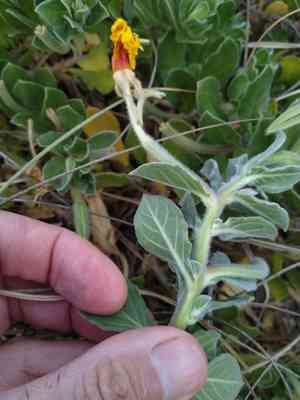
Beach evening primrose (Oenothera drummondii)
Also known as: Drummond's evening primrose
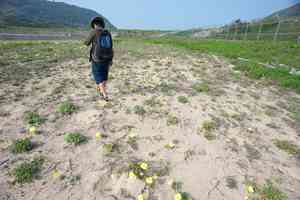
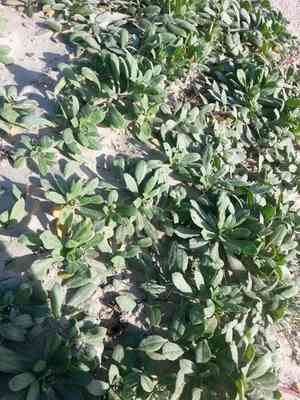
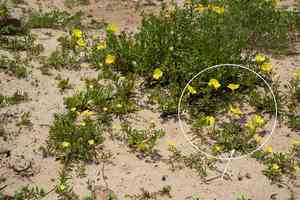
Beach evening primrose is native to the coastal areas of Mexico and the southern United States. This plant typically forms dense mats close to the ground, aiding in the stabilization of loose soil and sand. While it is often cultivated in gardens in various countries, it has become an invasive species in Australia after being introduced there.
In This Article
Attributes of Beach evening primrose
Lifespan
Perennial
Plant Type
Herb, Shrub
Plant Height
30 cm to 91 cm
Spread
50 cm
Leaf Color
Green
Flower Size
3 cm to 4 cm
Flower Color
Yellow
Images of Beach evening primrose
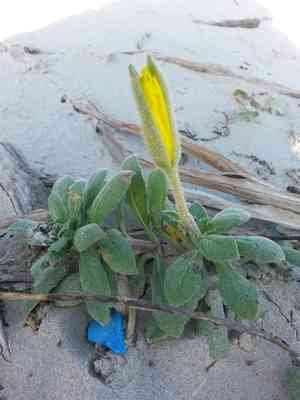
Quickly Identify Beach evening primrose
1
Oenothera drummondii can be identified by its large, yellow flowers that typically open late in the day and remain open throughout the night. The plant has lanceolate leaves that are arranged alternately along the stem. The stems are typically covered in fine hairs.
Scientific Classification of Beach evening primrose
Phylum
Vascular plants
Class
Dicotyledons
Order
Myrtales
Family
Evening primrose
Genus
Evening Primrose
Species
Beach evening primrose
Planting and Growing of Beach evening primrose
Care Difficulty
Easy
Watering Schedule
Every 4 days
Sunlight Requirements
Full sun
Sunshine Duration
4-6 hours
Ideal Temperature
65-75℉
Soil Type
Potting Mix, Peat Mix
Soil pH
6.5-7.5
Fertilizer Type
Balanced
Pruning Season
Spring, Summer
Pruning Area
Branches, Leaves
Pruning Frequency
2 times a year
Repotting Season
Spring
Pot Type
Plastic, Ceramic
 How to Water Beach evening primrose?
Aim to water Oenothera drummondii until the soil is evenly moist, which means approximately 250 ml per watering session. The goal is to make sure the soil is neither soggy nor dry. If water pools and doesn't absorb, you've watered too much. The plant prefers well-draining soil to prevent overwatering.
What are the symptoms of an underwatered Beach evening primrose?
›
What should I do if my Beach evening primrose is not getting enough water?
›
What are the symptoms of an overwatered Beach evening primrose?
›
How to save an overwatered Beach evening primrose?
›
 What Are the Sunlight Requirements for Beach evening primrose?
The ideal light range for Oenothera drummondii is full sun exposure, ensuring 6-8 hours of sunlight. This promotes healthy growth and ample flowering, contributing to the plant's vibrant display and ecological function.
How much sunlight does Oenothera drummondii need?
›
What if my plant doesn't get enough sun?
›
Are there artificial lighting options?
›
 What Is the Ideal Temperature Range for Beach evening primrose?
The ideal temperature range for Oenothera drummondii, commonly known as Drummond's evening primrose, falls between 65°F and 75°F. This range provides optimal conditions for growth and blooming, ensuring the plant's physiological processes operate efficiently. Within these temperatures, nutrient absorption, photosynthesis, and overall metabolism are maintained at optimal levels, promoting healthy foliage and vibrant flowers.
 What Soil is Best for Beach evening primrose?
Oenothera drummondii thrives in well-drained soil, which prevents root rot. The sandy texture aids in water percolation, offering the roots the breathing space needed for optimal growth. While it prefers sandy conditions, enriching the soil with organic matter can boost its nutrient availability. This helps the plant in achieving a healthier and more vibrant bloom. Although well-draining, the soil should retain enough moisture to support continuous hydration. This balance ensures that the plant remains resilient during dry spells.
 How to Fertilize Beach evening primrose?
When fertilizing Oenothera drummondii, use a balanced, all-purpose fertilizer with an N-P-K ratio of 10-10-10. Apply 1/2 to 1 teaspoon for each gallon of water when using liquid fertilizers. For solid fertilizers, a thin layer sprinkled around the base of the plant once annually is sufficient.
 How to Prune Beach evening primrose?
Start by examining your Oenothera drummondii for any dead or damaged stems, and cut them back to the base to encourage healthy growth. Next, shape the plant by trimming overgrown branches, aiming for a balanced look. This encourages the plant to focus its energy on producing flowers, rewarding you with a stunning display. Using sharp, sterilized scissors or shears, make clean cuts just above a leaf node or lateral bud.
More About Pruning Techniques→
 How to Propagate Beach evening primrose plant?
1
Collect seeds when seed pods have fully matured. Ensure the pods are dry and brown before harvesting to guarantee viable seeds for germination.
2
Select healthy stems for cuttings, ideally from new growth. Cut a 4- to 6-inch segment, ensuring it has at least two leaf nodes, and remove the lower leaves.
3
Dig up mature clumps in the spring. Gently separate the roots and stems into smaller sections, ensuring each section has healthy roots and shoots before replanting.
 How to Repot Beach evening primrose plant?
1
Oenothera drummondii should be repotted when you notice roots coming out of the drainage holes, slowed growth, or soil compacted at the surface. These signs indicate that the plant has outgrown its current container and requires more space for healthy development.
2
Select a pot that is just one size larger than the current one, with ample drainage holes. The larger size prevents root circling, while good drainage avoids waterlogging, both ensuring better root health and growth.
3
Opt for a well-draining sandy soil mix that mimics the plant's natural habitat. This promotes good air circulation around the roots and prevents issues related to root rot, supporting a healthy and thriving plant.
Learn More About Beach evening primrose Diseases
Anthracnose
Bacterial Leaf Spot
Bacterial Wilt
Crown Gall
Cyst Nematode
Damping-off
Downy Mildew
Drought Stress
Fusarium Wilt
Gray Mold
Leaf Curl
Leaf Spot
Mosaic
Nutrient Deficiency
Nutrient Toxicity
Powdery Mildew
Root Rot
Root-knot Nematode
Rusts
Sooty Mold
Spider Mites
Temperature Stress
Thrips Damage
White Mold



