Mickey Mouse plant (Ochna serrulata)
Also known as: Carnival bush, Mickey Mouse bush
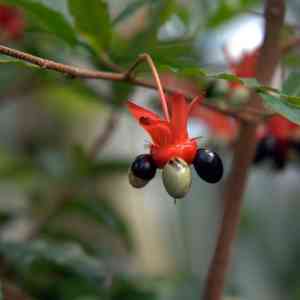
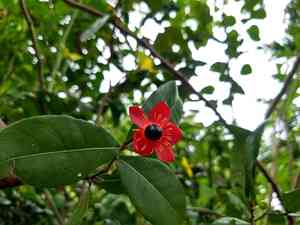
The Mickey Mouse plant, scientifically known as Ochna serrulata, derives its common name from its distinctive appearance when it fruits. The plant produces black berries that dangle from vivid red sepals, creating a visual that resembles Mickey Mouse's face and ears. Native to South Africa, this plant is often cultivated in gardens for its ornamental value.
In This Article
Attributes of Mickey Mouse plant
Lifespan
Perennial
Plant Type
Shrub
Plant Height
1 m to 6 m
Spread
90 cm to 1.2 m
Leaf Color
Green
Flower Size
2 cm
Flower Color
Yellow Red Green
Images of Mickey Mouse plant
Quickly Identify Mickey Mouse plant
1
Slender, dark brown stem reaching 3-8 feet (0.9-2.4 meters).
2
Glossy green elliptical leaves, 1-3 inches (2.5-7.6 cm) with toothed edges.
3
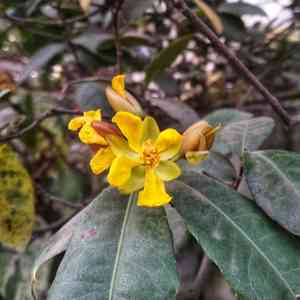
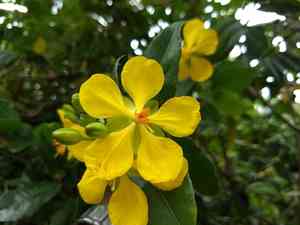
Fragrant yellow flowers, 0.8 inches (2 cm) wide with spread petals and stamens.
4
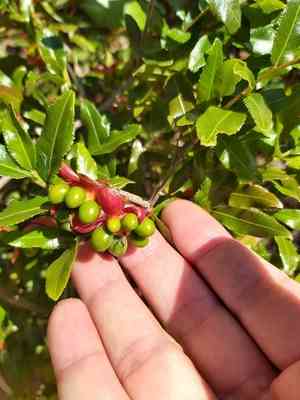
Small black berries, 0.5 inches (1.3 cm) against red sepals after yellow flowers.
5
Distinct red and black coloration of berries and sepals resembling cartoon character.
Scientific Classification of Mickey Mouse plant
Phylum
Vascular plants
Class
Dicotyledons
Order
Nances, spurges, willows and allies
Family
Ochna
Genus
Ochna
Species
Mickey Mouse plant
Planting and Growing of Mickey Mouse plant
Care Difficulty
Easy
Watering Schedule
Every 4 days
Sunlight Requirements
Partial sun
Sunshine Duration
4-8 hours
Ideal Temperature
60-75℉
Soil Type
Potting Mix, Peat Mix
Soil pH
5.5-7.5
Fertilizer Type
Balanced
Pruning Season
Spring, Summer
Pruning Area
Branches, Leaves
Pruning Frequency
2 times a year
Repotting Season
Spring
Pot Type
Plastic, Ceramic
 How to Water Mickey Mouse plant?
Ochna serrulata, also known as the Mickey Mouse plant, prefers a moderate amount of water. The soil should be kept consistently moist but never waterlogged. A good rule of thumb is to water it until the top 1 inch (about 2.5 cm) of soil feels moist, ensuring excess water drains away.
What are the symptoms of an underwatered Mickey Mouse plant?
›
What should I do if my Mickey Mouse plant is not getting enough water?
›
What are the symptoms of an overwatered Mickey Mouse plant?
›
How to save an overwatered Mickey Mouse plant?
›
 What Are the Sunlight Requirements for Mickey Mouse plant?
Ochna serrulata's ideal light exposure ranges from partial sun to dappled shade. Given this range, the plant receives the right balance of energy for optimal growth, vibrant leaf coloration, and flowering, while minimizing the risk of heat stress.
More About Sunlight Requirements Techniques→
What is Ochna serrulata's ideal light condition?
›
How can I ensure Ochna serrulata gets ideal light?
›
What benefits does ideal lighting provide Ochna serrulata?
›
 What Is the Ideal Temperature Range for Mickey Mouse plant?
For Ochna serrulata, it is crucial to maintain the ambient temperature between 60°F and 75°F to ensure optimal growth. In this range, the plant can effectively carry out photosynthesis, uptake nutrients efficiently, and maintain healthy growth. Temperatures in this range mimic its native subtropical environment, providing a consistent climate for it to flourish.
 What Soil is Best for Mickey Mouse plant?
Ochna serrulata thrives in well-draining soil as it prevents waterlogging, which can lead to root rot. Ensuring proper drainage mimics its natural habitat and supports healthy root development. The plant benefits from moderately fertile soil, which provides essential nutrients without causing excessive foliage growth or weakening the plant structure. Balanced soil fertility ensures steady growth and vibrant blooms. Ochna serrulata prefers slightly acidic soil, accommodating a pH range of 5.5 to 7.0. This pH range optimizes nutrient absorption and supports healthy foliage and flower production in this ornamental plant.
 How to Fertilize Mickey Mouse plant?
Ochna serrulata benefits from a balanced application of nutrients. Use a general-purpose fertilizer with a composition of 10-10-10 or similar. For liquid fertilizers, mix at a rate of approximately 10 ml per liter of water. Apply this solution thoroughly to the soil around the plant's base to encourage even nutrient distribution.
 How to Prune Mickey Mouse plant?
Begin by examining your Ochna serrulata for any dead, diseased, or damaged branches, and remove these first using clean, sharp pruning tools. Next, focus on shaping the plant by cutting back any overly long or unruly stems. Aim to create an open, airy structure that allows light to penetrate the inner branches. Always prune just above a bud or a branch junction to encourage new growth in the desired direction. Clean your tools with alcohol before and after pruning to prevent the spread of disease.
More About Pruning Techniques→
 How to Propagate Mickey Mouse plant plant?
1
Scarify the seeds by gently rubbing them with sandpaper to break the outer coating. This enhances water absorption, which is crucial for successful germination.
2
Select healthy, semi-hardwood stems about 10-15cm long. Remove the lower leaves and dip the cut ends in rooting hormone to encourage root formation.
3
Plant seeds or prepared cuttings in a well-draining soil mixture. Maintain moisture without waterlogging. Cover seed trays with plastic to retain humidity, if necessary.
 How to Repot Mickey Mouse plant plant?
1
Repot Ochna serrulata when you notice roots growing out of the drainage holes or circling at the pot's surface, indicating it's root-bound. Another signal is when the plant's growth appears stunted despite regular care. Spring or autumn are optimal for repotting, ensuring a transition period without stressful temperature extremes.
2
Select a pot that's 1-2 inches larger in diameter than the current one. Ensure it has adequate drainage holes to prevent waterlogging, which can lead to root rot. The material should be breathable like terracotta, aiding soil aeration and healthier root development.
3
Choose a rich, well-draining soil mix, with components like peat, sand, and perlite. Such a mix improves drainage, preventing waterlogged roots, while peat and organic matter provide nutrients essential for the plant's vibrant growth and flowering.
Learn More About Mickey Mouse plant Diseases
Anthracnose
Bacterial Leaf Spot
Black Spot
Chemical Injury
Crown Gall
Damping-off
Downy Mildew
Drought Stress
Fusarium Wilt
Gray Mold
Leaf Curl
Leaf Spot
Mosaic
Nutrient Deficiency
Nutrient Toxicity
Powdery Mildew
Root Rot
Root-knot Nematode
Rusts
Sooty Mold
Spider Mites
Temperature Stress
Thrips Damage



