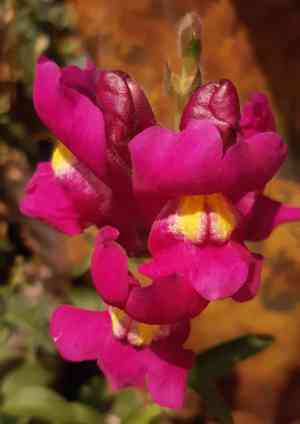
Woodland Beardtongue (Nothochelone) (Nothochelone)
Also known as: N/A
Woodland Beardtongue, a perennial herb indigenous to North America, displays tubular flowers in shades ranging from rose to purple. It flourishes in dry, rocky soils and is commonly found in woodlands and on moist, rocky slopes. The best time to observe these vibrant blooms is during the summer months.
In This Article
Attributes of Woodland Beardtongue (Nothochelone)
Lifespan
Perennial
Plant Height
Up to 1 meter
Spread
N/A
Leaf Color
Green
Flower Size
1-2 cm
Flower Color
Pink to reddish-purple
Images of Woodland Beardtongue (Nothochelone)
Quickly Identify Woodland Beardtongue (Nothochelone)
1
Nothochelone can be identified by its tall, erect stems that can grow up to 1 meter in height. The leaves are lanceolate and opposite, with serrated edges. The plant produces tubular flowers that are pink to reddish-purple, with a two-lipped structure.
Scientific Classification of Woodland Beardtongue (Nothochelone)
Phylum
Magnoliophyta
Class
Magnoliopsida
Order
Lamiales
Family
Plantaginaceae
Genus
Nothochelone
Planting and Growing of Woodland Beardtongue (Nothochelone)
Care Difficulty
Hard
Watering Schedule
Every 3 days
Sunlight Requirements
Partial sun
Sunshine Duration
4-6 hours
Ideal Temperature
60-75℉
Soil Type
Potting Mix, Peat Mix
Soil pH
6.5-7.5
Fertilizer Type
Balanced
Pruning Season
Spring, Summer
Pruning Area
Branches, Leaves
Pruning Frequency
2 times a year
Repotting Season
Spring
Pot Type
Plastic, Ceramic
 How to Water Woodland Beardtongue (Nothochelone)?
For Nothochelone, it's best to water about 250 ml each time. Ensure the soil is damp but not soggy, aiming for moisture consistency without causing root rot. Remember, wet feet are a no-no!
What are the symptoms of an underwatered Woodland Beardtongue (Nothochelone)?
›
What should I do if my Woodland Beardtongue (Nothochelone) is not getting enough water?
›
What are the symptoms of an overwatered Woodland Beardtongue (Nothochelone)?
›
How to save an overwatered Woodland Beardtongue (Nothochelone)?
›
 What Are the Sunlight Requirements for Woodland Beardtongue (Nothochelone)?
Nothochelone thrives best in areas offering partial sun, translating to about 4 to 6 hours of indirect sunlight. This light range supports lush foliage and ample blooming while preventing stress from harsh conditions.
How to provide optimal light?
›
What are the benefits of optimal lighting?
›
Specific measures for ideal light?
›
 What Is the Ideal Temperature Range for Woodland Beardtongue (Nothochelone)?
Nothochelone thrives best in a temperature range of 60-75°F. Within this range, the plant can optimally perform physiological processes such as photosynthesis, growth, and nutrient uptake. Maintaining consistent temperatures within this range ensures that the plant grows healthily and remains resilient to diseases.
 What Soil is Best for Woodland Beardtongue (Nothochelone)?
Nothochelone thrives in well-drained soil, which prevents waterlogging and root rot. Ensuring proper drainage helps the roots breathe and absorb nutrients efficiently, leading to healthier plant growth. This plant benefits from nutrient-rich soil, which provides the essential minerals and organic matter needed for vigorous growth and blooming. Adding compost or fertilizer can enhance soil fertility and provide a steady food source for the plant. Maintaining consistent soil moisture is crucial for Nothochelone. The soil should be kept moist but never waterlogged, as excess moisture can lead to root diseases. A balance in moisture aids in constant nutrient uptake and root development.
 How to Fertilize Woodland Beardtongue (Nothochelone)?
The fertilization amount for Nothochelone should be moderate, as too much can be detrimental. Use a balanced liquid fertilizer at a dilution rate of 1/4 strength every watering. If opting for a slow-release fertilizer, apply according to package instructions, but use only half the recommended amount to prevent over-fertilization.
 How to Prune Woodland Beardtongue (Nothochelone)?
Begin by identifying older growth that appears woody or non-productive. These parts of the plant can drain resources, and removing them helps promote new growth and improved airflow. Trim the plant to maintain a pleasing shape and ensure even growth. Focus on removing branches that cross over each other or grow inwards, as this can hinder light penetration and result in poor air circulation. By pruning strategically, focus your efforts on parts of the plant where new blooms are desired. Cut back stems to a node to encourage a burst of fresh growth and more vibrant flowers in the following season.
 How to Propagate Woodland Beardtongue (Nothochelone) plant?
1
Begin by selecting ripe seeds for propagation. Soak seeds in room temperature water for 24 hours to initiate the germination process. This softens the seed coat, improving germination rates.
2
Select healthy stems and cut 5-6 inch sections with a sterilized pruning shear. Remove the lower leaves to prevent decay in the rooting environment and dip the cut end in rooting hormone to encourage root development.
3
Divide mature plants during the dormant season. Carefully dig up the plant, gently separate the roots with a clean knife, and ensure each section has enough roots and foliage to grow independently for successful propagation.
 How to Repot Woodland Beardtongue (Nothochelone) plant?
1
Repotting Nothochelone should occur when roots start emerging from the drainage holes or if the plant appears to outgrow its current pot. Such signs indicate that the roots need more space to grow.
2
Select a pot that is 1-2 inches larger in diameter than the current one. Ensure it has ample drainage holes to prevent waterlogging, which can otherwise lead to root rot and poor plant health.
3
Choose a well-draining acidic soil mix, enriched with organic matter. Such a mix supports optimal root health and plant growth by allowing excess water to drain, while retaining enough moisture for nutrient absorption.
Learn More About Woodland Beardtongue (Nothochelone) Diseases
Anthracnose
Bacterial Leaf Spot
Bacterial Soft Rot
Bacterial Wilt
Black Spot
Chemical Injury
Crown Gall
Cyst Nematode
Damping-off
Downy Mildew
Drought Stress
Fusarium Wilt
Gray Mold
Leaf Curl
Leaf Spot
Mosaic
Nutrient Deficiency
Nutrient Toxicity
Powdery Mildew
Root Rot
Root-knot Nematode
Rusts
Sooty Mold
Spider Mites
Temperature Stress
Thrips Damage
White Mold

