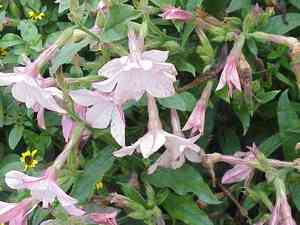
Tobacco plants (Nicotiana) (Nicotiana)
Also known as: Tobacco
Jean Nicot, a French diplomat active between 1559 and 1561, is credited with introducing tobacco plants to French royalty. The plants, originally from South America, were then cultivated in Europe for both commercial use and their ornamental flowers. The genus name "Nicotiana" honors him, as does the term "nicotine."
In This Article
Attributes of Tobacco plants (Nicotiana)
Lifespan
Annual
Plant Height
90 cm
Spread
60 cm
Leaf Color
Green
Flower Size
3-5 cm
Flower Color
White, Pink, Red
Images of Tobacco plants (Nicotiana)

Quickly Identify Tobacco plants (Nicotiana)
1
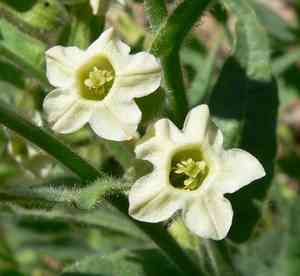
Nicotiana plants can be identified by their sticky hairy leaves and tubular flowers. The leaves are typically large, and the flowers can range in color from white to pink to red.
Scientific Classification of Tobacco plants (Nicotiana)
Phylum
Magnoliophyta
Class
Magnoliopsida
Order
Solanales
Family
Solanaceae
Genus
Nicotiana
Planting and Growing of Tobacco plants (Nicotiana)
Care Difficulty
Easy
Watering Schedule
Every 4 days
Sunlight Requirements
Full sun
Sunshine Duration
4-6 hours
Ideal Temperature
60-75℉
Soil Type
Potting Mix, Peat Mix
Soil pH
5.5-7.5
Fertilizer Type
Balanced
Pruning Season
Spring, Summer
Pruning Area
Branches, Leaves
Pruning Frequency
2 times a year
Repotting Season
Spring
Pot Type
Plastic, Ceramic
 How to Water Tobacco plants (Nicotiana)?
Nicotiana plants thrive with a watering approach where the soil is kept consistently moist but not soggy. Ensure that you water them until the soil is thoroughly saturated, approximately 250 ml per session. This allows the roots to access adequate moisture without sitting in water, which is crucial for their overall health.
What are the symptoms of an underwatered Tobacco plants (Nicotiana)?
›
What should I do if my Tobacco plants (Nicotiana) is not getting enough water?
›
What are the symptoms of an overwatered Tobacco plants (Nicotiana)?
›
How to save an overwatered Tobacco plants (Nicotiana)?
›
 What Are the Sunlight Requirements for Tobacco plants (Nicotiana)?
Nicotiana thrives in environments offering both full and partial sun. Optimal light ensures vigorous growth, prolific flowering, and enhanced disease resistance.
Best Times During the Day
›
Location Selection
›
Protective Measures
›
 What Is the Ideal Temperature Range for Tobacco plants (Nicotiana)?
Nicotiana plants thrive best when the temperature is maintained between 60°F and 75°F. This range ensures optimal growth and flowering by providing a suitable climate that supports photosynthesis and nutrient absorption efficiently. Maintaining this temperature helps avert thermal stress, enabling the plants to develop robust roots and healthy foliage.
 What Soil is Best for Tobacco plants (Nicotiana)?
Nicotiana thrives in soils that are rich in nutrients. These nutrients are essential for the vibrant growth of its leaves and flowers. A fertile soil ensures that the plant has access to all the necessary minerals and vitamins it requires for flourishing, leading to healthier and more robust plants. This plant prefers soil that allows excess water to drain quickly. This prevents root rot and other moisture-related diseases. A well-drained soil will help keep the roots healthy and encourage strong plant growth by preventing waterlogging and allowing roots to capitalize on necessary moisture without drowning. While Nicotiana requires soil that drains well, it also benefits from moderate moisture retention. This means the soil should hold enough moisture to sustain the plant during dry spells while not being too wet. Balancing moisture retention and drainage is crucial for maintaining the plant's health.
 How to Fertilize Tobacco plants (Nicotiana)?
For Nicotiana, it's essential to apply about half the recommended dose as a starter, especially if you are not familiar with its response to fertilizers. Always observe the plant's reaction, and if needed, adjust the amount carefully. Too little might not show visible results, yet too much can lead to nutrient burn, which may harm the plant's growth.
 How to Prune Tobacco plants (Nicotiana)?
Begin by inspecting your Nicotiana for any dead or damaged stems. These should be removed first to promote healthy growth. Cut them back to a main branch or down to the base of the plant. To encourage bushy growth, regularly pinch back the growing tips of your Nicotiana. This encourages the plant to produce more side shoots, leading to a fuller appearance and more blooms. Deadheading is crucial for continuous flowering. Regularly remove faded flowers to prevent seed formation and to redirect the plant's energy into producing more blooms. At the end of the growing season, perform a major pruning. Cut back Nicotiana plants to a few inches above the ground. This resets the plant for the next growing cycle and aids in rejuvenation.
 How to Propagate Tobacco plants (Nicotiana) plant?
1
For seed propagation, start by filling the seed tray with a well-draining potting mix. Moisten the soil lightly to facilitate seed germination. Ensure the soil is evenly distributed and free from large clumps.
2
Scatter Nicotiana seeds sparingly over the prepared soil surface. Lightly press the seeds into the soil without burying them, as they require light for germination. Covering the tray with plastic wrap or a lid can help maintain humidity.
3
For cutting propagation, select healthy, non-flowering stems of about 4-6 inches in length. Use clean, sharp pruning shears to make a slanted cut just below a leaf node, and remove the lower leaves from the cutting.
 How to Repot Tobacco plants (Nicotiana) plant?
1
The best time to repot Nicotiana is during its active growing seasons in spring or summer. Look for signals such as roots growing out of the drainage holes, slowed growth, and compacted soil. These signs indicate that your plant needs more space and fresh soil to thrive.
2
Select a pot that is one size larger than the current one, with sufficient drainage holes to prevent water accumulation. A well-chosen pot ensures healthy root growth and prevents root rot, ultimately contributing to a thriving plant.
3
Opt for a well-draining soil mix rich in organic matter to provide essential nutrients. A light, aerated soil mix allows for proper root expansion, promotes adequate water retention, and minimizes the risk of fungal infections.
Toxicity of Tobacco plants (Nicotiana)
Is Tobacco plants (Nicotiana) toxic to humans?
Tobacco plants, known for their stunning blossoms, must be cultivated carefully because of their significant toxicity to both humans and animals when ingested.
WARNING
The judgment on toxicity and danger is for reference only. We DO NOT GUARANTEE any accuracy of such judgment. Therefore, you SHALL NOT rely on such judgment. It is IMPORTANT TO SEEK PROFESSIONAL ADVICE in advance when necessary.
Learn More About Tobacco plants (Nicotiana) Diseases
Anthracnose
Bacterial Leaf Spot
Bacterial Soft Rot
Bacterial Wilt
Chemical Injury
Crown Gall
Cyst Nematode
Damping-off
Downy Mildew
Drought Stress
Fusarium Wilt
Gray Mold
Late Blight
Leaf Curl
Leaf Spot
Mosaic
Nutrient Deficiency
Nutrient Toxicity
Powdery Mildew
Root Rot
Root-knot Nematode
Rusts
Sooty Mold
Spider Mites
Temperature Stress
Thrips Damage
White Mold


