
South american tobacco (Nicotiana sylvestris)
Also known as: Argentine tobacco
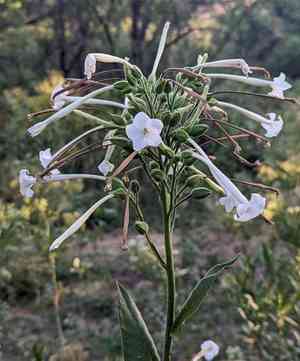
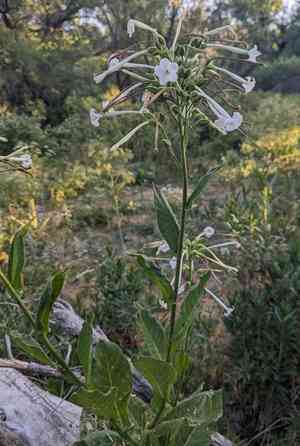
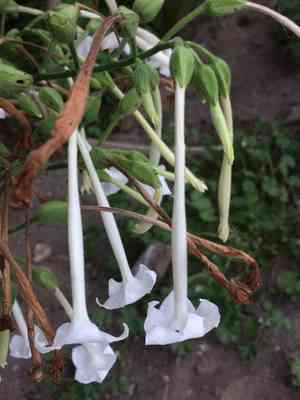
This plant typically reaches a height of around 1.5 meters and spreads about 50 centimeters wide. Its leaves are simple and slightly sticky, with the leaf blade partially wrapping around the stem and clasping the petiole. The plant produces flowers on numerous branching stems. These tubular, white flowers are grouped in racemes that rise above the foliage. Each flower can be over 7 cm in length, with a face approximately 2 cm across.
In This Article
Attributes of South american tobacco
Lifespan
Perennial, Annual, Biennial
Plant Type
Herb
Plant Height
91 cm to 1.5 m
Spread
60 cm
Leaf Color
Green
Flower Size
5-10 centimeters
Flower Color
White
Images of South american tobacco
Quickly Identify South american tobacco
1
Tubular white flowers, 2-3 inches long, resembling shooting stars.
2
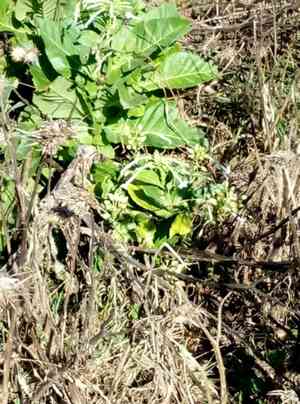
Long, spatulate to oblong leaves, up to 15 inches in length.
3
Fragrant blossoms in raceme arrangement emit a pleasing fragrance, noticeable in the evening.
4
Basal rosette growth habit with sturdy stems supporting blooms.
5
Bright green leaves with hairy texture, prominent venation, and short petioles.
Scientific Classification of South american tobacco
Phylum
Vascular plants
Class
Dicotyledons
Order
Solanales
Family
Nightshade
Genus
Tobacco plants
Species
South american tobacco
Planting and Growing of South american tobacco
Care Difficulty
Easy
Watering Schedule
Every 4 days
Sunlight Requirements
Partial sun
Sunshine Duration
6-10 hours
Ideal Temperature
68-77℉
Soil Type
Potting Mix, Peat Mix
Soil pH
5.5-7
Fertilizer Type
Balanced
Pruning Season
Spring, Summer
Pruning Area
Branches, Leaves
Pruning Frequency
2 times a year
Repotting Season
Spring
Pot Type
Plastic, Ceramic
 How to Water South american tobacco?
For Nicotiana sylvestris, water deeply enough for the soil to remain damp but not waterlogged. Approximately 300ml per session should suffice, covering the base and ensuring even moisture distribution which encourages healthy root development.
What are the symptoms of an underwatered South american tobacco?
›
What should I do if my South american tobacco is not getting enough water?
›
What are the symptoms of an overwatered South american tobacco?
›
How to save an overwatered South american tobacco?
›
 What Are the Sunlight Requirements for South american tobacco?
Partial sun is ideal, providing Nicotiana sylvestris with sufficient energy for photosynthesis. This promotes vigorous growth and a rich display of blooms.
What is the best location for Nicotiana sylvestris?
›
How can you ensure Nicotiana sylvestris gets ideal lighting?
›
Why is ideal lighting important for Nicotiana sylvestris?
›
 What Is the Ideal Temperature Range for South american tobacco?
The ideal temperature range for Nicotiana sylvestris is between 68°F and 77°F. This range supports optimal growth and photosynthesis, allowing the plant to maintain healthy leaf production and flowering. Within this temperature range, the plant is most likely to develop its full aesthetic potential and produce fragrant white flowers.
 What Soil is Best for South american tobacco?
Nicotiana sylvestris thrives in well-drained soils, as this prevents root rot and ensures that the plant can uptake nutrients efficiently. Proper drainage also allows for adequate aeration, promoting robust growth and bigger blooms. This plant prefers soils rich in organic matter, which offers a steady supply of essential nutrients. Such soils promote vigorous growth, vibrant foliage, and prolonged flowering periods, making the plant more resilient to pests and diseases. Soils that retain moderate moisture are ideal as they prevent the plant from drying out while avoiding waterlogging. This balance supports healthy physiological processes, ensuring the plant maintains optimal growth throughout its lifecycle.
 How to Fertilize South american tobacco?
Nicotiana sylvestris requires moderate amounts of nutrients. When applying liquid fertilizer, use a diluted solution at a rate of 1/2 to 1 teaspoon per gallon of water. For solid fertilizers, a balanced 10-10-10 slow-release formula is recommended. Ensure the soil is slightly moist before application to prevent root burn.
 How to Prune South american tobacco?
Start by examining your Nicotiana sylvestris for any dead or diseased branches. Use your clean pruning shears to cut these back to healthy wood. Removing these areas prevents the spread of disease and stimulates new, healthy growth. To encourage bushier growth, look for branches that are long and appear leggy. Cut these back to a node or a set of leaves where you want new branches to emerge. This helps the plant develop a fuller, more compact shape. Regularly check and prune to control the size and shape of your plant. Cut back any branches that are growing out of the desired form or are starting to overshadow neighboring plants. Aim to maintain an open structure that allows sunlight to reach all parts of the plant.
More About Pruning Techniques→
 How to Propagate South american tobacco plant?
1
Sow Nicotiana sylvestris seeds on the surface of moistened potting soil. Do not cover the seeds with soil, as they require light to germinate. Maintain soil moisture to facilitate germination.
2
Cover the seed tray with a transparent lid or plastic wrap to keep humidity high. This prevents the soil from drying out and provides the warm conditions needed for seed germination.
3
Once seedlings have developed several true leaves, carefully transplant them to larger pots. Handle the seedlings gently to avoid damaging their delicate roots during the process.
 How to Repot South american tobacco plant?
1
Repot Nicotiana sylvestris when its roots start to outgrow the current pot or poke through the drainage holes. It's also time to repot if the plant is top-heavy, tipping over easily, or if growth has significantly slowed down. The best time for repotting is during the active growing seasons of spring and summer for optimal recovery and growth.
2
Select a pot that is one size larger than the current one to give the roots more room to expand, but not too large as this may retain excessive moisture, leading to root rot. Ensure the new pot has adequate drainage holes to prevent waterlogging, which is crucial for the well-being of Nicotiana sylvestris.
3
Opt for a well-draining potting mix that holds moisture without becoming soggy. The ideal mix for Nicotiana sylvestris includes a blend of peat, perlite, and compost. This encourages healthy root development and prevents the common issue of root rot by maintaining an adequate balance of moisture and aeration.
Toxicity
Ingestion, Dermal contact
WARNING
The judgment on toxicity and danger is for reference only. We DO NOT GUARANTEE any accuracy of such judgment. Therefore, you SHALL NOT rely on such judgment. It is IMPORTANT TO SEEK PROFESSIONAL ADVICE in advance when necessary.
Learn More About South american tobacco Diseases
Anthracnose
Bacterial Leaf Spot
Bacterial Soft Rot
Bacterial Wilt
Chemical Injury
Crown Gall
Cyst Nematode
Damping-off
Downy Mildew
Drought Stress
Fusarium Wilt
Gray Mold
Late Blight
Leaf Curl
Leaf Spot
Mosaic
Nutrient Deficiency
Nutrient Toxicity
Powdery Mildew
Root Rot
Root-knot Nematode
Rusts
Sooty Mold
Spider Mites
Temperature Stress
Thrips Damage
White Mold



