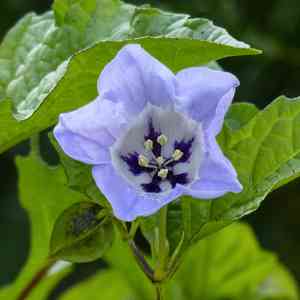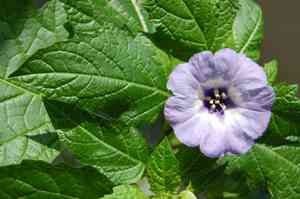
Apple-of-peru(Nicandra physalodes)

Apple-of-peru (Nicandra physalodes)

Also known as: Chinese lantern

The Apple-of-peru (Nicandra physalodes), a member of the nightshade family, is also known as the shoo-fly plant. This name originates from an old practice where the plant's juices, when mixed with milk, would attract and subsequently poison flies. This method was used to control fly populations. The plant is native to South America.

Attributes of Apple-of-peru

Lifespan
Annual
Plant Type
Herb
Plant Height
1 m
Spread
30 cm to 40 cm
Leaf Color
Green
Flower Size
5 cm
Flower Color
White Purple Blue

ForwardPlant - Identify plants with a snap

Identify and diagnose plants, get toxicity alerts, and explore safety guides for all types of fungi.

Try for Free

Images of Apple-of-peru

Apple-of-peru(Nicandra physalodes)

Quickly Identify Apple-of-peru

1
Single day-lasting blue blossom distinguishes apple-of-peru from other plants.
2
Distinctive dry and inflated calyx on 1-2 inch (2.5-5 cm) fruit of apple-of-peru.
3
Alternate leaves up to 8 inches (20 cm) long with sparse pubescent texture.
4
Axillary and nodding flowers with short bell shape, measuring 0.75-1 inch (2-2.5 cm) across.
5
Pale blue petals with delicate white center on apple-of-peru flowers, blooming in late summer to early fall.

Scientific Classification of Apple-of-peru

Phylum
Vascular plants
Class
Dicotyledons
Order
Nightshades, bindweeds, gooseweeds, and allies
Family
Nightshade
Genus
Nicandra
Species
Apple-of-peru

Planting and Growing of Apple-of-peru

Care Difficulty
Easy
Watering Schedule
Every 4 days
Sunlight Requirements
Full sun
Sunshine Duration
6-8 hours
Ideal Temperature
65-75℉
Soil Type
Potting Mix, Peat Mix
Soil pH
6.5-7.5
Fertilizer Type
Balanced
Pruning Season
Spring, Summer
Pruning Area
Branches, Leaves
Pruning Frequency
2 times a year
Repotting Season
Spring
Pot Type
Plastic, Ceramic

water icon How to Water Apple-of-peru?

Water Nicandra physalodes with approximately 500 ml each time, ensuring the soil remains moderately moist. This plant prefers consistent moisture levels but should never sit in water. It is crucial to allow the top inch of the soil to dry out between waterings to prevent waterlogging, which can lead to root rot.
What are the symptoms of an underwatered Apple-of-peru?
What should I do if my Apple-of-peru is not getting enough water?
What are the symptoms of an overwatered Apple-of-peru?
How to save an overwatered Apple-of-peru?
More About Watering Techniques

sunlight icon What Are the Sunlight Requirements for Apple-of-peru?

Sunlight Requirements: Full sun, Partial sun
Duration of light: 4 to 6 hours
Nicandra physalodes benefits from partial to full sun exposure, ideally around four to six hours daily. This range aids in robust growth, promotes vibrant flowering, and enhances overall health by facilitating efficient Photosynthesis without overexposing or undernourishing the plant.
Location Selection
Light Balancing Techniques
Regular Monitoring
More About Sunlight Requirements Techniques

temperature icon What Is the Ideal Temperature Range for Apple-of-peru?

Ideal Temperature: 65 ~ 75℉
For optimal growth, Nicandra physalodes thrives best in temperatures ranging from 65°F to 75°F. This range supports vigorous growth by providing the warmth necessary for photosynthesis and cellular functions while preventing excessive stress from heat.

soil icon What Soil is Best for Apple-of-peru?

Soil type: Loam, Sandy loam
Soil PH: 6.5 ~ 7.5
Nicandra physalodes thrives in well-drained soil to prevent root rot. Ensuring proper drainage allows the roots to breathe, promoting vigorous growth and preventing waterlogging which can cause nutrient deficiencies. The plant benefits from a nutrient-rich loam that provides essential minerals. This type of soil supports robust growth, enhancing leaf color and flower production while minimizing the need for additional fertilizers. Maintaining moderate soil moisture without letting it dry out or become waterlogged is crucial. This balance ensures optimal root function, improving the overall health and resilience of Nicandra physalodes. More About Soil

fertilize icon How to Fertilize Apple-of-peru?

Fertilizer type: Balanced
For Nicandra physalodes, it is important to provide a balanced supply of nutrients without overwhelming the plant. A general guideline is to use a half-strength balanced liquid fertilizer, which is rich in nitrogen, phosphorus, and potassium. The application should be around 20 ml of this diluted solution per plant during the active growing season. Additionally, consider incorporating a spoonful of slow-release granular fertilizer into the topsoil once a year for sustained nourishment. More About Fertilizing Techniques

prune icon How to Prune Apple-of-peru?

Pruning Time: Spring, Summer
Start by examining the plant for any dead, damaged, or diseased stems. Cut these back to healthy tissue to prevent any spread of disease and to enhance the plant's overall appearance. Trim stems that look out of place to maintain a uniform shape. This will not only make the plant look tidy but also allow better air circulation. Cut just above a leaf node to encourage new branching. Regularly pinch back the tips of new growth during the growing season. This practice encourages a bushier appearance as it stimulates the plant to put out more lateral branches and reduces its height. More About Pruning Techniques

propagate icon How to Propagate Apple-of-peru plant?

Propagate Time: Early spring, Late spring
1
Prepare a seed tray with a well-draining potting mix. Ensure the soil is moist but not waterlogged. Lightly press the soil surface to make a flat seedbed.
2
Scatter the Nicandra physalodes seeds evenly across the soil surface. Cover them with a thin layer of potting mix, about twice the thickness of the seed.
3
Keep the soil consistently moist but not soggy. Use a spray bottle to mist the soil gently, preventing seed displacement while maintaining humidity.
More About Propagating Techniques

repot icon How to Repot Apple-of-peru plant?

Repotting frequency: Every 1-2 years
1
Repot Nicandra physalodes when you notice roots growing out of the drainage holes or the plant looking stressed due to being root-bound. Typically, repotting is necessary every 1-2 years, especially if growth has slowed considerably. Choosing the right time ensures the plant continues to flourish with enough room for root expansion.
2
Select a pot that is one size larger than the current one, with good drainage holes. The extra space allows roots to grow freely and prevents waterlogging, reducing the risk of root rot. This ensures that the plant's growth is not hindered by space constraints or excess moisture.
3
Opt for a well-draining potting mix, often composed of peat, perlite, and organic matter. This type of soil prevents water retention while providing adequate nutrients. It mimics the plant's natural habitat and promotes healthy root development by allowing air and moisture to reach the roots effectively.

ForwardPlant - Identify plants with a snap

Find the best spots for them to optimize their health, simply using your phone.

Try for Free

Toxicity of Apple-of-peru

Is Apple-of-peru toxic to humans?

Apple-of-Peru exhibits a moderate toxicity level to humans, mainly through ingestion. Every part of the plant is toxic, with the seeds being particularly hazardous. The toxic characteristics stem from the presence of tropane alkaloids, such as atropine, hyoscine, scopolamine, and hyoscyamine. Ingestion of these substances can lead to a variety of symptoms, including dilated pupils, dry mouth, difficulty swallowing, increased heart rate, hallucinations, and in extreme cases, seizures and coma. Given the seriousness of these symptoms, it is essential to exercise caution to avoid accidental consumption of any portion of the apple-of-Peru.

Is Apple-of-peru toxic to cat?

The Apple-of-Peru plant poses a moderate level of toxicity to cats and can be hazardous if ingested inadvertently. All parts of this plant are toxic, with the seeds being especially harmful. When consumed, cats may exhibit various distressing symptoms due to the presence of tropane alkaloids, including atropine, hyoscine, scopolamine, and hyoscyamine. These compounds can lead to signs of severe physical discomfort or illness. If there is a suspicion of apple-of-peru poisoning, it is crucial to promptly seek veterinary care to ensure the best possible outcome for the affected cat.

Is Apple-of-peru toxic to dog?

The apple-of-peru plant is identified as having a moderate level of toxicity for dogs. If canines accidentally ingest any part of this plant, they may suffer from poisoning. All components of the apple-of-peru are toxic, especially the seeds, which pose a greater risk. Following ingestion, a dog might show signs such as dilated pupils, trouble swallowing, a heightened heart rate, vomiting, diarrhea, and in serious cases, may experience seizures or tremors. It is crucial for dog owners to recognize that the apple-of-peru contains harmful substances, specifically tropane alkaloids (including atropine, hyoscine, and scopolamine) along with hyoscyamine, which contribute to these negative health effects. If a dog is suspected of consuming any part of the apple-of-peru, prompt veterinary assistance is essential to secure the best chance of recovery.

Identify toxic plants for your safety

Learn which plants are harmful to you and your pets, and make informed choices for a safer home!

Try for Free
WARNING
The judgment on toxicity and danger is for reference only. We DO NOT GUARANTEE any accuracy of such judgment. Therefore, you SHALL NOT rely on such judgment. It is IMPORTANT TO SEEK PROFESSIONAL ADVICE in advance when necessary.
More About Toxic Techniques