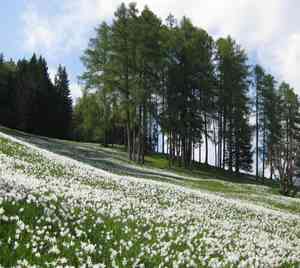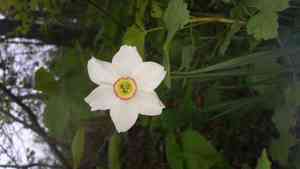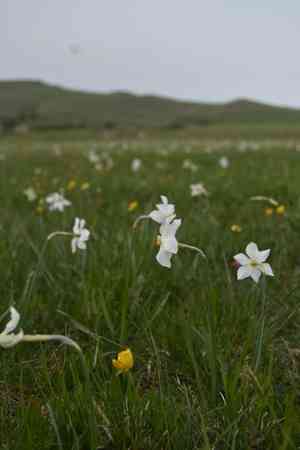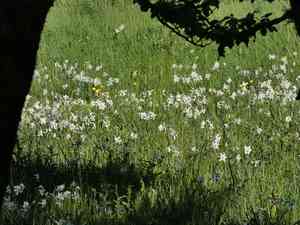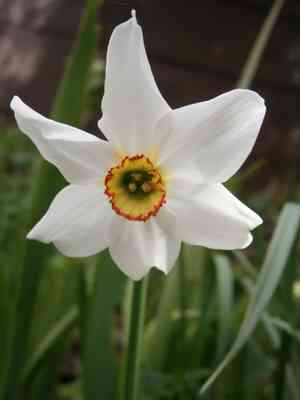
Poet's narcissus(Narcissus poeticus)

Poet's narcissus (Narcissus poeticus)

Also known as: Pheasant's eye, Findern flower

The Poet's Narcissus (Narcissus poeticus) is often considered the legendary narcissus referenced in ancient texts and celebrated in art and literature. The Greek philosopher Theophrastus mentioned a flower in his "Historia Plantarum" that many scholars believe to be the Poet's Narcissus. According to Greek mythology, this is the flower that Persephone was gathering when Hades abducted her to the underworld.

Attributes of Poet's narcissus

Lifespan
Perennial
Plant Type
Herb
Plant Height
20 cm to 40 cm
Spread
10 cm
Leaf Color
Green Blue
Flower Size
5 cm to 8 cm
Flower Color
White Yellow Red

PlantJoy - Identify plants with a snap

Identify and diagnose plants, get toxicity alerts, and explore safety guides for all types of fungi.

Try for Free

Images of Poet's narcissus

Poet's narcissus(Narcissus poeticus)

Quickly Identify Poet's narcissus

1
Bulbous base is a distinctive feature for identification.
2
Flower with green or yellow corona and red rim stands out.
3
Perianth segments are pure white, surrounding the corona.
4
Basal leaves are strap-like, smooth, and blue-green.
5
Leaves display a glaucous texture with no prominent veins.

Scientific Classification of Poet's narcissus

Phylum
Vascular plants
Class
Monocotyledons
Order
Asparagus and allies
Family
Amaryllis
Genus
Daffodils
Species
Poet's narcissus

Planting and Growing of Poet's narcissus

Care Difficulty
Easy
Watering Schedule
Every 2 days
Sunlight Requirements
Full sun
Sunshine Duration
4-8 hours
Ideal Temperature
50-68℉
Soil Type
Potting Mix, Peat Mix
Soil pH
6.5-7.5
Fertilizer Type
Balanced
Pruning Season
Spring, Summer
Pruning Area
Branches, Leaves
Pruning Frequency
2 times a year
Repotting Season
Spring
Pot Type
Plastic, Ceramic

water icon How to Water Poet's narcissus?

Narcissus poeticus requires 250 ml of water per session. The principle here is to keep the soil consistently moist but not waterlogged. Ensure that the topsoil is dry to the touch before watering again to prevent root rot.
What are the symptoms of an underwatered Poet's narcissus?
What should I do if my Poet's narcissus is not getting enough water?
What are the symptoms of an overwatered Poet's narcissus?
How to save an overwatered Poet's narcissus?

sunlight icon What Are the Sunlight Requirements for Poet's narcissus?

Sunlight Requirements: Full sun, Partial sun
Duration of light: 6-8 hours daily
Narcissus poeticus performs best in full to partial sun environments. The ideal light conditions promote vigorous growth, plentiful flowering, and robust health, optimizing the plant's ornamental value and resilience.
Ideal Light Intensity
Position for Best Results
Light Monitoring Practices
More About Sunlight Requirements Techniques

temperature icon What Is the Ideal Temperature Range for Poet's narcissus?

Ideal Temperature: 50 ~ 68℉
The ideal temperature for growing Narcissus poeticus is between 50°F and 68°F. This range is conducive to healthy growth and ensures that the plant can carry out photosynthesis efficiently without excessive stress. Maintaining these temperatures helps in optimal flower production and vigorous foliage growth.

soil icon What Soil is Best for Poet's narcissus?

Soil type: Loam, Sandy loam
Soil PH: 6.5 ~ 7.5
Narcissus poeticus thrives in well-drained soil to prevent root rot. Proper drainage ensures that water does not accumulate around the roots, enabling the plant to access enough oxygen and essential nutrients for healthy growth. Rich, organic soil is crucial for Narcissus poeticus as it provides the necessary nutrients for robust flower production. Adding compost or well-rotted manure can enhance the soil nutrition, promoting vigorous growth and vibrant blooms. While the soil should be well-drained, it must also retain enough moisture to keep the plant hydrated. Maintaining a balance prevents the plant from experiencing drought stress, ensuring continuous and lush flowering.

fertilize icon How to Fertilize Poet's narcissus?

Fertilizer type: Balanced
For Narcissus poeticus, use a balanced liquid fertilizer diluted to half the recommended strength. During the growth period, apply approximately 1 cup of diluted fertilizer per plant to ensure an adequate supply of nutrients without overloading the soil.

prune icon How to Prune Poet's narcissus?

Pruning Time: Summer, Autumn
Cut off the spent flowers at the base of the stem right after they fade. This process, known as deadheading, prevents the plant from wasting energy on seed production and encourages the storage of nutrients in the bulb. Once the foliage has yellowed and died back naturally, cut it down to the ground. This step clears away any decaying material and reduces the risk of disease, ensuring healthy new growth the next season. Before and after pruning, clean your tools with a disinfectant to prevent the spread of diseases. This practice is crucial as it ensures that any pathogens are not transferred from plant to plant. More About Pruning Techniques

propagate icon How to Propagate Poet's narcissus plant?

Propagate Time: Early spring, Late spring
1
Carefully dig up the Narcissus poeticus bulbs after flowering. Separate offsets from the parent bulb with a clean cut. Ensure each offset has a bit of the root stem attached to encourage new growth.
2
Sow seeds in a prepared seed tray, ensuring they are covered lightly with soil. Keep the tray in a warm, sunny location. Ensure the soil remains moist but not waterlogged to promote seed germination.
3
Once seedlings have sprouted and developed several true leaves, gently transplant them into individual pots or a nursery bed. Handle with care to avoid damaging the roots.
More About Propagating Techniques

repot icon How to Repot Poet's narcissus plant?

Repotting frequency: Every 2-3 years
1
Narcissus poeticus shows signs of needing repotting when its growth becomes stunted, the bulbs outgrow the pot, or roots start appearing through drainage holes. Repotting in these situations ensures continued healthy blooms.
2
Select a pot that is about 2 inches larger in diameter than the current one. Ensure the pot has drainage holes to prevent waterlogging. The right size helps accommodate growth and allows adequate drainage, preventing root rot.
3
Opt for a well-draining soil mix with equal parts of peat, perlite, and sand. This mix facilitates proper aeration and avoids water retention, which is crucial for preventing bulb rot and promoting healthy growth.

PlantJoy - Identify plants with a snap

Find the best spots for them to optimize their health, simply using your phone.

Try for Free

Toxicity of Poet's narcissus

Is Poet's narcissus toxic to humans?

Accidental ingestion is the most common cause of poisoning associated with poet's narcissus. While the bulbs are the most poisonous part, all other components of the plant are considered to have mild toxic effects on humans. Symptoms resulting from the consumption of poet's narcissus can include vomiting, excessive salivation, and diarrhea. Consuming large amounts of this plant may provoke more serious effects such as convulsions, hypotension, tremors, and irregular heartbeats. Additionally, one source suggests that even the aroma of this plant can trigger headaches and vomiting, particularly when it is present in substantial quantities within a confined area.

Is Poet's narcissus toxic to cat?

The Poet's narcissus is harmful to cats, presenting a notable danger if ingested. Cats are at risk of poisoning upon accidental consumption of any portion of the plant. If they ingest it, they might show signs of physical distress, including gastrointestinal issues or other indications of sickness. Prompt medical attention at a veterinary clinic is essential for a cat suspected of Poet's narcissus poisoning, to ensure proper care and treatment.

Is Poet's narcissus toxic to dog?

The poet's narcissus is a highly toxic plant for dogs, representing a serious health hazard if consumed. Any part of the plant can poison dogs, as it contains detrimental substances throughout. Signs of poisoning in dogs may manifest as gastrointestinal distress, irregular heartbeats, seizures, and even lethargy. It is vital for dog owners to keep their pets away from poet's narcissus and to observe them carefully for any indications of unease. Should a dog be suspected of having ingested poet's narcissus, prompt veterinary care is critical to secure the most favorable outcome.

Identify toxic plants for your safety

Learn which plants are harmful to you and your pets, and make informed choices for a safer home!

Try for Free
WARNING
The judgment on toxicity and danger is for reference only. We DO NOT GUARANTEE any accuracy of such judgment. Therefore, you SHALL NOT rely on such judgment. It is IMPORTANT TO SEEK PROFESSIONAL ADVICE in advance when necessary.
More About Toxic Techniques