
Paperwhite narcissus (Narcissus papyraceus)
Also known as: Paperwhite daffodil
The Paperwhite Narcissus is an excellent choice for winter table displays. These flowers are highly fragrant, filling the room with a pleasant scent. Each stem can support up to ten delicate white blossoms. Commonly gifted during the Christmas season, it's important to note that all parts of the plant, including the bulbs, are toxic.
Attributes of Paperwhite narcissus
Images of Paperwhite narcissus
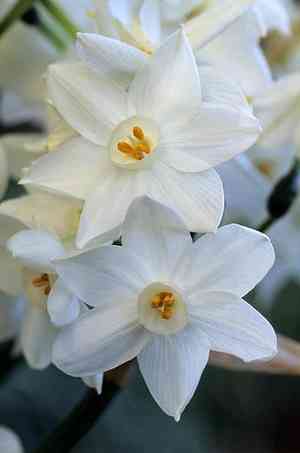
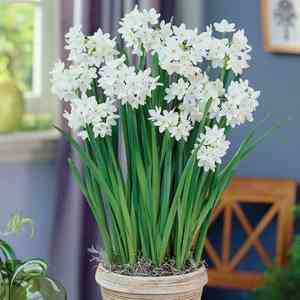

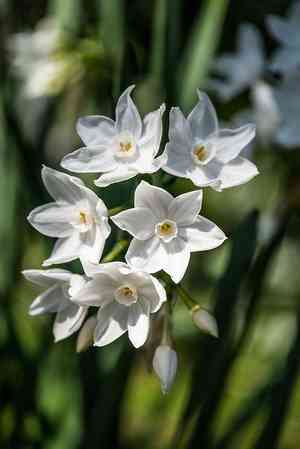
Quickly Identify Paperwhite narcissus
Scientific Classification of Paperwhite narcissus
Planting and Growing of Paperwhite narcissus
 How to Water Paperwhite narcissus?
 What Are the Sunlight Requirements for Paperwhite narcissus?
 What Is the Ideal Temperature Range for Paperwhite narcissus?
 What Soil is Best for Paperwhite narcissus?
 How to Fertilize Paperwhite narcissus?
 How to Prune Paperwhite narcissus?
 How to Propagate Paperwhite narcissus plant?
 How to Repot Paperwhite narcissus plant?
Toxicity of Paperwhite narcissus
Is Paperwhite narcissus toxic to humans?
The Paperwhite narcissus carries a mild toxicity risk for humans if ingested. Every component of the plant is toxic, indicating that accidental consumption of any section—be it the bulb, foliage, or blooms—can result in poisoning. When consumed, individuals may encounter a variety of symptoms such as nausea, vomiting, stomach pain, and diarrhea. It is especially crucial to remain cautious around children and pets, as they may be more prone to inadvertently ingesting parts of the Paperwhite narcissus. While the symptoms can differ in intensity, they are generally not life-threatening. Nevertheless, it is wise to exercise caution to avert any instances of accidental poisoning from this plant.
Is Paperwhite narcissus toxic to cat?
The paperwhite narcissus presents a moderate toxic risk to felines. A frequent way for cats to be poisoned is through accidental ingestion of the plant. When ingested, symptoms may arise in cats that reflect physical discomfort or anxiety. All parts of the plant are deemed toxic, highlighting the significant need to keep cats away from any section of the paperwhite narcissus. Should there be any suspicion that a cat has consumed this plant, it is crucial to obtain immediate veterinary assistance to safeguard their health and implement any required treatments.
Is Paperwhite narcissus toxic to dog?
The Paperwhite narcissus presents a moderate toxicity risk to dogs. Canines might accidentally ingest various parts of this plant, which can lead to poisoning. All parts of the plant are toxic, meaning that consuming even a small portion can result in negative health consequences. Symptoms of poisoning in dogs may manifest as gastrointestinal distress, such as vomiting and diarrhea, along with lethargy or even more serious clinical signs based on the quantity consumed. It is essential for dog owners to vigilantly supervise their pets and restrict their access to paperwhite narcissus. If a dog consumes any part of this plant, it is vital to seek immediate veterinary attention to secure the best possible outcome for the animal.



