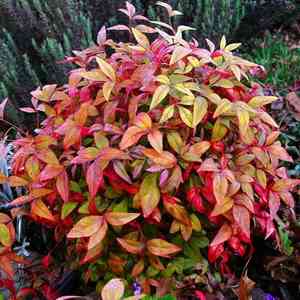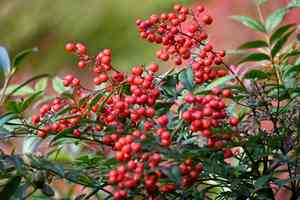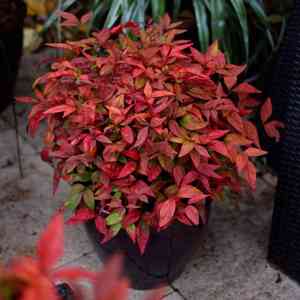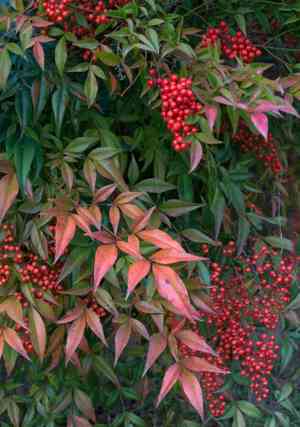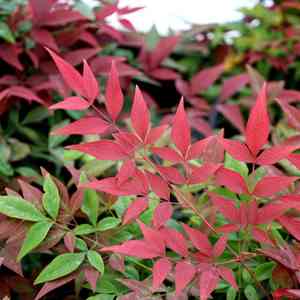
Heavenly bamboo(Nandina domestica)

Heavenly bamboo (Nandina domestica)

Also known as: Sacred bamboo

Heavenly bamboo, despite its misleading name, is not a type of bamboo. It's a semi-evergreen shrub that resembles bamboo, which can cause confusion. One striking characteristic is its bright red berries, which are toxic to both humans and animals and should be avoided.

Attributes of Heavenly bamboo

Lifespan
Perennial
Plant Type
Shrub
Plant Height
1 m to 3 m
Spread
1.5 m
Leaf Color
Green Red Purple Yellow White Variegated Orange
Flower Size
6 mm to 7 mm
Flower Color
White

PlantJoy - Identify plants with a snap

Identify and diagnose plants, get toxicity alerts, and explore safety guides for all types of fungi.

Try for Free

Images of Heavenly bamboo

Heavenly bamboo(Nandina domestica)

Quickly Identify Heavenly bamboo

1
Cane-like stems reach 6-8 feet (183-244 cm), resembling bamboo.
2
Leaves are bi- to tri-pinnately compound, reddish new growth, and 1-2 feet (30-60 cm) long.
3
Distinctive bright red berries, 0.3 inches (8 mm) in diameter, clustered at terminals.
4
Delicate white flowers with yellow anthers, 5-13 mm (0.2-0.5 inches) in diameter.
5
Foliage changes from bluish-green in summer to purplish-red in fall, creating a vibrant display.

Scientific Classification of Heavenly bamboo

Phylum
Vascular plants
Class
Dicotyledons
Order
Buttercups, poppies and allies
Family
Barberry
Genus
Nandina
Species
Heavenly bamboo

Planting and Growing of Heavenly bamboo

Care Difficulty
Easy
Watering Schedule
Every 3 days
Sunlight Requirements
Full sun
Sunshine Duration
6-12 hours
Ideal Temperature
60-77℉
Soil Type
Potting Mix, Peat Mix
Soil pH
6.5-7.5
Fertilizer Type
Balanced
Pruning Season
Spring, Summer
Pruning Area
Branches, Leaves
Pruning Frequency
2 times a year
Repotting Season
Spring
Pot Type
Plastic, Ceramic

water icon How to Water Heavenly bamboo?

For Nandina domestica, the ideal watering amount is about 500 ml per session. The soil should be moist but not waterlogged, ensuring water reaches the root zone without pooling. Adjust based on climate and pot size.
What are the symptoms of an underwatered Heavenly bamboo?
What should I do if my Heavenly bamboo is not getting enough water?
What are the symptoms of an overwatered Heavenly bamboo?
How to save an overwatered Heavenly bamboo?
More About Watering Techniques

sunlight icon What Are the Sunlight Requirements for Heavenly bamboo?

Sunlight Requirements: Full sun, Partial sun
Duration of light: 4 to 6 hours daily
Partial sun exposure is ideal for Nandina domestica. Receiving morning sunlight while being sheltered from harsh afternoon rays enhances foliage color and promotes healthy flowering.
What is the best location for Nandina domestica?
How to manage Nandina domestica light needs during different seasons?
What benefits does optimal light provide to Nandina domestica?
More About Sunlight Requirements Techniques

temperature icon What Is the Ideal Temperature Range for Heavenly bamboo?

Ideal Temperature: 60 ~ 77℉
The ideal temperature range for Nandina domestica, also known as heavenly bamboo, is between 60°F and 77°F. This temperature range ensures the plant's optimal growth and vibrant color development. Maintaining these temperatures promotes healthy foliage and encourages flowering.

soil icon What Soil is Best for Heavenly bamboo?

Soil type: Loam, Sandy loam, Clay soil
Soil PH: 6.5 ~ 7.5
Nandina domestica thrives in soil that is moderately rich in nutrients, ensuring healthy growth and vibrant foliage. Adding compost or organic matter can enhance soil fertility, leading to more robust plant performance. This plant prefers well-drained soil to prevent root rot and other water-logging issues. To achieve this, you can incorporate sand or perlite into the soil, promoting better drainage and oxygen flow to the roots. While it tolerates some dryness, Nandina domestica performs best with a consistent level of moisture. A mulched soil surface can help retain moisture levels, ensuring the plant stays hydrated during dry spells. More About Soil

fertilize icon How to Fertilize Heavenly bamboo?

Fertilizer type: Balanced
For Nandina domestica, use a balanced fertilizer at a rate of approximately 1 tablespoon per gallon of water for liquid fertilizer. For slow-release granules, apply about 1 to 2 ounces per plant, ensuring not to exceed this to prevent root burn. More About Fertilizing Techniques

prune icon How to Prune Heavenly bamboo?

Pruning Time: Spring, Summer
Start by identifying and removing any dead, diseased, or damaged wood. This helps promote plant health by preventing the spread of disease and encouraging new growth. Use clean, sharp pruning shears to make clean cuts just above a bud or a branch junction. Look for areas where the branches of Nandina domestica are overcrowded. Thinning these areas can improve air circulation and light penetration, leading to healthier plants. Selectively remove the thickest or most tangled stems at their base to open up the plant without altering its elegant shape. If certain branches grow excessively long and disrupt the balanced appearance of Nandina domestica, consider shortening them. Cut back long branches to a lateral bud or side branch, ensuring that the plant retains its natural, airy look. This kind of pruning helps keep the plant tidy and encourages new branching.

propagate icon How to Propagate Heavenly bamboo plant?

Propagate Time: Spring, Early summer
1
Collect seeds from mature Nandina domestica plants once they have fully ripened. Clean the seeds to remove any pulp and let them dry slightly. This step is crucial to prevent fungal issues and ensure the seeds are viable.
2
Select healthy, semi-hardwood stems from the Nandina domestica plant in spring or early summer. Cut these stems into lengths of approximately 10-15 centimeters. Ensure each cutting has at least two or three nodes to maximize rooting potential.
3
Dig up a mature Nandina domestica plant carefully and separate the clumps. Make sure each division has a healthy root system and several stems attached. Replant immediately in a prepared bed or pot to prevent desiccation.
More About Propagating Techniques

repot icon How to Repot Heavenly bamboo plant?

Repotting frequency: Every 2-3 years
1
Nandina domestica often displays signs that indicate it’s time for a new pot. Look for roots emerging from the drainage holes, soil drying out sooner than usual, or reduced growth rate. These are key signals that your heavenly bamboo needs more room for root expansion and fresh soil for nutrients.
2
Select a pot that is 1-2 inches larger in diameter than the current one, and ensure it has good drainage holes. This size allows room for root growth without overwhelming the plant with excess soil, helping to prevent root rot while providing a stable environment for optimum growth and health.
3
Opt for a well-draining potting mix, ideally one that includes components such as pine bark, perlite, or sand. This type of soil allows for proper aeration and prevents waterlogging, which is crucial for the prevention of root rot and ensures that your Nandina domestica thrives.
More About Repotting Techniques

PlantJoy - Identify plants with a snap

Find the best spots for them to optimize their health, simply using your phone.

Try for Free

Toxicity of Heavenly bamboo

Is Heavenly bamboo toxic to humans?

The berries of heavenly bamboo are regarded as highly toxic if consumed due to their hydrogen cyanide content. Although death is a preventable consequence, ingesting a significant amount of these berries can lead to cyanide poisoning, which might be fatal within minutes to a few hours. Typical side effects associated with the consumption of heavenly bamboo berries include vomiting, diarrhea, abdominal discomfort, nausea, and in some cases, seizures. Children are particularly at risk because the bright red berries are visually appealing.

Is Heavenly bamboo toxic to cat?

The heavenly bamboo (Nandina domestica) contains significant amounts of cyanogenic glycosides, rendering all its parts highly toxic to cats. It is crucial to seek veterinary assistance if any part of this plant is consumed. While the plant’s bitter flavor generally discourages pets from eating it in large amounts, ingestion can lead to severe symptoms, which may encompass bright red mucous membranes, difficulty in breathing, respiratory distress, coma, and potentially seizures.

Is Heavenly bamboo toxic to dog?

While dogs may come across heavenly bamboo used as an ornamental plant in homes, it's crucial to seek veterinary assistance immediately if they happen to chew on this highly toxic species. The berries, leaves, and stems all harbor cyanide, which can be lethal if consumed in significant quantities. Symptoms indicative of poisoning include vomiting, respiratory distress, and an elevated heart rate.

Identify toxic plants for your safety

Learn which plants are harmful to you and your pets, and make informed choices for a safer home!

Try for Free
WARNING
The judgment on toxicity and danger is for reference only. We DO NOT GUARANTEE any accuracy of such judgment. Therefore, you SHALL NOT rely on such judgment. It is IMPORTANT TO SEEK PROFESSIONAL ADVICE in advance when necessary.
More About Toxic Techniques