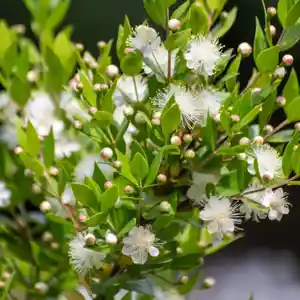
Common myrtle (Myrtus communis)
Also known as: Roman Myrtle, Bride's Myrtle, Sweet Roman Myrtle, True myrtle, Myrtle
Common myrtle (Myrtus communis) is an evergreen shrub indigenous to the Mediterranean regions of Europe, Africa, and Asia. Valued for its appealing look, manageable growth rate, and low maintenance, it is frequently grown in gardens.
**Characteristics:**
- **Leaves:** Shiny, aromatic, lanceolate.
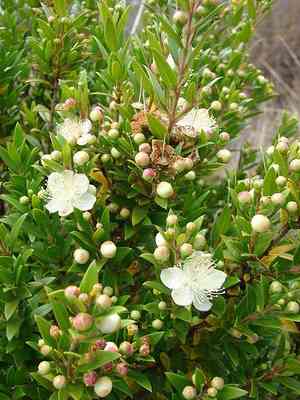
- **Flowers:** White or pale pink, fragrant, with multiple stamens.
- **Berries:** Dark blue to black, edible but slightly bitter.
- **Growth:** Dense, bushy, slow to moderate growth.
**Uses:**
- **Culinary:** Leaves and berries are used to infuse flavors into drinks and dishes.
- **Ornamental:** Widely used in landscaping for hedges and aesthetic appeal.
- **Medicinal:** Traditionally utilized for its potential antiseptic and anti-inflammatory benefits.
- **Cultural:** Integral to various cultural rituals, including Jewish festival traditions.
Overall, common myrtle is cherished for its beauty, fragrance, and versatility in culinary, ornamental, medicinal, and cultural contexts.
Attributes of Common myrtle
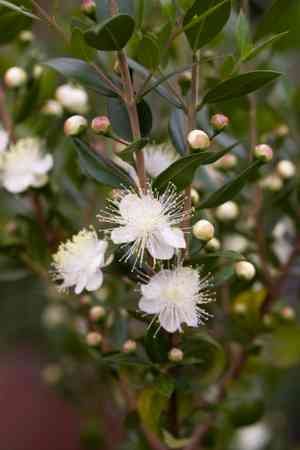
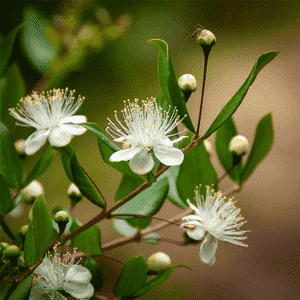
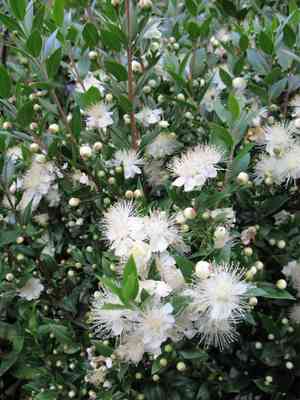
Images of Common myrtle
 How to Water Common myrtle?
  What Are the Sunlight Requirements for Common myrtle?
  What Is the Ideal Temperature Range for Common myrtle?
  What Soil is Best for Common myrtle?
  How to Fertilize Common myrtle?
  How to Prune Common myrtle?
  How to Propagate Common myrtle plant?
 How to Repot Common myrtle plant?



