Nutmeg and mace(Myristica fragrans)

Nutmeg and mace (Myristica fragrans)

Also known as: Mace

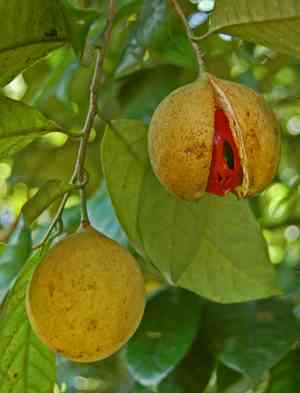
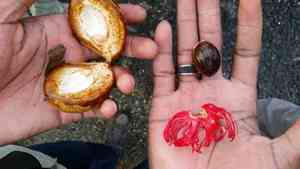
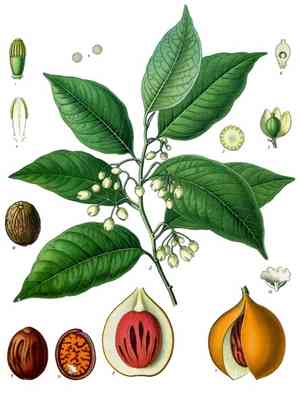
The evergreen tree Myristica fragrans is the primary source of the globally renowned spices nutmeg and mace. Nutmeg is the seed of this tree, while mace is the lacy, reddish covering (aril) that encases the seed. Historically, these spices were highly valuable and sought after, leading to intense and often violent conflicts for their control.

Attributes of Nutmeg and mace

Lifespan
Perennial
Plant Type
Tree
Plant Height
5 m to 15 m
Spread
8 m
Leaf Color
Green
Flower Size
4 mm
Flower Color
Yellow White Green

ForwardPlant - Identify plants with a snap

Identify and diagnose plants, get toxicity alerts, and explore safety guides for all types of fungi.

Try for Free

Images of Nutmeg and mace

Nutmeg and mace(Myristica fragrans)

Quickly Identify Nutmeg and mace

1
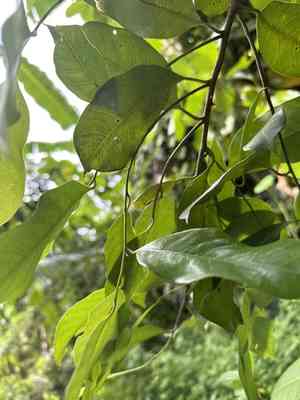
Identify Myristica fragrans by its dense, evergreen foliage, aromatic leaves, and distinctive fruit. The fruit splits open to reveal a seed (nutmeg) covered by a lacy red aril (mace). Flowers are small, white to yellow, and grow in clusters.

Scientific Classification of Nutmeg and mace

Phylum
Vascular plants
Class
Dicotyledons
Order
Magnolias, nutmegs, and allies
Family
Nutmeg
Genus
Nutmegs
Species
Nutmeg and mace

Planting and Growing of Nutmeg and mace

Care Difficulty
Hard
Watering Schedule
Every 3 days
Sunlight Requirements
Partial sun
Sunshine Duration
6-10 hours
Ideal Temperature
77-86℉
Soil Type
Potting Mix, Peat Mix
Soil pH
6.5-7.5
Fertilizer Type
Balanced
Pruning Season
Spring, Summer
Pruning Area
Branches, Leaves
Pruning Frequency
2 times a year
Repotting Season
Spring
Pot Type
Plastic, Ceramic

water icon How to Water Nutmeg and mace?

The Myristica fragrans, commonly known as nutmeg, prefers its soil to be consistently moist but not waterlogged. Each watering session should ideally involve approximately 250 milliliters of water, ensuring it reaches the plant’s roots without pooling at the base. The aim is to maintain a balance where the topsoil feels slightly damp to the touch but not overly saturated.
What are the symptoms of an underwatered Nutmeg and mace?
What should I do if my Nutmeg and mace is not getting enough water?
What are the symptoms of an overwatered Nutmeg and mace?
How to save an overwatered Nutmeg and mace?
More About Watering Techniques

sunlight icon What Are the Sunlight Requirements for Nutmeg and mace?

Sunlight Requirements: Partial sun
Duration of light: 4 to 6 hours
Myristica fragrans ideally thrives in partial sun exposure. This balance of light ensures healthy leaf development and optimal seed production, providing essential energy for its lifecycle.
What lighting conditions does Myristica fragrans prefer?
How can I achieve the ideal lighting for Myristica fragrans?
What are the benefits of Myristica fragrans receiving ideal lighting?
More About Sunlight Requirements Techniques

temperature icon What Is the Ideal Temperature Range for Nutmeg and mace?

Ideal Temperature: 77 ~ 86℉
The ideal temperature range for Myristica fragrans, commonly known as nutmeg, is between 77°F and 86°F. This tropical plant thrives in warm, humid conditions that mimic its native habitat in the Spice Islands of Indonesia. Maintaining this temperature range supports healthy growth and maximizes the production of both leaves and fruit. Cooler or more extreme temperatures can stress the plant, resulting in slow growth or reduced yields.

soil icon What Soil is Best for Nutmeg and mace?

Soil type: Loam, Sandy loam
Soil PH: 6.5 ~ 7.5
Myristica fragrans thrives in soils that retain moisture without becoming waterlogged. Maintaining even soil moisture supports consistent growth and nut development, as it ensures an adequate supply of nutrients. Rich, fertile soil is essential for the healthy growth of Myristica fragrans. Sufficient nutrients promote lush foliage and productive fruiting, making compost or organic matter incorporation very beneficial. The soil should offer exceptional drainage capabilities. This prevents root rot and other fungal issues, ensuring the plant's longevity and robust health. More About Soil

fertilize icon How to Fertilize Nutmeg and mace?

Fertilizer type: Balanced
For Myristica fragrans, the recommended fertilizer amount should be moderate. Use about 10 grams of balanced NPK fertilizer for young plants and double for mature trees. Apply evenly around the base, avoiding direct contact with the stem. More About Fertilizing Techniques

prune icon How to Prune Nutmeg and mace?

Pruning Time: Spring, Summer
Begin by examining the tree and identifying any dead, diseased, or damaged branches. Remove these first to improve the tree's overall health. Next, look for any branches that are crossing or rubbing against each other, and prune them to prevent structural weakness. Use a pair of sharp pruning shears to make clean cuts at a 45-degree angle just above a bud or branching point. This encourages new growth and helps the plant heal quickly. Avoid tearing or crushing the branches as it makes them susceptible to diseases. Avoid cutting too deeply into the plant. Only remove up to one-third of the canopy at a time. This helps the plant maintain enough foliage to continue photosynthesis effectively. More About Pruning Techniques

propagate icon How to Propagate Nutmeg and mace plant?

Propagate Time: Spring, Early Summer
1
Harvest fully ripe seeds from the Myristica fragrans fruit. Clean the arils surrounding the seeds and allow them to dry in a shaded area. It's important to sow fresh seeds for better germination rates.
2
Sow the cleaned seeds in seed trays filled with sterilized potting mix. Cover the seeds lightly with soil, ensuring they’re not buried too deep. Maintain humidity by covering the tray with a plastic dome or placing it in a propagator.
3
Place the seed trays in a warm location with indirect sunlight. Keep the soil consistently moist but not waterlogged. Germination can take between 4-6 weeks. Once seedlings develop a few true leaves, they can be transplanted into individual pots.
More About Propagating Techniques

repot icon How to Repot Nutmeg and mace plant?

Repotting frequency: Every two years
1
You should consider repotting Myristica fragrans when you notice its roots starting to circle the pot or emerging from drainage holes. Spring, with its active growth, is the perfect season. Offering it new soil nutrients and roomier quarters can significantly boost its health and growth. Keep an eye out for reduced vigor or water not soaking in well, these are also signs to repot.
2
Select a pot that's one size larger than the current one, ideally with drainage holes to prevent waterlogging. A terracotta pot is beneficial as it allows air exchange and helps maintain appropriate soil moisture, crucial for the health of Myristica fragrans. Choosing a slightly deeper pot encourages root development and stability for the growing plant.
3
Opt for a rich, well-draining soil mix, like a peat-based potting mix that includes perlite. This combination ensures nutrients are readily available while preventing water from stagnating around the roots. Good drainage is vital for preventing root rot and providing the ideal balance of air and moisture for Myristica fragrans.

ForwardPlant - Identify plants with a snap

Find the best spots for them to optimize their health, simply using your phone.

Try for Free

Toxicity of Nutmeg and mace

Is Nutmeg and mace toxic to humans?

Nutmeg and mace exhibit a high level of toxicity in humans, mainly when their seeds are ingested. These seeds contain myristicin, a compound that can cause poisoning if consumed in sufficiently large amounts. The effects of poisoning from nutmeg and mace can be quite severe, with symptoms that may include hallucinations, nausea, vomiting, dizziness, palpitations, and even seizures in some cases. As the seeds of nutmeg and mace are often utilized as spices in small quantities, it is the excessive consumption that presents a notable risk to health. It is essential to remain aware of the amount ingested to avoid the potential for inadvertent poisoning.

Is Nutmeg and mace toxic to cat?

Nutmeg and mace present a significant toxicity hazard for cats. Felines risk poisoning if they inadvertently ingest any portion of the plant, especially the seeds. Consumption can result in serious health complications due to the presence of myristicin, a substance that is extremely toxic to cats. Signs of physical distress may appear, requiring prompt care and medical intervention from a veterinary clinic.

Is Nutmeg and mace toxic to dog?

Nutmeg and mace can pose a significant toxicity hazard for dogs. When dogs accidentally consume the seeds of nutmeg and mace, whether out of curiosity or by mistake, they risk poisoning. The principal toxic agent present in nutmeg and mace is myristicin, which is concentrated in the seeds of these plants. Dogs that are poisoned may exhibit symptoms such as hallucinations, elevated heart rate, hypertension, dry mouth, abdominal distress, and seizures. It is vital for dog owners to remain alert and prevent their pets from accessing any part of nutmeg and mace, especially the seeds. If a dog ingests nutmeg or mace, seeking prompt veterinary assistance is essential to achieve the best possible outcome for the affected pet.

Identify toxic plants for your safety

Learn which plants are harmful to you and your pets, and make informed choices for a safer home!

Try for Free
WARNING
The judgment on toxicity and danger is for reference only. We DO NOT GUARANTEE any accuracy of such judgment. Therefore, you SHALL NOT rely on such judgment. It is IMPORTANT TO SEEK PROFESSIONAL ADVICE in advance when necessary.
More About Toxic Techniques