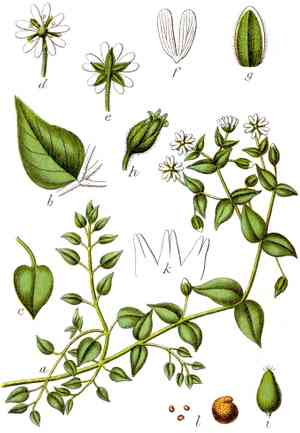
Giant chickweed (Myosoton aquaticum)
Also known as: Water starwort
Giant chickweed thrives in the temperate zones of Western Europe, particularly in moist environments. Its white blooms draw in bees and hoverflies, while its foliage is favored by rabbits. Additionally, sparrows and other birds are attracted to its seeds.
In This Article
Attributes of Giant chickweed
Lifespan
Perennial, Annual
Plant Type
Herb
Plant Height
15 cm to 40 cm
Spread
Not typically measured as it is a sprawling plant
Leaf Color
Green
Flower Size
1.3 cm
Flower Color
White
Images of Giant chickweed
Quickly Identify Giant chickweed
1
Look for the small, white, star-shaped flowers with five deeply bifid petals and opposite leaves with a slightly hairy margin. It generally grows in damp soil and areas with high moisture.
Scientific Classification of Giant chickweed
Phylum
Vascular plants
Class
Dicotyledons
Order
Caryophyllales
Family
Pink
Genus
Myosoton
Species
Giant chickweed
Planting and Growing of Giant chickweed
Care Difficulty
Easy
Watering Schedule
Every 8 days
Sunlight Requirements
Partial sun
Sunshine Duration
4-8 hours
Ideal Temperature
60-75℉
Soil Type
Potting Mix, Peat Mix
Soil pH
6.5-7.5
Fertilizer Type
Balanced
Pruning Season
Spring, Summer
Pruning Area
Branches, Leaves
Pruning Frequency
2 times a year
Repotting Season
Spring
Pot Type
Terracotta, Plastic
 How to Water Giant chickweed?
Myosoton aquaticum requires a moderate amount of water to thrive. Aim to keep the soil consistently moist, but not waterlogged. It's best to water until about 150 ml has been absorbed, ensuring that the top inch of soil feels damp to the touch. Avoid letting the plant sit in standing water, as this can lead to root rot.
What are the symptoms of an underwatered Giant chickweed?
›
What should I do if my Giant chickweed is not getting enough water?
›
What are the symptoms of an overwatered Giant chickweed?
›
How to save an overwatered Giant chickweed?
›
 What Are the Sunlight Requirements for Giant chickweed?
Myosoton aquaticum prospers under partial sun conditions, approximately 4 to 6 hours of light per day is beneficial. Adequate lighting ensures effective photosynthesis, enhances growth, and stimulates blooming, significantly contributing to the plant's health and vitality.
How much sunlight does Myosoton aquaticum ideally need?
›
What are some solutions to provide ideal lighting for Myosoton aquaticum?
›
What benefits does Myosoton aquaticum gain from ideal light conditions?
›
 What Is the Ideal Temperature Range for Giant chickweed?
For Myosoton aquaticum to thrive, maintaining an ideal temperature range of 60 to 75°F is crucial. This range supports optimal photosynthesis, ensuring the plant retains vigor and exhibits healthy growth patterns. Maintaining constant temperatures within this range can mitigate stress and promote consistent development and blooming patterns.
 What Soil is Best for Giant chickweed?
Loamy and peat soils provide excellent moisture retention, essential for Myosoton aquaticum, which thrives in consistently damp conditions. These soil types prevent the roots from drying out and promote lush growth. Myosoton aquaticum requires soils rich in organic matter, which is typically found in loam and peat soils. This nutrient-rich environment supports healthy foliage and robust stem development. While the plant prefers moist conditions, adequate drainage in loamy and peat soils prevents waterlogging, protecting the roots from rot and ensuring the plant thrives.
 How to Fertilize Giant chickweed?
For Myosoton aquaticum, the amount of fertilizer applied should be measured carefully. Typically, a balanced liquid fertilizer should be diluted to half its strength. For solid fertilizers, a small handful spread evenly across the soil can suffice. Amounts may vary depending on environmental conditions and plant health.
 How to Prune Giant chickweed?
Regularly inspect Myosoton aquaticum for overcrowded areas or dead leaves. Removing these will open up space for light and air, reducing the risk of fungal diseases. While pruning is beneficial, over-pruning can stress the plant. Limit the removal to no more than one-third of the plant's total foliage at any one time to ensure healthy recovery and growth.
 How to Propagate Giant chickweed plant?
1
Gather seeds from mature Myosoton aquaticum plants. Ensure that the seeds are fully ripened and dry before collection to enhance germination rates.
2
Select healthy stems for cuttings. Each cutting should be about 4-6 inches long and have at least two nodes. Use sharp shears to make clean cuts just below the node.
3
For division propagation, gently uproot a mature plant and separate it into smaller sections, ensuring that each section has sufficient roots for replanting.
 How to Repot Giant chickweed plant?
1
Observe when Myosoton aquaticum becomes root-bound or the growth slows down. The ideal time to repot is when you notice roots poking out of the drainage holes or when the foliage starts yellowing, indicating a constrained root system.
2
Select a pot that is one to two inches larger in diameter than the current one, with adequate drainage holes. A pot too large will retain excess moisture, risking root rot, whereas a pot too small will limit root growth, affecting vitality.
3
Opt for a soil mix that is moist but drains well, ensuring the roots receive sufficient air and do not sit in water. A blend rich in organic matter, yet crumbly, allows for robust root expansion and helps prevent waterlogging.


