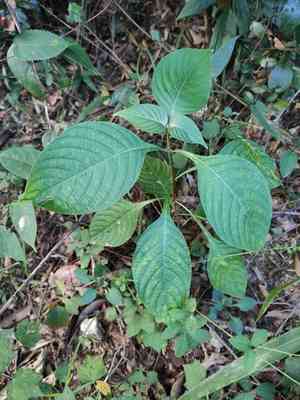
Mussaenda shikokiana (Mussaenda shikokiana)
Also known as: None
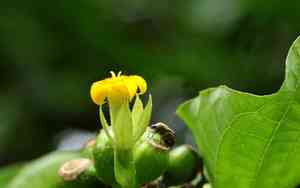
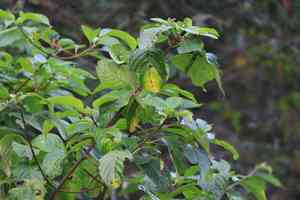
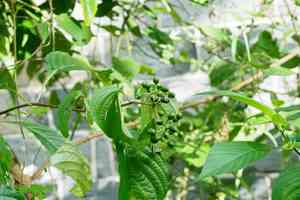
Mussaenda shikokiana features soft, ovate leaves and clusters of small, tubular yellow flowers with striking, star-shaped sepals. This shrub is typically found in the understory of shaded woodlands in East Asia, including China, Japan, and Taiwan. It thrives in areas with dappled sunlight, where its pale floral bracts stand out against the green foliage, creating a captivating visual effect reminiscent of butterflies resting on leaves.
In This Article
Attributes of Mussaenda shikokiana
Lifespan
Perennial
Plant Type
Shrub
Plant Height
1-2 meters
Spread
1-1.5 meters
Leaf Color
Green
Flower Size
1-2 centimeters
Flower Color
White or yellowish, enveloped by colorful bracts which can be pink, white, or red.
Images of Mussaenda shikokiana
Quickly Identify Mussaenda shikokiana
1
Mussaenda shikokiana can be identified by its unique bracts that are often colorful and petal-like, surrounding small less conspicuous flowers. The leaves are generally broad and have a smooth texture.
Scientific Classification of Mussaenda shikokiana
Phylum
Vascular plants
Class
Dicotyledons
Order
Gentians, dogbanes, madders, and allies
Family
Madder
Genus
Paper-rose
Species
Mussaenda shikokiana
Planting and Growing of Mussaenda shikokiana
Care Difficulty
Moderate
Watering Schedule
Every 4 days
Sunlight Requirements
Partial sun
Sunshine Duration
6-10 hours
Ideal Temperature
65-75℉
Soil Type
Potting Mix, Peat Mix
Soil pH
6.5-7.5
Fertilizer Type
Balanced
Pruning Season
Spring, Summer
Pruning Area
Branches, Leaves
Pruning Frequency
2 times a year
Repotting Season
Spring
Pot Type
Plastic, Ceramic
 How to Water Mussaenda shikokiana?
When watering Mussaenda shikokiana, provide about 500ml of water per session. Water adequately until the soil feels moist to the touch, but ensure it is not waterlogged. Water until you see some drainage from the pot. This ensures the roots are well-hydrated without drowning them.
What are the symptoms of an underwatered Mussaenda shikokiana?
›
What should I do if my Mussaenda shikokiana is not getting enough water?
›
What are the symptoms of an overwatered Mussaenda shikokiana?
›
How to save an overwatered Mussaenda shikokiana?
›
 What Are the Sunlight Requirements for Mussaenda shikokiana?
Mussaenda shikokiana thrives best in partial sun to full shade environments. This preference ensures optimal photosynthesis, robust growth, and vibrant foliage while preventing heat stress and leaf burn.
What is the best location for Mussaenda shikokiana?
›
How do you ensure Mussaenda shikokiana gets enough light?
›
Why is balancing light important for Mussaenda shikokiana?
›
 What Is the Ideal Temperature Range for Mussaenda shikokiana?
For optimal growth, Mussaenda shikokiana prefers a temperature range between 65°F and 75°F. This range mimics the plant's natural tropical habitat, providing a warm environment that supports active growth and blooming. Maintaining temperatures within this range ensures the plant's metabolic processes function effectively, resulting in healthy foliage and vibrant blooms.
 What Soil is Best for Mussaenda shikokiana?
Mussaenda shikokiana thrives best in well-draining soil, preventing waterlogging which could lead to root rot. Good drainage ensures the roots receive adequate air, supporting healthy plant growth and vibrancy. Loamy soil rich in organic matter is ideal. This provides essential nutrients, encourages robust growth, and helps maintain moisture without becoming waterlogged, which is essential for healthy flowering and foliage. Preferring slightly acidic conditions (pH 6.5 to 7.5), this plant absorbs nutrients more effectively, promoting vigorous growth and enhanced flowering, translating to a more aesthetically pleasing plant.
 How to Fertilize Mussaenda shikokiana?
Mussaenda shikokiana typically requires a moderate amount of fertilizer. Use a balanced, water-soluble fertilizer at half the recommended strength to avoid over-fertilization. For liquid fertilizer, mix 5 milliliters of fertilizer in 1 liter of water. For slow-release fertilizer, use 30 grams per square meter.
 How to Prune Mussaenda shikokiana?
Start by sterilizing your pruning shears to prevent any disease transmission. Examine your Mussaenda shikokiana for any dead, diseased, or crossing branches. Remove these first by cutting them back to the main stem or a healthy outward-facing bud. For overall shape, prune to maintain the plant's natural form by cutting back any excessively long branches just above a leaf node or bud. Aim to open the center slightly, allowing light and air to penetrate the interior, which promotes better growth and reduces the risk of disease. Remember to step back occasionally and assess the overall shape of the plant to ensure you are pruning evenly.
 How to Propagate Mussaenda shikokiana plant?
1
Choose healthy, disease-free plant material for cuttings. Select semi-hardwood cuttings from the current year's growth, ensuring each has several nodes for potential root growth.
2
Use a well-draining potting mix composed of equal parts sand, peat, and perlite. Fill the seed trays or pots and gently wet the medium to prepare it for the sowing or inserting of cuttings.
3
For seeds, scatter them evenly over the surface of the prepared medium and cover lightly with soil. For cuttings, remove lower leaves, dip in rooting hormone, and insert into the medium deeply enough to support the cutting.
 How to Repot Mussaenda shikokiana plant?
1
Mussaenda shikokiana needs repotting when its roots fill the pot or water drains unusually slow. It's also time if the plant's growth stagnates or shows signs of stress, indicating rootbound conditions.
2
Select a pot about 2 inches larger in diameter than the current one. Ensure it has ample drainage holes to prevent waterlogging. A larger pot provides room for growth and helps maintain optimal soil aeration and moisture levels.
3
Opt for a well-draining potting mix rich in organic matter, such as a blend of peat, pine bark, and perlite. This mix allows roots to breathe, retains necessary moisture, and supports nutrient uptake, essential for vibrant growth.
Learn More About Mussaenda shikokiana Diseases
Anthracnose
Bacterial Leaf Spot
Bacterial Wilt
Crown Gall
Damping-off
Downy Mildew
Drought Stress
Fusarium Wilt
Gray Mold
Leaf Curl
Leaf Spot
Mosaic
Nutrient Deficiency
Nutrient Toxicity
Powdery Mildew
Root Rot
Root-knot Nematode
Rusts
Sooty Mold
Spider Mites
Temperature Stress
Thrips Damage
White Mold



