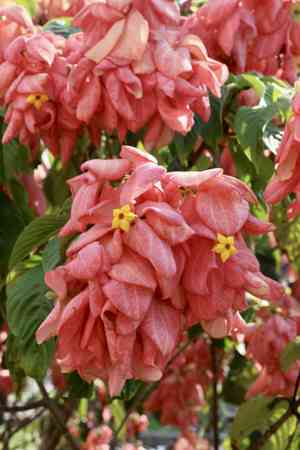
Philippine mussaenda (Mussaenda philippica)
Also known as: Buddha's lamp, Tropical dogwood
The Philippine mussaenda (Mussaenda philippica), also known as the Queen of the Philippines, can reach up to 10 meters in height. Adorned with cascading pink or white flowers, it stands out as a regal centerpiece in public gardens. This plant is notable for its year-round blooming cycle.
In This Article
Attributes of Philippine mussaenda
Lifespan
Perennial
Plant Type
Shrub
Plant Height
1 m
Spread
1 m
Leaf Color
Dark Green
Flower Size
2.5 cm
Flower Color
White Yellow Pink Red Gold
Images of Philippine mussaenda
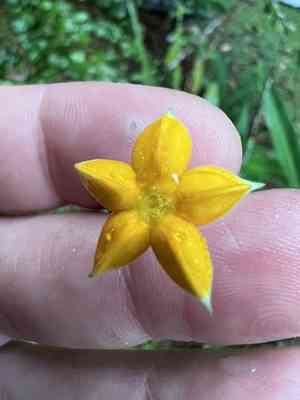
Quickly Identify Philippine mussaenda
1
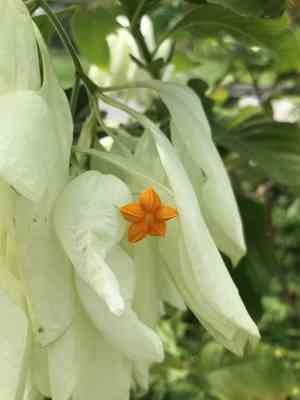
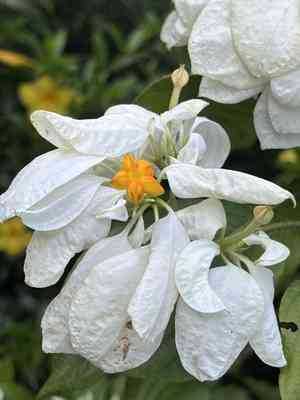
To identify Mussaenda philippica, look for its distinctive bracts that resemble large, colorful leaves. The actual flowers are tiny, star-shaped, and typically yellow. The bracts can be white, yellow, or pink, and are often mistaken for petals. The leaves are broad, ovate, and dark green with a glossy finish.
Scientific Classification of Philippine mussaenda
Phylum
Vascular plants
Class
Dicotyledons
Order
Gentianales
Family
Madder
Genus
Paper-rose
Species
Philippine mussaenda
Planting and Growing of Philippine mussaenda
Care Difficulty
Easy
Watering Schedule
Every 4 days
Sunlight Requirements
Partial sun
Sunshine Duration
6-10 hours
Ideal Temperature
68-86℉
Soil Type
Potting Mix, Peat Mix
Soil pH
6.5-7.5
Fertilizer Type
Balanced
Pruning Season
Spring, Summer
Pruning Area
Branches, Leaves
Pruning Frequency
2 times a year
Repotting Season
Spring
Pot Type
Plastic, Terracotta
 How to Water Philippine mussaenda?
For Mussaenda philippica, the watering amount is crucial for its vibrant growth. It thrives when the soil is consistently moist but not waterlogged. Aim to water around 500ml per session, ensuring the soil remains adequately hydrated. Watering should be thorough such that it reaches the roots, but any excess should drain out to prevent root rot.
What are the symptoms of an underwatered Philippine mussaenda?
›
What should I do if my Philippine mussaenda is not getting enough water?
›
What are the symptoms of an overwatered Philippine mussaenda?
›
How to save an overwatered Philippine mussaenda?
›
 What Are the Sunlight Requirements for Philippine mussaenda?
Partial to full sun exposure between 4 to 6 hours is ideal. This range supports lush foliage growth and maximizes flowering, crucial for the ornamental appeal of Mussaenda philippica.
More About Sunlight Requirements Techniques→
How much sunlight does Mussaenda philippica need?
›
How can I optimize light conditions for Mussaenda philippica?
›
What are the benefits of ideal lighting for Mussaenda philippica?
›
 What Is the Ideal Temperature Range for Philippine mussaenda?
The ideal temperature range for Mussaenda philippica is between 68°F and 86°F. This range supports healthy growth, vibrant foliage, and abundant flowering. Maintaining temperatures within this range mimics the plant's natural tropical environment, ensuring its thriving development.
 What Soil is Best for Philippine mussaenda?
Mussaenda philippica thrives in well-drained soils which help prevent waterlogging that can lead to root rot. This ensures the roots have adequate oxygen and reduces the likelihood of fungal infections. While they prefer draining, Mussaenda philippica also benefits from soils that can retain some moisture, providing the roots with a consistent supply of water vital for growth and health. A soil rich in organic matter provides essential nutrients for Mussaenda philippica, promoting vibrant growth and lush foliage which enhances its ornamental appeal.
 How to Fertilize Philippine mussaenda?
Mussaenda philippica thrives on balanced nutrient intake without overly rich fertilizer. For liquid fertilizers, a concentration of 1 tablespoon per gallon is optimal. For slow-release fertilizers, use about 50 grams per square meter annually. This ensures a steady nutrient supply promoting lush growth.
 How to Prune Philippine mussaenda?
Start by removing any dead or diseased branches to maintain the health of the plant. Use sharp, clean shears to cut branches at an angle just above a node to encourage new growth. Aim to create a balanced shape by trimming overgrown areas while opening up the center to allow sunlight to reach the inner leaves. This ensures your Mussaenda philippica remains bushy and produces abundant flowers. Every few years, it's beneficial to perform a more drastic pruning to rejuvenate your Mussaenda philippica. Cut back about one-third of the stems to encourage a burst of new growth. Focus on removing older, woody stems, leaving the greener, more vigorous shoots intact. This deep pruning stimulates flower production and prevents the plant from becoming too woody or large for its space.
More About Pruning Techniques→
 How to Propagate Philippine mussaenda plant?
1
Choose a healthy, disease-free stem of about 4-6 inches in length. Ensure the cutting has at least two to three nodes for effective root development.
2
Use a well-draining potting mix, incorporate sand or perlite for proper aeration. Sterilizing the soil before planting can reduce the risk of infestations.
3
Insert the treated cuttings into the prepared soil, ensuring at least one node is buried. Water lightly and cover with a plastic dome to maintain humidity.
 How to Repot Philippine mussaenda plant?
1
Repotting needs arise when roots visibly crowd the pot or appear through drainage holes, indicating the plant needs more space. Spring and summer are ideal seasons, as Mussaenda philippica resumes active growth, quickly adapting to new soil and pots. Regularly check for these signs to time the repotting correctly.
2
Select a pot 2-3 inches larger in diameter than the current one to allow ample room for new root growth. Adequate drainage holes are crucial to prevent waterlogging. This avoids root rot, ensuring healthy growth by allowing excess water to escape, maintaining ideal moisture levels.
3
Opt for a well-drained potting mix with components like peat, perlite, and compost. This combination offers nutrient richness and allows excess water to drain, preventing root suffocation and promoting vibrant, continuous flowering throughout growing seasons.



