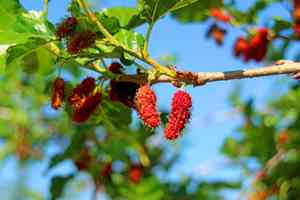
Red mulberry (Morus rubra)
Also known as: Red Mulberry
The red mulberry tree (Morus rubra), a small- to medium-sized deciduous species, produces sweet, blackberry-like fruits. These fruits are versatile and can be enjoyed fresh or used in cooking and baking. They are great for making jams, jellies, and pie fillings. Additionally, red mulberries can be fermented to produce mulberry wine. Historical records indicate that English settlers in early Virginia utilized these plants for their edible fruits.
In This Article
Attributes of Red mulberry
Lifespan
Perennial
Plant Type
Tree
Plant Height
10 m to 20 m
Spread
6 m to 12 m
Leaf Color
Green
Flower Size
5 mm to 7 mm
Flower Color
Green Yellow
Images of Red mulberry
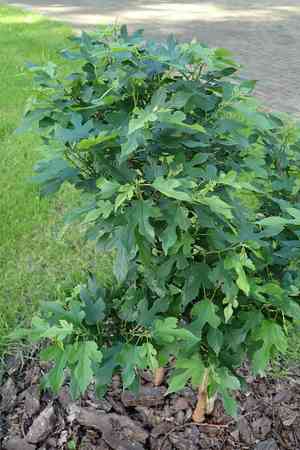
Quickly Identify Red mulberry
1
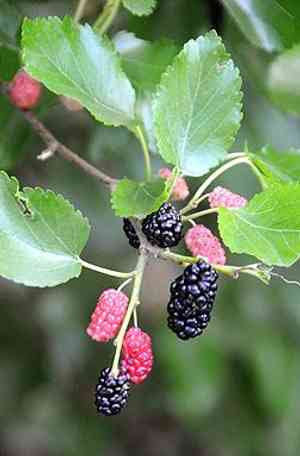
Heart-shaped, dark green leaves with toothed edges, ranging from 3-5 inches (7.6-12.7 cm) in length.
2
Unisexual flowers in drooping catkin-like spikes, greenish in color, with male catkins around 1.5 inches (4 cm) long.
3
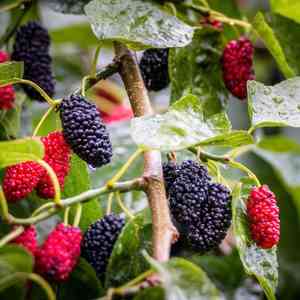
Sweet, blackberry-like fruits in reddish to dark purple clusters, 1-1.5 inches (2.5-3.8 cm) in length.
4
Slender branches with smooth reddish-brown bark, featuring scattered white lenticels and light green glabrous shoots.
5
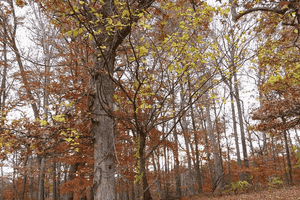
Distinctive sturdy trunk with grey-brown bark adorned with scaly ridges that exfoliate for unique tactile identification.
Scientific Classification of Red mulberry
Phylum
Vascular plants
Class
Dicotyledons
Order
Rosales
Family
Mulberry
Genus
Mulberries
Species
Red mulberry
Planting and Growing of Red mulberry
Care Difficulty
Easy
Watering Schedule
Every 4 days
Sunlight Requirements
Full sun
Sunshine Duration
4-8 hours
Ideal Temperature
68-77℉
Soil Type
Potting Mix, Peat Mix
Soil pH
5.5-7.5
Fertilizer Type
Balanced
Pruning Season
Spring, Summer
Pruning Area
Branches, Leaves
Pruning Frequency
2 times a year
Repotting Season
Spring
Pot Type
Plastic, Ceramic
 How to Water Red mulberry?
It's important to water Morus rubra deeply, ensuring that the soil remains moist but not waterlogged. The key is to provide just enough water to penetrate several inches into the soil, allowing the roots to absorb sufficient moisture without becoming oversaturated. Adjust the quantity as needed depending on climate and soil drainage.
More About Watering Techniques→
What are the symptoms of an underwatered Red mulberry?
›
What should I do if my Red mulberry is not getting enough water?
›
What are the symptoms of an overwatered Red mulberry?
›
How to save an overwatered Red mulberry?
›
 What Are the Sunlight Requirements for Red mulberry?
Partial to full sunlight is beneficial for Morus rubra as it promotes healthy growth, vibrant foliage, and robust fruit production while reducing the risk of pests and diseases.
More About Sunlight Requirements Techniques→
Optimal Sunlight Hours
›
Balancing Light Intensity
›
Seasonal Adjustments
›
 What Is the Ideal Temperature Range for Red mulberry?
The ideal temperature range for Morus rubra is between 68 and 77 degrees Fahrenheit. This range provides optimal growth conditions, encouraging robust development and abundant fruit production. Within this temperature span, photosynthesis and cellular activities occur efficiently, ensuring healthy plant growth.
 What Soil is Best for Red mulberry?
Morus rubra thrives in soil rich in organic matter, which aids in moisture retention and provides essential nutrients. The presence of decayed plant material not only enriches the soil but also improves its structure, fostering better root development and growth for the plant. This plant requires well-drained soil to prevent waterlogging, which can lead to root rot and other diseases. Ensuring that the soil has good drainage allows for better oxygenation of the roots, contributing to the overall health and vigor of Morus rubra. It's important for Morus rubra to have moderately moist soil to ensure steady growth. Consistent moisture helps in nutrient uptake and supports the plant's physiological processes, ensuring robust foliage and fruit production.
More About Soil→
 How to Fertilize Red mulberry?
When fertilizing Morus rubra, apply a balanced fertilizer such as a 10-10-10 formulation. For liquid fertilizers, use approximately one tablespoon per gallon of water, ensuring coverage over the root zone. For slow-release fertilizers, use about 1 to 2 pounds per tree, depending on the size and age. This ensures adequate nutrient availability for growth without overloading the plant with excess nutrients.
More About Fertilizing Techniques→
 How to Prune Red mulberry?
When pruning, make cuts just above healthy buds to encourage new growth. This ensures that the tree can recover effectively and continue to flourish. Begin by removing any dead, diseased, or damaged branches. This helps to prevent disease spread and allows the tree to focus its energy on healthy growth.
More About Pruning Techniques→
 How to Propagate Red mulberry plant?
1
Select healthy, non-flowering stems in early spring. Cut sections of about 6 inches each. Remove the lower leaves to prevent rot when planting.
2
For layering, bend a low branch to the ground, slightly wound the stem, and cover the wounded part with soil to encourage rooting over a few months.
3
Collect red mulberry seeds in late summer. Stratify them in a cold frame for several weeks before sowing to break dormancy and enhance germination.
 How to Repot Red mulberry plant?
1
You should consider repotting Morus rubra when you notice roots growing out of the drainage holes, the soil drying out rapidly after watering, or when the growth appears stunted. Spring offers the best conditions for the plant to recover and establish itself. Repotting in early spring allows the tree to utilize the upcoming growing season to expand in its new space.
2
Select a pot that is slightly larger than the current one, ensuring it has one or more drainage holes to prevent waterlogging. Opting for a pot with a diameter about 2 inches larger than the current pot will provide enough space for root growth without overwhelming the plant. This helps in maintaining proper moisture levels and preventing root rot.
3
Use well-draining, loamy soil to ensure good aeration and prevent water from pooling at the bottom, which may lead to root rot. A soil mix rich in organic matter will provide essential nutrients and support healthy growth. Combining garden soil with compost can improve the soil structure and nutrient content.
Learn More About Red mulberry Diseases
Anthracnose
Bacterial Leaf Spot
Crown Gall
Damping-off
Downy Mildew
Drought Stress
Fusarium Wilt
Gray Mold
Leaf Curl
Leaf Spot
Mosaic
Nutrient Deficiency
Nutrient Toxicity
Powdery Mildew
Root Rot
Root-knot Nematode
Rusts
Sooty Mold
Spider Mites
Temperature Stress
Thrips Damage
White Mold
Chemical Injury



