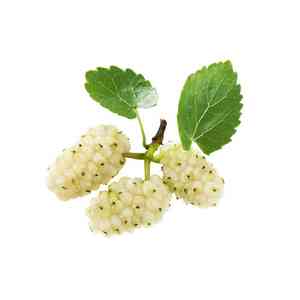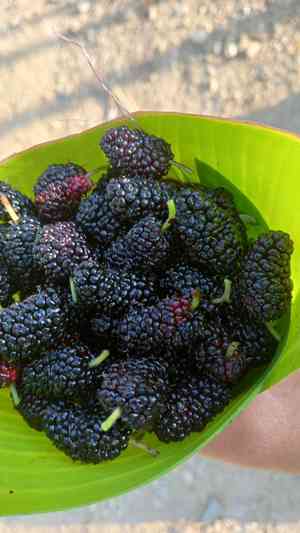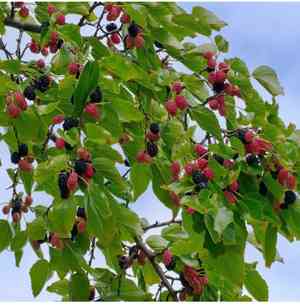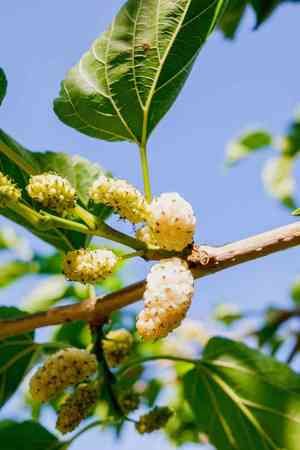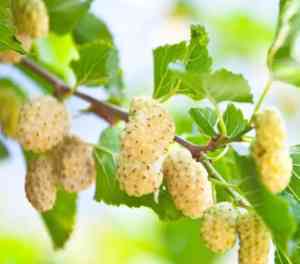
Mulberry(Morus alba)

Mulberry (Morus alba)

Also known as: Common mulberry

The mulberry tree is a versatile and easy-to-grow plant known for its delicious fruits and decorative beauty. Native to China, it played a vital role in silk production since silkworms feed exclusively on its leaves. Over time, mulberry trees have been cultivated globally, supporting silk industries in various countries.

Attributes of Mulberry

Lifespan
Perennial
Plant Type
Tree
Plant Height
9 m to 20 m
Spread
9 m to 15 m
Leaf Color
Green
Flower Size
1 cm to 3.5 cm
Flower Color
Green Yellow

PlantJoy - Identify plants with a snap

Identify and diagnose plants, get toxicity alerts, and explore safety guides for all types of fungi.

Try for Free

Images of Mulberry

Mulberry(Morus alba)

Quickly Identify Mulberry

1
Milky sap from twigs
2
Fruit stains surfaces
3
Glossy, toothed leaves
4
Distinctive bark changes with age
5
Fleshy, sweet-tasting drupes

Scientific Classification of Mulberry

Phylum
Vascular plants
Class
Dicotyledons
Order
Roses, elms, figs, and allies
Family
Mulberry
Genus
Mulberries
Species
Mulberry

Planting and Growing of Mulberry

Care Difficulty
Easy
Watering Schedule
Every 3 days
Sunlight Requirements
Full sun
Sunshine Duration
6-10 hours
Ideal Temperature
68-86℉
Soil Type
Potting Mix, Peat Mix
Soil pH
6.5-7.5
Fertilizer Type
Balanced
Pruning Season
Spring, Summer
Pruning Area
Branches, Leaves
Pruning Frequency
2 times a year
Repotting Season
Spring
Pot Type
Plastic, Ceramic

water icon How to Water Mulberry?

For Morus alba, or the white mulberry tree, applying approximately 1000 milliliters of water per session is optimal. The key principle is to deeply water the soil until it is saturated, allowing for proper root absorption without causing standing water at the base. Watering should ensure moisture penetration to a depth of at least 30 centimeters.
What are the symptoms of an underwatered Mulberry?
What should I do if my Mulberry is not getting enough water?
What are the symptoms of an overwatered Mulberry?
How to save an overwatered Mulberry?
More About Watering Techniques

sunlight icon What Are the Sunlight Requirements for Mulberry?

Sunlight Requirements: Full sun, Partial sun
Duration of light: 6 to 8 hours
Morus alba flourishes best under full to partial sun conditions, enjoying 6 to 8 hours of light daily. This range ensures balanced growth and fruit development while minimizing stress from light fluctuations.
What kind of light does Morus alba prefer?
How can you ensure Morus alba receives ideal sunlight?
What are the benefits of providing Morus alba with ideal sunlight?
More About Sunlight Requirements Techniques

temperature icon What Is the Ideal Temperature Range for Mulberry?

Ideal Temperature: 68 ~ 86℉
Morus alba thrives best between 68 and 86 degrees Fahrenheit. This range supports optimal photosynthesis and nutrient absorption, contributing to healthy foliage and abundant fruiting. Maintaining this temperature range ensures vigorous growth and enhances the plant's resistance to pests and diseases.

soil icon What Soil is Best for Mulberry?

Soil type: Loam, Sandy loam, Calcareous soil
Soil PH: 6.5 ~ 7.5
Morus alba thrives best in well-drained soils, where excess water can swiftly percolate away. This prevents waterlogged conditions, reducing root rot and boosting healthy, robust growth. For optimal growth, Morus alba benefits from soils rich in nutrients. A fertile soil supports vigorous growth, enhancing the plant's productivity and resilience against pests and diseases. While Morus alba prefers well-drained soil, maintaining consistent moisture is key. Regular watering ensures nutrients are accessible, promoting lush foliage and healthy development. More About Soil

fertilize icon How to Fertilize Mulberry?

Fertilizer type: Balanced
When fertilizing Morus alba, use a balanced fertilizer with an N-P-K ratio of around 10-10-10. For liquid fertilizers, apply approximately one tablespoon per gallon of water. When using slow-release fertilizers, apply about half a pound per mature tree, ensuring the nutrients are distributed evenly around the root zone. More About Fertilizing Techniques

prune icon How to Prune Mulberry?

Pruning Time: Spring, Autumn
Begin by identifying any dead, diseased, or damaged branches, as removing these first increases tree health. Then, look for any crossing branches that could hinder air flow or light penetration as removing these branches will promote better overall growth. Make clean cuts at a 45-degree angle to the main stem just above a bud or secondary branch. This technique promotes new growth at the desired spot and prevents water from collecting on the cut surface, reducing the chance of rot. Prune Morus alba in late winter or early spring before the new growth begins. This timing minimizes stress on the tree and allows it to devote energy to healing and new growth in spring. More About Pruning Techniques

propagate icon How to Propagate Mulberry plant?

Propagate Time: Spring,Early summer
1
Choose healthy, disease-free branches or seeds to maximize propagation success. Avoid using materials that show signs of pests or diseases.
2
Use clean tools to make angled cuts on the chosen branches. Remove unnecessary leaves to reduce transpiration and keep the cutting hydrated.
3
Plant cuttings or seeds in well-draining soil and maintain consistent moisture. Placing them in a warm, humid environment can improve rooting success.
More About Propagating Techniques

repot icon How to Repot Mulberry plant?

Repotting frequency: Every 2-3 years
1
Watch for signs like roots emerging through drainage holes or the plant appearing top-heavy. These signals indicate it's time for your Morus alba to shift into a larger pot. Keep an eye on these indicators, especially during its growing season, to avoid stress on the plant.
2
Choose a pot that's 2-3 inches larger in diameter than the current one. The material of the pot should allow for proper aeration and drainage to accommodate the expanding root system. Clay or ceramic pots often provide good breathability and stability.
3
Opt for well-draining loamy soil that retains enough moisture yet drains excess water efficiently. This balance keeps roots healthy and prevents waterlogging, ensuring optimal growth for your Morus alba.

PlantJoy - Identify plants with a snap

Find the best spots for them to optimize their health, simply using your phone.

Try for Free

Toxicity of Mulberry

Is Mulberry toxic to cat?

The mulberry plant poses a toxic risk to cats. If pets consume its fruits or come into contact with its sap, they can suffer from poisoning. Cats that interact with mulberry may exhibit negative health effects, showing signs of physical distress or illness. It is essential for cat owners to keep their pets from eating or engaging with mulberry. If there's a suspicion that a cat has been poisoned by mulberry, it is vital to seek immediate medical attention at a veterinary clinic to secure the cat's health and facilitate recovery.

Is Mulberry toxic to dog?

Mulberry is deemed toxic to dogs. If dogs mistakenly consume mulberry, they can experience poisoning. The parts of the plant that are hazardous include the fruits and sap/juice, which should be kept out of pets' reach to avoid accidental ingestion. Ingestion of these parts may result in symptoms associated with poisoning in dogs. It is essential for dog owners to closely observe their pets for any signs of distress or abnormal behavior after they have been exposed to mulberry. If a dog exhibits symptoms such as vomiting, diarrhea, or lethargy after encountering mulberry, it is vital to seek prompt veterinary attention to ensure the best possible health outcome for the animal.

Identify toxic plants for your safety

Learn which plants are harmful to you and your pets, and make informed choices for a safer home!

Try for Free
WARNING
The judgment on toxicity and danger is for reference only. We DO NOT GUARANTEE any accuracy of such judgment. Therefore, you SHALL NOT rely on such judgment. It is IMPORTANT TO SEEK PROFESSIONAL ADVICE in advance when necessary.
More About Toxic Techniques