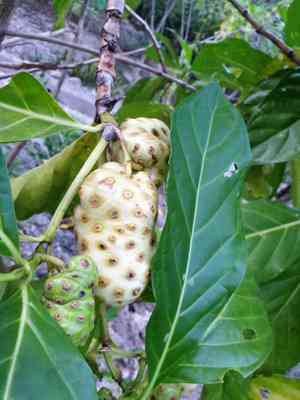
Morinda (Morinda) (Morinda)
Also known as: Noni, Indian mulberry, Cheese fruit
Morinda is a genus of flowering plants belonging to the family Rubiaceae. The most well-known species in this genus is Morinda citrifolia, commonly known as Noni. It is notable for its fruit, which has a strong odor and is used in traditional medicine and as a food source.
In This Article
Attributes of Morinda (Morinda)
Lifespan
Perennial
Plant Height
3-10 meters
Spread
Up to 3 meters
Leaf Color
Dark green
Flower Size
1-2 centimeters
Flower Color
White
Images of Morinda (Morinda)
Quickly Identify Morinda (Morinda)
1
Morinda plants can be identified by their large, glossy, dark green leaves that are elliptical in shape. The fruits are oval, lumpy, and change from green to yellow as they ripen. They emit a strong, distinct odor when mature.
Scientific Classification of Morinda (Morinda)
Phylum
Tracheophyta
Class
Magnoliopsida
Order
Gentianales
Family
Rubiaceae
Genus
Morinda
Planting and Growing of Morinda (Morinda)
Care Difficulty
Moderate
Watering Schedule
Every 2 days
Sunlight Requirements
Partial sun
Sunshine Duration
6-10 hours
Ideal Temperature
68-86℉
Soil Type
Potting Mix, Peat Mix
Soil pH
6.5-7.5
Fertilizer Type
Balanced
Pruning Season
Spring, Summer
Pruning Area
Branches, Leaves
Pruning Frequency
2 times a year
Repotting Season
Spring
Pot Type
Plastic, Ceramic
 How to Water Morinda (Morinda)?
For Morinda plants, watering should be thorough yet moderate. Aim to provide around 500 ml of water each time, ensuring the soil is moistened evenly but not saturated. This helps maintain healthy root growth without causing waterlogging. Water until it starts to drain from the bottom, then pause to let the plant absorb the moisture.
What are the symptoms of an underwatered Morinda (Morinda)?
›
What should I do if my Morinda (Morinda) is not getting enough water?
›
What are the symptoms of an overwatered Morinda (Morinda)?
›
How to save an overwatered Morinda (Morinda)?
›
 What Are the Sunlight Requirements for Morinda (Morinda)?
Partial to full sun is ideal, with Morinda appreciating consistent light exposure of 4-8 hours daily for optimal photosynthesis, robust growth, and enhanced flowering capabilities without stressing the plant.
What is the best lighting condition for Morinda?
›
How can I ensure Morinda gets ideal lighting?
›
Why is ideal lighting crucial for Morinda?
›
 What Is the Ideal Temperature Range for Morinda (Morinda)?
The ideal temperature range for Morinda is between 68°F and 86°F. This range allows the plant to carry out photosynthesis efficiently while maintaining its metabolic processes. It ensures that the plant is not stressed by excessive heat or cold, allowing for optimal growth and development.
 What Soil is Best for Morinda (Morinda)?
Morinda thrives in well-drained soil because it prevents waterlogging, which can lead to root rot. Ensuring excellent drainage helps maintain root health and promotes vigorous growth. These plants benefit from nutrient-rich soil that supports healthy foliage and fruit production. Amending the soil with organic matter such as compost can enhance nutrient availability. While Morinda prefers well-drained conditions, it also requires soil that can retain some moisture. Sandy loam is ideal since it retains adequate moisture without becoming waterlogged.
 How to Fertilize Morinda (Morinda)?
For the Morinda plant, a balanced fertilizer is required. When using liquid fertilizer, dilute it to half strength to prevent nutrient build-up. A typical dose is around 10 ml per liter of water every time you fertilize. Be cautious not to over-fertilize, as it can lead to nutrient burn.
 How to Prune Morinda (Morinda)?
Begin by removing any dead or diseased branches. Make clean cuts just above a bud or side branch to encourage new growth. Cut back overgrown branches to maintain the desired shape. Aim for an even distribution of foliage to ensure sunlight reaches all parts of the plant. Remove branches that are causing congestion. This increases air circulation within the plant, minimizing the risk of fungal infections.
 How to Propagate Morinda (Morinda) plant?
1
Start by selecting healthy seeds from a mature Morinda plant. Clean the seeds under running water to remove any pulp residues. For best results, soak the seeds in warm water for 24 hours before sowing to enhance germination.
2
Select a healthy branch from the Morinda plant. Use sterilized pruning shears to make a clean cut just below a node. Remove any large leaves from the lower part of the cutting to reduce water loss through transpiration.
3
For seeds, plant them in seed trays with well-draining soil and cover lightly with soil. For cuttings, plant them in a small pot with peat or a potting mix. Keep them in a warm location with indirect sunlight and maintain high humidity around the cuttings.
 How to Repot Morinda (Morinda) plant?
1
Watch for signs like roots emerging from drainage holes or the plant becoming root-bound. If growth seems stunted or the soil dries out too quickly, it's a strong indicator that repotting is necessary. The best time to repot Morinda is during its active growth period in spring or early summer when the plant can recover quickly.
2
Select a pot that is one size larger than the current pot, ensuring it has good drainage holes. A pot about 1-2 inches larger in diameter offers the right space for new root growth without being too spacious, which could lead to overwatering issues. The material of the pot should promote breathability, like terracotta.
3
Opt for a well-draining potting mix. A mixture with perlite or sand can ensure proper aeration and prevent root rot. This type of soil allows excess water to drain while retaining just enough moisture, promoting healthy growth and nutrient uptake.
Learn More About Morinda (Morinda) Diseases
Anthracnose
Bacterial Leaf Spot
Bacterial Wilt
Crown Gall
Cyst Nematode
Damping-off
Downy Mildew
Fusarium Wilt
Gray Mold
Leaf Curl
Leaf Spot
Mosaic
Nutrient Deficiency
Nutrient Toxicity
Powdery Mildew
Root Rot
Root-knot Nematode
Rusts
Sooty Mold
Spider Mites
Thrips Damage
White Mold
Chemical Injury
Drought Stress
Temperature Stress

