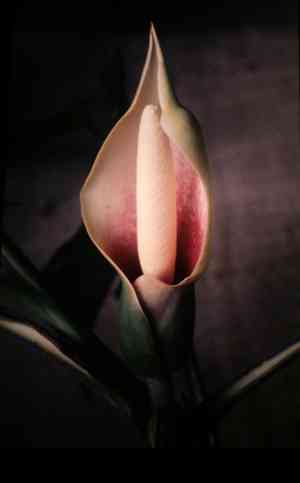
Yautia madera (Montrichardia arborescens)
Also known as: Swamp Bloodwood, Arouman
Yautia madera, also known as cocoyam or malanga, is a versatile tropical aquatic shrub. Its tubers are a significant food source, often boiled, baked, or fried in various dishes. Farmers appreciate its leaves and tubers as nutritious livestock feed. In traditional medicine, parts of the plant are used to address skin and digestive issues. Agriculturally, it is valuable for crop rotation due to its soil-enriching deep roots. Additionally, in certain cultures, it holds ceremonial and cultural significance.
In This Article
Attributes of Yautia madera
Lifespan
Perennial
Plant Type
Herb
Plant Height
3-6 meters
Spread
1-2 meters
Leaf Color
Green
Flower Size
4-5 cm (spadix)
Flower Color
Yellow Pink Green
Images of Yautia madera
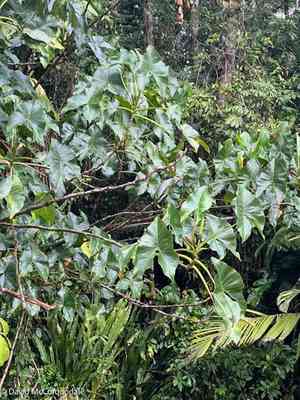
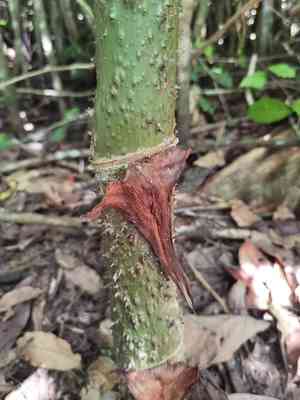
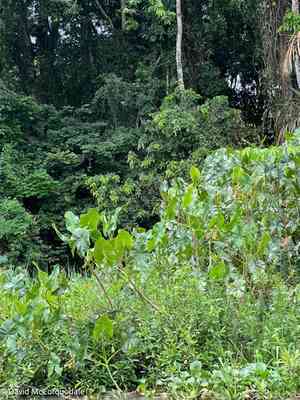
Quickly Identify Yautia madera
1
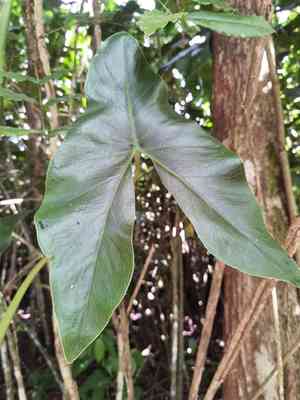
Montrichardia arborescens can be identified by its large, glossy, heart-shaped leaves, which can reach up to 90 cm in length. The plant typically has a woody stem and can grow quite tall. It produces a unique spadix-type flower that is characteristic of the Araceae family.
Scientific Classification of Yautia madera
Phylum
Vascular plants
Class
Monocotyledons
Order
Alismatales
Family
Arum
Genus
Montrichardia
Species
Yautia madera
Planting and Growing of Yautia madera
Care Difficulty
Easy
Watering Schedule
Every 4 days
Sunlight Requirements
Partial sun
Sunshine Duration
6-10 hours
Ideal Temperature
75-85℉
Soil Type
Potting Mix, Peat Mix
Soil pH
6.5-7.5
Fertilizer Type
Balanced
Pruning Season
Spring, Summer
Pruning Area
Branches, Leaves
Pruning Frequency
2 times a year
Repotting Season
Spring
Pot Type
Plastic, Ceramic
 How to Water Yautia madera?
Montrichardia arborescens thrives in waterlogged conditions, similar to marshlands. Ensuring the soil is consistently moist is key. You should water until you notice a bit of excess draining at the bottom of the pot. This guarantees the roots have plenty of moisture without waterlogging the plant.
What are the symptoms of an underwatered Yautia madera?
›
What should I do if my Yautia madera is not getting enough water?
›
What are the symptoms of an overwatered Yautia madera?
›
How to save an overwatered Yautia madera?
›
 What Are the Sunlight Requirements for Yautia madera?
Montrichardia arborescens prefers 4-6 hours of partial to full sun daily, which ensures robust growth and strong foliage, promoting overall plant health.
More About Sunlight Requirements Techniques→
What is the ideal amount of sunlight for Montrichardia arborescens?
›
How can you achieve optimal lighting conditions for this plant?
›
What are the benefits of providing ideal lighting conditions?
›
 What Is the Ideal Temperature Range for Yautia madera?
Montrichardia arborescens thrives best in warm conditions where temperatures consistently range between 75°F and 85°F. These temperatures mimic their native tropical environment, ensuring optimal growth and health of the plant. In this range, the plant can carry out photosynthesis efficiently, allowing for vibrant foliage and proper root development. Maintaining this range provides a stable environment, minimizing stress and promoting overall vitality.
 What Soil is Best for Yautia madera?
Montrichardia arborescens thrives in moist but well-drained soil, preventing root rot while ensuring adequate hydration. This soil condition supports the plant's lush foliage and vigorous growth. The plant prefers soils enriched with organic matter, which provides the necessary nutrients for robust development and enhances soil structure, boosting the plant’s overall health. A well-aerated soil structure ensures that Montrichardia arborescens roots receive ample oxygen, vital for photosynthesis and seamless nutrient uptake, enhancing plant vitality.
 How to Fertilize Yautia madera?
When fertilizing Montrichardia arborescens, it is important to use a well-balanced fertilizer, such as a 10-10-10 NPK formula. For liquid fertilizers, use approximately half the recommended amount on the label, ensuring the roots absorb nutrients without overwhelming them. For slow-release fertilizers, apply no more than 20 grams per plant annually to maintain sustained nutrition.
 How to Prune Yautia madera?
Begin by identifying any dead or diseased stems; remove these completely to prevent the spread of disease. Follow by trimming back any overly long stems to encourage a bushier growth habit, ensuring each cut is made just above a leaf node. Use sharp and sanitized pruning shears to shape the plant according to the desired appearance. Aim to maintain a balanced look, ensuring that the plant does not lean too much in any direction, which could lead to lopsided growth.
More About Pruning Techniques→
 How to Propagate Yautia madera plant?
1
Collect seeds from the mature Montrichardia arborescens fruit. Surface should be cleaned and dried before sowing to prevent fungal infections.
2
Select healthy and mature stems for cuttings. Each cutting should be about 10-15 cm long with several nodes and at least one pair of leaves.
3
Sow seeds in a seed tray filled with a moistened growing medium. Ensure seeds are covered lightly to facilitate proper germination.
 How to Repot Yautia madera plant?
1
Montrichardia arborescens needs repotting when it becomes root-bound, indicated by roots emerging from the pot's drainage holes, or when the plant appears to outgrow its current container. Additionally, slowed growth or water accumulating at the pot's surface might suggest the need for fresh soil.
2
Select a pot that is about 2 inches larger in diameter than the current one. This ensures enough room for growth without overwhelming the plant. Ensure the pot has drainage holes to prevent waterlogging and root rot, vital for the plant’s health. An unglazed clay pot can aid in moisture control.
3
Opt for a moist, well-draining mix comprised of equal parts peat, perlite, and compost. This mix retains enough moisture while ensuring excess water drains away, preventing root rot. The soil should be slightly acidic to neutral, creating an optimal environment for nutrient uptake.
Toxicity
ingestion or contact with skin
WARNING
The judgment on toxicity and danger is for reference only. We DO NOT GUARANTEE any accuracy of such judgment. Therefore, you SHALL NOT rely on such judgment. It is IMPORTANT TO SEEK PROFESSIONAL ADVICE in advance when necessary.
Learn More About Yautia madera Diseases
Anthracnose
Bacterial Leaf Spot
Bacterial Soft Rot
Bacterial Wilt
Chemical Injury
Damping-off
Downy Mildew
Drought Stress
Fusarium Wilt
Gray Mold
Leaf Spot
Mosaic
Nutrient Deficiency
Nutrient Toxicity
Powdery Mildew
Root Rot
Root-knot Nematode
Sooty Mold
Spider Mites
Temperature Stress
Thrips Damage
White Mold



