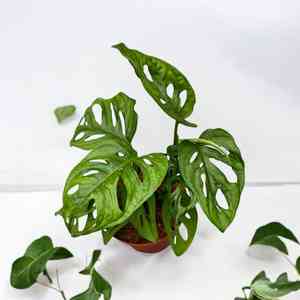
Swiss cheese-plant(Monstera adansonii)

Swiss cheese-plant (Monstera adansonii)

Also known as: Monkey Mask, Swiss cheese vine

The Swiss Cheese Plant is a beloved houseplant known for its distinctive and attractive leaves. The heart-shaped leaves develop characteristic holes over time, which is why it's commonly called the Swiss Cheese Plant.

Attributes of Swiss cheese-plant

Lifespan
Perennial
Plant Type
Vine
Plant Height
3 m to 3.5 m
Spread
50 cm
Leaf Color
Green
Flower Size
13 cm to 15 cm
Flower Color
Cream Purple

ForwardPlant - Identify plants with a snap

Identify and diagnose plants, get toxicity alerts, and explore safety guides for all types of fungi.

Try for Free

Images of Swiss cheese-plant

Swiss cheese-plant(Monstera adansonii)

Quickly Identify Swiss cheese-plant

1
Monstera adansonii can be identified by its distinctive leaves that have oval-shaped holes or perforations. The leaves are heart-shaped and glossy with a rich green color. As the plant matures, the holes in the leaves become more pronounced.

Scientific Classification of Swiss cheese-plant

Phylum
Vascular plants
Class
Monocotyledons
Order
Alismatales
Family
Arum
Genus
Monsteras
Species
Swiss cheese-plant

Planting and Growing of Swiss cheese-plant

Care Difficulty
Easy
Watering Schedule
Every 4 days
Sunlight Requirements
Partial sun
Sunshine Duration
4-6 hours
Ideal Temperature
65-85℉
Soil Type
Potting Mix, Peat Mix
Soil pH
5.5-7
Fertilizer Type
Balanced
Pruning Season
Spring, Summer
Pruning Area
Branches, Leaves
Pruning Frequency
2 times a year
Repotting Season
Spring
Pot Type
Plastic, Terracotta

water icon How to Water Swiss cheese-plant?

When watering Monstera adansonii, it's essential to ensure the soil is moist but not soggy. You should water until the water drains from the bottom of the pot, approximately 300 ml. The goal is to keep the soil moist but allow it to dry out slightly between waterings to prevent root rot.
What are the symptoms of an underwatered Swiss cheese-plant?
What should I do if my Swiss cheese-plant is not getting enough water?
What are the symptoms of an overwatered Swiss cheese-plant?
How to save an overwatered Swiss cheese-plant?
More About Watering Techniques

sunlight icon What Are the Sunlight Requirements for Swiss cheese-plant?

Sunlight Requirements: Partial sun, Full shade
Duration of light: 4-6 hours sunlight
Partial sun implies exposure to filtered light, which is ideal for Monstera adansonii. This setting promotes healthy foliage growth, vibrant leaf coloration, and prevents potential leaf burn.
How much light does Monstera adansonii need?
What are the best solutions to achieve ideal light?
What are the benefits of ideal lighting for Monstera adansonii?
More About Sunlight Requirements Techniques

temperature icon What Is the Ideal Temperature Range for Swiss cheese-plant?

Ideal Temperature: 65 ~ 85℉
For optimal growth, Monstera adansonii thrives in temperatures between 65°F and 85°F. At this range, the plant can perform photosynthesis effectively and maintain overall health. Keeping the plant within these temperatures will ensure vibrant foliage and sustained growth.

soil icon What Soil is Best for Swiss cheese-plant?

Soil type: Loam, Sandy loam, Peat soil
Soil PH: 5.5 ~ 7
Monstera adansonii thrives in well-draining soil, which helps to prevent waterlogging and root rot. This type of soil ensures that water percolates quickly, keeping the roots from sitting in water and allowing them to breathe. A nutrient-rich substrate is essential for Monstera adansonii as it provides the necessary macro and micronutrients for growth. This helps in sustaining healthy leaves and promoting vigorous growth. Soil that retains moisture but also allows for good airflow is ideal. This balance helps to maintain an optimal level of hydration while ensuring the roots do not suffocate. More About Soil

fertilize icon How to Fertilize Swiss cheese-plant?

Fertilizer type: Balanced
When fertilizing Monstera adansonii, aim for a balanced fertilizer with a 20-20-20 ratio. Apply no more than 1/4 teaspoon per gallon of water, ensuring that the plant receives the necessary nutrients without the risk of fertilizer burn. More About Fertilizing Techniques

prune icon How to Prune Swiss cheese-plant?

Pruning Time: Spring, Summer
Begin by sterilizing your pruning shears with rubbing alcohol to prevent the spread of disease. Identify the areas that need pruning; focus on damaged, diseased, or yellowing leaves. Cut the stems just above a leaf node to encourage new growth. Ensure your cuts are clean and angled to prevent water from pooling on the cut surface. More About Pruning Techniques

propagate icon How to Propagate Swiss cheese-plant plant?

Propagate Time: Spring,Late spring,Early spring,Summer
1
Choose a healthy stem with at least one node and a few leaves. Nodes are crucial as they are the points from which new roots will grow.
2
Using sharp and sterilized pruning shears, make a clean cut below a node. Ensure the cutting is about 4-6 inches long for optimal growth potential.
3
Dip the cut end of the stem in rooting hormone, then plant it in a pot filled with a moist, well-draining soil mix. Ensure the node is buried in the soil.
More About Propagating Techniques

repot icon How to Repot Swiss cheese-plant plant?

Repotting frequency: Every 1-2 years
1
Monstera adansonii typically needs repotting when you observe roots protruding from the drainage holes or if the plant's growth has noticeably slowed down. Also, if the soil dries out far too quickly or remains soggy, it's time to consider repotting. Choosing the right season, primarily spring or summer, ensures the plant is in a growth period and can recover quicker from the repotting process.
2
When selecting a pot for your Monstera adansonii, ensure it has adequate drainage holes to prevent waterlogging, which can lead to root rot. A pot that's about 2 inches larger in diameter than the current one is typically ideal. This size provides room for growth while minimizing the risk of excess soil retaining too much moisture. The material can be plastic or terracotta, depending on your preference for weight and aesthetic.
3
Opt for a well-draining potting mix rich in organic matter. A good mixture typically includes a blend of peat moss, pine bark, and perlite, which provides the right balance of moisture retention and aeration. Such a mix prevents root rot and encourages healthy root development, crucial for the plant's overall vitality and growth.
More About Repotting Techniques

ForwardPlant - Identify plants with a snap

Find the best spots for them to optimize their health, simply using your phone.

Try for Free

Toxicity of Swiss cheese-plant

Is Swiss cheese-plant toxic to humans?

The Swiss cheese plant exhibits a mild degree of toxicity to humans, primarily through ingestion. This entire plant is composed of calcium oxalate, which is responsible for its toxic properties. Upon consuming any part of the Swiss cheese plant, the calcium oxalate can trigger a variety of symptoms. Affected individuals may suffer from oral irritation, which can include sensations of burning, as well as swelling of the lips, tongue, and throat, leading to difficulties in swallowing. Additionally, nausea, vomiting, and diarrhea may occur in certain instances. It is crucial for individuals, particularly those with children or pets, to be cognizant of the potential dangers and actively prevent accidental ingestion of the Swiss cheese plant.

Is Swiss cheese-plant toxic to cat?

The Swiss cheese plant possesses a moderate degree of toxicity that poses a risk to cats. Felines might inadvertently consume this plant, resulting in poisoning. Once ingested, cats may feel immediate distress due to the calcium oxalate contained within the plant. Every part of the Swiss cheese plant presents this danger, with symptoms potentially involving oral irritation, pawing at the mouth, excessive drooling, vomiting, and challenges in swallowing. It is vital to seek prompt veterinary assistance if a cat exhibits any signs of having ingested the Swiss cheese plant, in order to mitigate the severity of symptoms and safeguard its health.

Is Swiss cheese-plant toxic to dog?

The swiss cheese plant is regarded as having a mild toxicity level for dogs. When dogs consume any part of the swiss cheese plant, poisoning can occur, as the entire plant harbors substances that can be detrimental to their health. The most frequent way for dogs to encounter these toxins is inadvertently through eating the plant. If a dog ingests any portion of the swiss cheese plant, it may show signs such as oral irritation, discomfort and swelling in the mouth, tongue, and lips, excessive salivation, vomiting, and trouble swallowing. These reactions are caused by the presence of calcium oxalate within the plant. Therefore, it is essential for dog owners to remain watchful and keep their pets away from swiss cheese plants. Should ingestion occur, seeking prompt veterinary assistance is vital to ensure effective treatment and management of the symptoms.

Identify toxic plants for your safety

Learn which plants are harmful to you and your pets, and make informed choices for a safer home!

Try for Free
WARNING
The judgment on toxicity and danger is for reference only. We DO NOT GUARANTEE any accuracy of such judgment. Therefore, you SHALL NOT rely on such judgment. It is IMPORTANT TO SEEK PROFESSIONAL ADVICE in advance when necessary.
More About Toxic Techniques