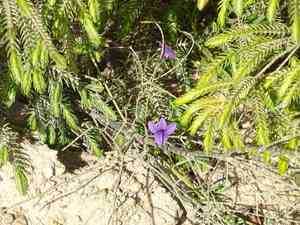
Monopsis unidentata (Monopsis unidentata)
Monopsis unidentata is a captivating flowering plant favored for its ornamental value. It boasts delicate, often lavender-blue blooms with a distinctive uneven petal structure that sets it apart. This plant typically thrives in well-drained soils, where it sprawls modestly, preferring sunny spots to unfurl its beauty. Adapted to its native environs, monopsis unidentata exhibits resilience in dry conditions, enabling it to contribute vivid hues to rock gardens and borders.
In This Article
Attributes of Monopsis unidentata
Lifespan
Annual
Plant Type
Herb
Plant Height
10-20 cm
Spread
Not applicable as it has a creeping habit
Leaf Color
Green
Flower Size
1-2 cm
Flower Color
Purple
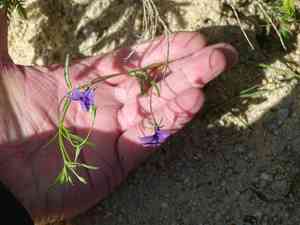
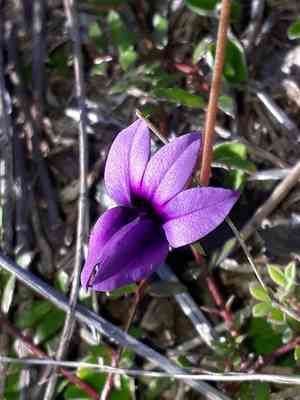
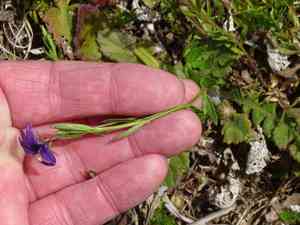
Images of Monopsis unidentata
Quickly Identify Monopsis unidentata
1
Identify Monopsis unidentata by its small, tubular purple flowers and lance-shaped leaves. The plant usually grows in clusters and has a creeping or spreading habit.
Scientific Classification of Monopsis unidentata
Phylum
Vascular plants
Class
Dicotyledons
Order
Asterales
Family
Bellflower
Genus
Oneyes
Species
Monopsis unidentata
Planting and Growing of Monopsis unidentata
Care Difficulty
Easy
Watering Schedule
Every 4 days
Sunlight Requirements
Full sun
Sunshine Duration
4-8 hours
Ideal Temperature
60-75℉
Soil Type
Potting Mix, Peat Mix
Soil pH
6.5-7.5
Fertilizer Type
Balanced
Pruning Season
Spring, Summer
Pruning Area
Branches, Leaves
Pruning Frequency
2 times a year
Repotting Season
Spring
Pot Type
Plastic, Ceramic
 How to Water Monopsis unidentata?
For Monopsis unidentata, watering should follow the principle of thorough soaking, ensuring the soil receives around 250 ml at each watering session. It's important to allow the soil to dry slightly between waterings, ensuring it's moist but not waterlogged.
What are the symptoms of an underwatered Monopsis unidentata?
›
What should I do if my Monopsis unidentata is not getting enough water?
›
What are the symptoms of an overwatered Monopsis unidentata?
›
How to save an overwatered Monopsis unidentata?
›
 What Are the Sunlight Requirements for Monopsis unidentata?
Monopsis unidentata thrives best under full to partial sun exposure. Ideal lighting encourages vibrant growth and flowering, enhancing its natural beauty. Regular light access supports chlorophyll production, essential for maintaining strong, healthy foliage.
Optimal Sunlight Hours
›
Sunlight Direction
›
Shading Strategies
›
 What Is the Ideal Temperature Range for Monopsis unidentata?
The ideal growing temperature for Monopsis unidentata is between 60°F and 75°F. In this range, the plant exhibits optimal growth and vibrant blooms. These temperatures allow for efficient photosynthesis and nutrient uptake, thus promoting healthy development. It’s crucial to maintain this range consistently to avoid stress that could hinder plant progress. Temperature fluctuations within this range are generally acceptable, providing that they are gradual and not abrupt.
 What Soil is Best for Monopsis unidentata?
Monopsis unidentata thrives in well-drained soil. Good drainage prevents root rot, which is detrimental to the plant's health. Utilizing well-drained soil ensures that the plant receives the necessary moisture without becoming waterlogged, promoting healthy growth. Nutrient-rich soil supports lush foliage and robust flowering in Monopsis unidentata. Incorporating organic matter, like compost, enriches the soil with essential nutrients that are vital for the plant's development, leading to vibrant blooms and strong stems. Monopsis unidentata prefers soil pH between 6.5 and 7.5. Within this range, nutrient availability is optimized, facilitating the uptake of vital minerals. Maintaining this pH range helps prevent nutrient deficiencies and ensures healthy, continuous plant growth.
 How to Fertilize Monopsis unidentata?
Monopsis unidentata benefits from a balanced approach to fertilization to ensure healthy growth. Use a water-soluble fertilizer diluted to half the recommended strength for most flowering plants. Apply around 100 ml per plant during each liquid feeding session. It's important not to over-fertilize, as this can lead to salt buildup and potentially harm the plant's roots.
 How to Prune Monopsis unidentata?
Avoid pruning during extreme weather conditions, such as heatwaves or cold snaps, as these can stress the plant. Perform pruning during mild, overcast days to minimize stress and prevent wilting. After pruning, regularly monitor the plant for any signs of pests or diseases. Promptly address any issues to ensure the plant remains healthy and continues to thrive. Be cautious not to remove more than one-third of the plant at a time. Over-pruning can shock the plant, leading to stunted growth and reduced flowering potential. When cutting near the plant's base, make gentle cuts to avoid damaging the main stems. Preserve the plant's structural integrity for ongoing support and stability.
More About Pruning Techniques→
 How to Propagate Monopsis unidentata plant?
1
Choose healthy and disease-free plant material for propagation. When using seeds, make sure they are ripe and mature. For cuttings, select a young and vigorous stem from the parent plant, ideally taking from non-flowering growth to enhance root development.
2
Use a well-draining soil mix to prepare the growing medium. For both seeds and cuttings, a mix that contains peat, perlite, and vermiculite is often ideal. This combination retains enough moisture while providing good aeration, supporting root development and reducing the risk of fungal infections.
3
After planting the seeds or cuttings, cover them with a thin layer of soil and lightly mist with water. Ensure that they are placed in a warm, bright location but not in direct sunlight. Maintain constant moisture in the soil during the initial stages for successful root and shoot development.
 How to Repot Monopsis unidentata plant?
1
Repot Monopsis unidentata when you notice its roots crowding the pot or its growth slowing down. This usually indicates that the plant has outgrown its current home and needs more space or fresh soil. Spring and summer are ideal seasons, as the plant is actively growing and can better adapt to a new environment, leading to a stronger and healthier development.
2
Choose a pot that's one to two inches larger in diameter than the current pot. This gradual increase allows the roots to expand without risking root rot. Ensure the pot has adequate drainage holes to prevent water from stagnating, which is crucial for the plant's health. A lightweight, breathable material like terra cotta can further enhance moisture control and aeration.
3
Select a well-draining potting mix to prevent overwatering issues. A mix rich in organic matter, combined with perlite or sand, ensures both water retention and aeration, promoting healthy root growth. This type of soil supports nutrient uptake and reduces the risk of root diseases, making it ideal for Monopsis unidentata.
Learn More About Monopsis unidentata Diseases
Anthracnose
Bacterial Leaf Spot
Bacterial Soft Rot
Bacterial Wilt
Chemical Injury
Cyst Nematode
Damping-off
Downy Mildew
Drought Stress
Fusarium Wilt
Gray Mold
Leaf Spot
Mosaic
Nutrient Deficiency
Nutrient Toxicity
Powdery Mildew
Root Rot
Root-knot Nematode
Rusts
Sooty Mold
Spider Mites
Temperature Stress
Thrips Damage
White Mold


