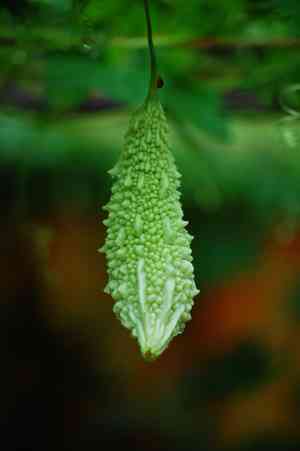
Bitter melon(Momordica charantia)

Bitter melon (Momordica charantia)

Also known as: Balsam-pear, Bitter squash

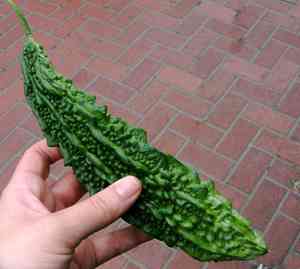
Bitter melon, originally from Africa, is now grown globally for its edible fruit, which varies in shape and size. Particularly popular in Asian dishes, its bitterness can be reduced by slicing and salting the fruit, then soaking it in water. This climbing vine has also been used for centuries in traditional medicine across Asia and Africa.

Attributes of Bitter melon

Lifespan
Annual
Plant Type
Vine, Herb
Plant Height
2 m to 3 m
Spread
2 m
Leaf Color
Green
Flower Size
3 cm to 7 cm
Flower Color
Yellow Gold

PlantJoy - Identify plants with a snap

Identify and diagnose plants, get toxicity alerts, and explore safety guides for all types of fungi.

Try for Free

Images of Bitter melon

Bitter melon(Momordica charantia)

Quickly Identify Bitter melon

1
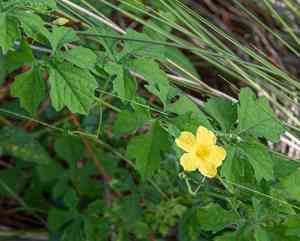
Vivid yellow, tubular flowers measuring 1-2 inches (2.5-5 cm) in length.
2
Foul-smelling, palmately lobed leaves with crenate margins, 2-4 inches (5-10 cm) long.
3
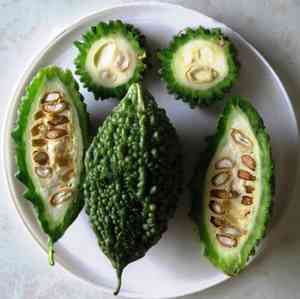
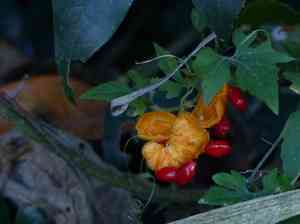
Ovate-elliptical pepo fruit transitioning from green to yellow-orange, splitting to reveal red pulp.
4
Exuberant climbing plant with delicate tendrils, reaching 12-20 feet (3.7-6.1 meters).
5
Annual plant intolerant to cold, requiring warm climates for thriving growth.

Scientific Classification of Bitter melon

Phylum
Vascular plants
Class
Dicotyledons
Order
Cucurbitales
Family
Gourd
Genus
Momordica
Species
Bitter melon

Planting and Growing of Bitter melon

Care Difficulty
Easy
Watering Schedule
Every 8 days
Sunlight Requirements
Full sun
Sunshine Duration
6-10 hours
Ideal Temperature
77-86℉
Soil Type
Potting Mix, Peat Mix
Soil pH
6.5-7.5
Fertilizer Type
Balanced
Pruning Season
Spring, Summer
Pruning Area
Branches, Leaves
Pruning Frequency
2 times a year
Repotting Season
Spring
Pot Type
Plastic, Ceramic

water icon How to Water Bitter melon?

The water amount for Momordica charantia should be enough to moisten the soil thoroughly, approximately 500 milliliters per watering session. Ensure that the water permeates deep into the soil to reach the roots, as the plant requires consistent moisture, especially during its growing period. Avoid waterlogging, as it can cause root rot.
What are the symptoms of an underwatered Bitter melon?
What should I do if my Bitter melon is not getting enough water?
What are the symptoms of an overwatered Bitter melon?
How to save an overwatered Bitter melon?
More About Watering Techniques

sunlight icon What Are the Sunlight Requirements for Bitter melon?

Sunlight Requirements: Full sun, Partial sun
Duration of light: 4 to 8 hours
Optimal growth occurs under full to partial sunlight conditions. Ensuring adequate light supports healthy foliage and optimal fruit development, crucial for the plant's health.
How much sunlight does Momordica charantia need?
What solutions ensure ideal lighting?
Benefits of ideal light conditions?
More About Sunlight Requirements Techniques

temperature icon What Is the Ideal Temperature Range for Bitter melon?

Ideal Temperature: 77 ~ 86℉
For optimal growth, Momordica charantia thrives best in temperatures ranging from 77°F to 86°F. This temperature range is ideal for maximizing the plant’s growth and fruit production. Maintaining this range helps ensure the plant has sufficient warmth for photosynthesis and nutrient absorption.

soil icon What Soil is Best for Bitter melon?

Soil type: Sandy loam, Loam
Soil PH: 6.5 ~ 7.5
Bitter melon thrives in well-drained soil to prevent root rot and fungal diseases. Proper drainage ensures the roots receive adequate oxygen, promoting vigorous growth and healthier plants. Bitter melon benefits from nutrient-rich soil that provides essential nutrients like nitrogen, phosphorus, and potassium. This enhances the plant's growth, increases fruit yield, and improves resistance to pests. The soil should have moderate moisture retention to keep the plant hydrated without waterlogging. Balanced moisture levels are crucial for maintaining consistent growth and preventing stress-related issues. More About Soil

fertilize icon How to Fertilize Bitter melon?

Fertilizer type: Balanced
When fertilizing Momordica charantia, use a balanced fertilizer with equal parts nitrogen, phosphorus, and potassium (NPK 10-10-10). Use about 1 ounce (28 grams) of fertilizer per plant, ensuring it's evenly distributed around the base, without touching the stem to prevent any potential burn. More About Fertilizing Techniques

prune icon How to Prune Bitter melon?

Pruning Time: Spring, Summer, Autumn
Begin by identifying and targeting stems that are diseased, damaged, or crossing each other. Focus on those inhibiting light penetration to the inner parts of the plant. Make clean cuts at a 45-degree angle just above a healthy node or bud. This positioning encourages new growth and helps rainwater runoff, reducing the risk of rot at the cut site. Shape the plant by strategically trimming it to maintain an open structure that allows sunlight and air to reach the center. This reduces the likelihood of fungal diseases and optimizes fruit production. More About Pruning Techniques

propagate icon How to Propagate Bitter melon plant?

Propagate Time: Early spring, Late spring, Early summer
1
Begin by soaking the seeds of Momordica charantia in warm water for about 24 hours to soften the hard seed coat. This step enhances germination by facilitating water uptake and encouraging the seeds to sprout more rapidly.
2
After soaking, plant the seeds in seed trays filled with well-draining potting mix. Sow the seeds about 1-inch deep and cover them lightly with soil. Ensure that the seeds are spaced adequately to prevent overcrowding.
3
Place the seed trays in a warm, sunny location or under grow lights to maintain optimal growing conditions. Keep the soil consistently moist but not waterlogged, as excessive watering can lead to seed rot.
More About Propagating Techniques

repot icon How to Repot Bitter melon plant?

Repotting frequency: Once a year
1
You should consider repotting Momordica charantia when you notice roots protruding from the drainage holes, or if the plant's growth appears stunted due to being root-bound. Additionally, if the potting soil breaks down and affects drainage, it's time to refresh the environment.
2
Opt for a pot that's 1 to 2 inches larger in diameter than the current one. A pot with drainage holes is essential to prevent water from stagnating, which can lead to root rot. A slightly larger pot will provide enough space for growth without overwhelming the plant.
3
The ideal soil mix for repotting should be well-draining and rich in organic matter. This ensures that the roots have the necessary aeration and nutrients, preventing waterlogging and root diseases while supporting vigorous growth.

PlantJoy - Identify plants with a snap

Find the best spots for them to optimize their health, simply using your phone.

Try for Free

Toxicity of Bitter melon

Is Bitter melon toxic to humans?

Bitter melon may pose toxicity risks when consumed in significant quantities. Ingesting it can lead to moderate adverse effects. The seeds and the bright red fruits are the toxic components, containing detrimental alkaloids. Signs of ingestion encompass abdominal pain, vomiting, nausea, fatigue, dilated pupils, headaches, and excessive salivation. As ornamental plants, they are commonly found in gardens and yards, making them more accessible. The distinctive red fruits may attract children, who might unknowingly consume them due to their toxic nature.

Is Bitter melon toxic to cat?

Bitter melon exhibits a low level of toxicity in cats, which can lead to discomfort when ingested in excessive quantities. The main poisoning risk is linked to the consumption of the fruit of this plant. If a cat consumes an excessive amount of bitter melon, it may show various signs of distress or physical unease. It is essential for cat owners to keep a close eye on their pets and to prevent them from eating large portions of this plant. If ingestion is suspected, it is vital to promptly seek veterinary assistance to safeguard the pet's health and welfare.

Is Bitter melon toxic to dog?

Bitter melon is recognized as having a mild toxic effect on dogs. If dogs consume this plant in excessive quantities, they may experience poisoning. The toxic components of the plant are primarily found in its fruits, which can induce a range of symptoms reflecting poisoning when ingested by a dog. Pet owners should be vigilant for any signs of distress or unusual behavior in their dogs that may indicate they have eaten bitter melon. Should a dog ingest bitter melon and exhibit symptoms such as vomiting, diarrhea, or lethargy, it is crucial to seek prompt veterinary assistance to protect the animal's health and well-being.

Identify toxic plants for your safety

Learn which plants are harmful to you and your pets, and make informed choices for a safer home!

Try for Free
WARNING
The judgment on toxicity and danger is for reference only. We DO NOT GUARANTEE any accuracy of such judgment. Therefore, you SHALL NOT rely on such judgment. It is IMPORTANT TO SEEK PROFESSIONAL ADVICE in advance when necessary.
More About Toxic Techniques