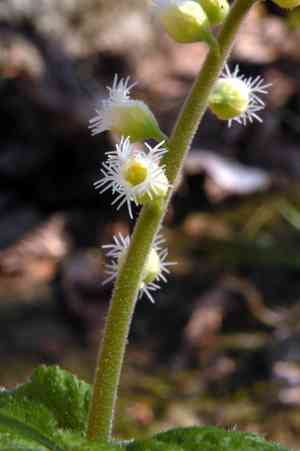
Twoleaf miterwort (Mitella diphylla)
Also known as: Twoleaf bishop's-cap
The twoleaf miterwort (Mitella diphylla) flourishes in damp, shaded woodland areas, often thriving on mossy slopes. Gardeners favor this plant for its effectiveness as ground cover and its stunning springtime display of intricate, star-shaped white flowers, which are so finely detailed that they are best admired up close.
In This Article
Attributes of Twoleaf miterwort
Lifespan
Perennial
Plant Type
Herb
Plant Height
23 cm to 30 cm
Spread
35 cm
Leaf Color
Green
Flower Size
2.5 cm
Flower Color
White
Images of Twoleaf miterwort
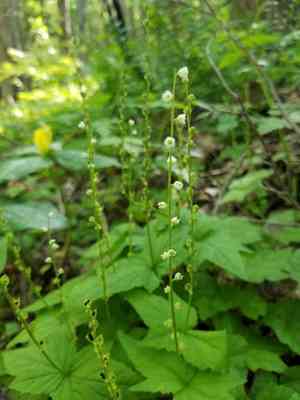
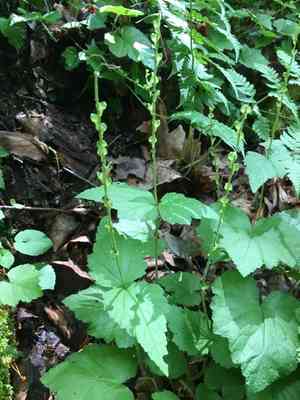
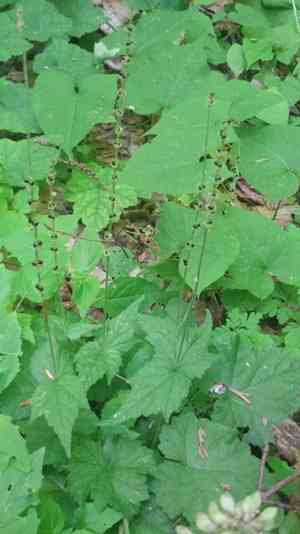
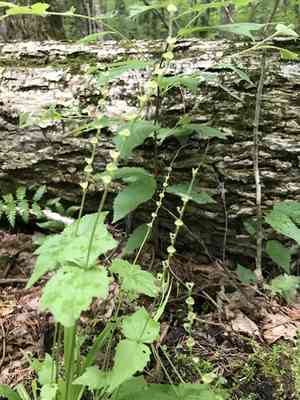
Quickly Identify Twoleaf miterwort
1
Basal leaves heart-shaped, covered in fine hairs, up to 4 inches (10 cm) wide.
2
Second set of upright leaves halfway up flowering stalk, stemless.
3
Small, cup-shaped white flowers with five fringed petals resembling a snowflake.
4
Distinct miter-shaped fruit resembling a bishop's headdress after flowering.
5
Prominent lobed pattern on hairy, long-stalked ovate leaves, up to 3 inches (7.6 cm) long.
Scientific Classification of Twoleaf miterwort
Phylum
Vascular plants
Class
Dicotyledons
Order
Saxifragales
Family
Saxifrage
Genus
Miterworts
Species
Twoleaf miterwort
Planting and Growing of Twoleaf miterwort
Care Difficulty
Easy
Watering Schedule
Every 8 days
Sunlight Requirements
Partial sun
Sunshine Duration
4-8 hours
Ideal Temperature
60-75℉
Soil Type
Potting Mix, Peat Mix
Soil pH
6.5-7.5
Fertilizer Type
Balanced
Pruning Season
Spring, Summer
Pruning Area
Branches, Leaves
Pruning Frequency
2 times a year
Repotting Season
Spring
Pot Type
Plastic, Ceramic
 How to Water Twoleaf miterwort?
Mitella diphylla thrives on consistent moisture levels. You should aim to apply around 200 milliliters of water per watering session, ensuring that the soil remains damp but not waterlogged. Watering should soak the soil at least to a depth of 2-3 inches.
What are the symptoms of an underwatered Twoleaf miterwort?
›
What should I do if my Twoleaf miterwort is not getting enough water?
›
What are the symptoms of an overwatered Twoleaf miterwort?
›
How to save an overwatered Twoleaf miterwort?
›
 What Are the Sunlight Requirements for Twoleaf miterwort?
Mitella diphylla thrives in partial sun to full shade environments. Ideal light conditions foster botanical harmony, promoting robust leafy growth and efficient energy conversion.
More About Sunlight Requirements Techniques→
What is the best lighting condition for Mitella diphylla?
›
How can one achieve the ideal lighting for Mitella diphylla indoors?
›
What are the benefits of providing ideal lighting for Mitella diphylla?
›
 What Is the Ideal Temperature Range for Twoleaf miterwort?
The ideal temperature range for cultivating Mitella diphylla is between 60°F and 75°F. This range ensures optimal growth and health for the plant. Maintaining these temperatures supports photosynthesis and other metabolic processes, aiding in robust foliar and root development. Temperatures within this range simulate the conditions found in its native habitats, contributing to a thriving plant.
 What Soil is Best for Twoleaf miterwort?
Mitella diphylla thrives best in well-drained soil that prevents waterlogging, which can lead to root rot. Good drainage ensures roots get adequate oxygen and the plant remains healthy. Soils rich in organic matter provide essential nutrients and improve soil structure, promoting healthy growth in Mitella diphylla. Compost or leaf mold can enhance organic content. This plant enjoys consistently moist conditions—as long as the soil is not waterlogged. Regular watering helps maintain steady moisture levels, mimicking its native forest habitat.
 How to Fertilize Twoleaf miterwort?
For Mitella diphylla, use a balanced liquid fertilizer at half strength to avoid over-fertilization. Monthly applications during the growing season will provide the necessary nutrients without overwhelming the plant.
 How to Prune Twoleaf miterwort?
Ensure you have a pair of sharp, sterilized pruning shears to make clean cuts and prevent the spread of disease between plants. Choose tools that are comfortable to handle to avoid fatigue during the pruning process. Inspect your Mitella diphylla for any stems that appear brown, brittle, or damaged by pests. Removing these promotes better air circulation and redirects the plant's energy toward new, healthy growth. Prune to maintain an appealing shape by cutting back long or unruly stems. Aim for a balanced, bushy appearance, and avoid cutting more than one-third of the plant at a time to prevent shock.
More About Pruning Techniques→
 How to Propagate Twoleaf miterwort plant?
1
Collect seeds from mature plants in late summer or autumn. Clean and dry the seeds properly before storage. Stratify them by placing them in the refrigerator for a few weeks before planting in early spring.
2
Identify the healthiest plants for division in early spring. Use a sharp and clean tool to cut the plant's root ball into sections, each with a healthy shoot and root system. Replant immediately to reduce stress.
3
Sow stratified seeds in a seedling tray filled with moist, well-draining soil. Cover the seeds lightly with soil and place the tray in a warm, bright area. Water gently to maintain moisture without over-watering.
 How to Repot Twoleaf miterwort plant?
1
Mitella diphylla should be repotted when the roots start emerging from the drainage holes or when growth appears stunted. These are clear signals that the plant requires more space to grow vigorously.
2
Select a pot with good drainage, slightly larger than the current one, ideally 1-2 inches in diameter wider. This encourages healthy root growth and prevents waterlogging. A well-chosen pot optimizes moisture levels and root aeration.
3
Use a well-drained loamy soil to ensure proper moisture retention without waterlogging. Such soil balances moisture and nutrients, promoting robust growth for your Mitella diphylla.
Learn More About Twoleaf miterwort Diseases
Anthracnose
Bacterial Leaf Spot
Bacterial Soft Rot
Damping-off
Downy Mildew
Drought Stress
Fusarium Wilt
Gray Mold
Leaf Spot
Mosaic
Nutrient Deficiency
Nutrient Toxicity
Powdery Mildew
Root Rot
Root-knot Nematode
Rusts
Sooty Mold
Spider Mites
Temperature Stress
Thrips Damage
White Mold
Chemical Injury



