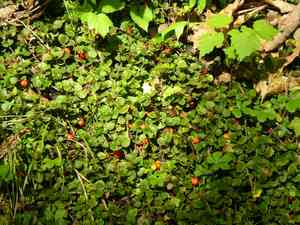
Partridge berry (Mitchella repens)
Also known as: Two-eyed berry, Running box, Twinberry
Partridge berry (Mitchella repens) is a creeping ground cover that flourishes in shaded, moist environments. This evergreen plant showcases small, fragrant, white flowers in late spring to early summer, which bloom in pairs. Both flowers need to be pollinated for a single scarlet red berry to form. The berries, which persist through winter, are edible but generally considered bland and seedy. Partridge berry prefers well-draining, acidic soil rich in organic material and is often found in forested areas, benefiting from the shelter of deciduous and coniferous trees.
In This Article
Attributes of Partridge berry
Lifespan
Perennial
Plant Type
Herb
Plant Height
2.5 cm to 8 cm
Spread
30 cm to 40 cm
Leaf Color
Green
Flower Size
2.5 cm
Flower Color
White Pink
Images of Partridge berry
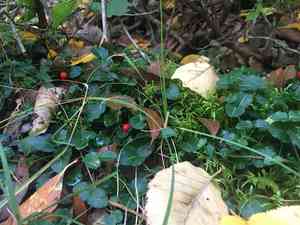
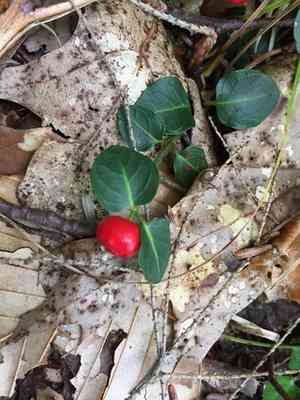
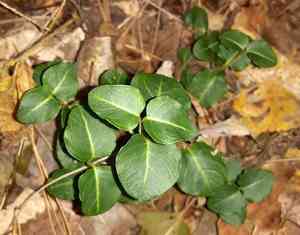
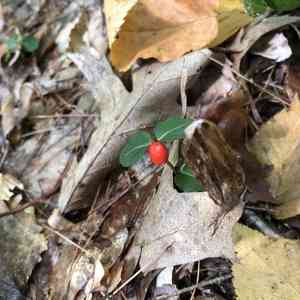
Quickly Identify Partridge berry
1
Low-lying creeping vine
2
Pairs of small dark green glossy leaves
3
Small scarlet or red fruits
4
Delicate slender stems with rooting nodes
5
Pairs of oval heart-shaped leaves with whitish veins
Scientific Classification of Partridge berry
Phylum
Vascular plants
Class
Dicotyledons
Order
Gentianales
Family
Madder
Genus
Mitchella
Species
Partridge berry
Planting and Growing of Partridge berry
Care Difficulty
Easy
Watering Schedule
Every 3 days
Sunlight Requirements
Partial sun
Sunshine Duration
6-12 hours
Ideal Temperature
60-75℉
Soil Type
Potting Mix, Peat Mix
Soil pH
6.5-7.5
Fertilizer Type
Balanced
Pruning Season
Spring, Summer
Pruning Area
Branches, Leaves
Pruning Frequency
2 times a year
Repotting Season
Spring
Pot Type
Plastic, Ceramic
 How to Water Partridge berry?
Mitchella repens prefers moist but not waterlogged soil. Ensure the top layer of soil, about one inch, remains moist between waterings. This balance mimics its native woodland habitat where the soil remains consistently damp yet drains well.
What are the symptoms of an underwatered Partridge berry?
›
What should I do if my Partridge berry is not getting enough water?
›
What are the symptoms of an overwatered Partridge berry?
›
How to save an overwatered Partridge berry?
›
 What Are the Sunlight Requirements for Partridge berry?
Mitchella repens benefits from partial to full shaded environments. Access to ideal light levels means balanced growth, vibrant leaf coloration, and avoidance of stress symptoms typically caused by inappropriate lighting.
What type of light does Mitchella repens prefer?
›
How can I achieve ideal lighting for Mitchella repens?
›
What benefits does Mitchella repens gain from ideal lighting?
›
 What Is the Ideal Temperature Range for Partridge berry?
The ideal temperature range for Mitchella repens, commonly known as partridgeberry, is between 60 and 75 degrees Fahrenheit. This range provides optimal conditions for growth and photosynthesis, encouraging vibrant foliage and sustained health.
 What Soil is Best for Partridge berry?
Mitchella repens thrives best in soils that retain moisture without becoming waterlogged. This aids in sustaining the plant during dry spells and supports rich, lush foliage. Ensuring good drainage prevents root rot and helps the plant absorb nutrients effectively without drowning in excess water. Nutrient-dense loamy soils provide essential minerals and organic matter crucial for the plant's health and vibrant berry production.
 How to Fertilize Partridge berry?
Mitchella repens, commonly known as partridgeberry, is a plant with simple fertilization needs. A balanced, half-strength liquid fertilizer is ideal. Apply at a rate of 1/4 teaspoon per gallon of water during active growth.
 How to Prune Partridge berry?
Mitchella repens, commonly known as partridgeberry, is a ground cover plant that requires minimal pruning. To maintain its health, trim back any dead or diseased stems at least once a year. Removing these stems helps improve airflow and reduce the risk of fungal diseases. Pruning can stimulate new growth and make the plant bushier. After the blooming season, you can lightly trim the plant to encourage branching. This helps the plant cover more ground effectively and could enhance its visual appeal by making it look fuller.
 How to Propagate Partridge berry plant?
1
Gather mature seeds from the plant's berries, and clean them to eliminate any pulp, which may hinder germination. It's essential to ensure the seeds are viable for optimal propagation.
2
Select healthy, non-flowering stems for cuttings, and cut them at a 45-degree angle to maximize rooting potential. Avoid using stems that appear weak or discolored.
3
Choose a low branch that's healthy and bend it to the ground. Secure it with a U-shaped pin or a stone, ensuring the contact point with the soil is buried for optimal root formation.
 How to Repot Partridge berry plant?
1
Mitchella repens should be repotted when it shows signs of becoming root-bound, such as slowed growth or roots growing from the drainage holes. The best time is during the growing seasons, Spring or Summer, as the plant can recover quickly during these periods.
2
Select a pot that is slightly larger than the previous one with adequate drainage holes. This prevents waterlogging and ensures the plant doesn't get overwatered, promoting healthy root growth.
3
Opt for a light, well-draining, and slightly acidic soil mix, ideally with peat moss, which provides balanced moisture retention and mimics the plant's natural forest floor habitat.



