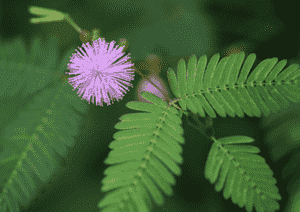
Shame plant (Mimosa pudica)
Also known as: Action plant, Dormilones, Zombie plant
When touched, the Sensitive plant (Mimosa pudica) reacts by folding its fern-like leaves inward and drooping. This unique response serves as a defense mechanism. While its purple, fuzzy flowers add decorative charm, it's important to be aware that the plant contains alkaloids, which can be toxic to both humans and animals.
Attributes of Shame plant
Images of Shame plant
Quickly Identify Shame plant
Scientific Classification of Shame plant
Planting and Growing of Shame plant
 How to Water Shame plant?
 What Are the Sunlight Requirements for Shame plant?
 What Is the Ideal Temperature Range for Shame plant?
 What Soil is Best for Shame plant?
 How to Fertilize Shame plant?
 How to Prune Shame plant?
 How to Propagate Shame plant plant?
 How to Repot Shame plant plant?
Toxicity of Shame plant
Is Shame plant toxic to humans?
The shame plant poses minimal risk to humans, primarily due to its toxin, mimosine, which is present in only small quantities in its tissues. As a result, most children typically only take a few nibbles of it. However, the shame plant has unfortunately become an invasive species in certain regions. Consequently, depending on your local climate, it may infiltrate your yard without you realizing it. If a child or an individual with cognitive impairments consumes a significant amount of it, they could experience symptoms of mimosine poisoning. These symptoms may include weakness, hair loss, goiter, and a decreased appetite. Generally, symptoms tend to resolve on their own once the individual is no longer able to consume any more of the plant.



